We are strongest when we embrace a diversity of voices, ideas, perspectives, identities, and experiences.
Across the University of Maryland, we recognize that diversity is a cornerstone of an excellent and inclusive learning environment. Each year, the university’s Office of Multicultural Involvement and Community Advocacy coordinates a calendar of events to commemorate national Latinx Heritage Month (September 15 – October 15). This year’s campus-wide theme is Creciendo con Amor, Spanish for “Growing with Love,” celebrating the support and energy behind a history of Latinx student advocacy, activism, and growth at Maryland.
At the A. James Clark School of Engineering, we know that we—and the solutions we engineer—benefit from a strong, tightly-knit, and supportive community, and the inclusive collaboration it fosters. Join us as we proudly celebrate Latinx Heritage Month, paying tribute to the many histories and contributions of Latinx Americans in the United States, by learning more about some of our students and their ongoing contributions to engineering.
Featured Students
Alessandra Contreras
For materials science and engineering sophomore Alessandra Contreras, being a first-generation college student made her feel like she had something to prove: “It took me a while to learn that I earned my spot.”
At Maryland Engineering, Contreras says she now knows she belongs. Instead of the competitive environment she’d envisioned before college, she has found a welcoming one—from her professors and advisers to her tight-knit cohort of A. James Clark Scholars. “In reality, your classmates become your network of support,” she says.
Together with her network of fellow Clark Scholars, Contreras is excited to take on the Grand Challenges for Engineering. For her team’s multi-year service-learning project, they are brainstorming a wide range of challenges and solutions—from improving access to clean water to improving urban infrastructure. She also looks forward to declaring her major specialization: materials for energy.
Being a member of the Latinx community, Contreras finds the diversity on campus empowering. She has enjoyed being a student ambassador for the Department of Materials Science and Engineering and connecting with prospective students and the newest cohort of Clark Scholars to join UMD this fall. “Growing up interested in engineering, I didn’t always see that much Latinx representation. Now that I’m doing engineering, I realize I always could do it,” she says. “We always could do it.”
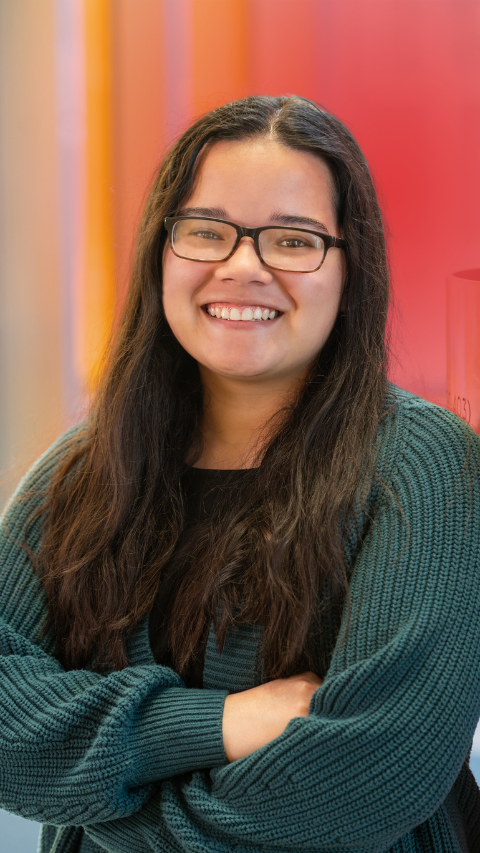
Emma Perez
Sophomore aerospace engineering major and A. James Clark Scholar Emma Perez tries to take advantage of every chance for growth and success. That drive, says Perez, is something that unites many of the members of the Maryland Engineering Latinx community: “Our parents had fewer opportunities, so they raised us to seize all the opportunities we can.”
Seeking a community with cultural connections, Perez became involved with the Center for Minorities in Science and Engineering (CMSE). She took part in the center’s AmazonNext Scholars program, which offers students interested in technology careers hard and soft skill development, networking opportunities, and mentoring by Amazon employees—in addition to other support and resources. She also participated in the LSAMP Bridge Program for Scientists and Engineers as a peer tutor in pre-calculus. Perez says she appreciates the caring, close-knit community that CMSE fosters: “It’s important to find people who understand what you’re going through—not just academically, but also culturally.”
This year, Perez is excited to begin the QUEST Honors Program, which combines her two interests: engineering and business. A participant in Terraformers, a UMD club working to develop an autonomous rover for a competition through NASA, Perez hopes to one day make her mark on the space revolution.
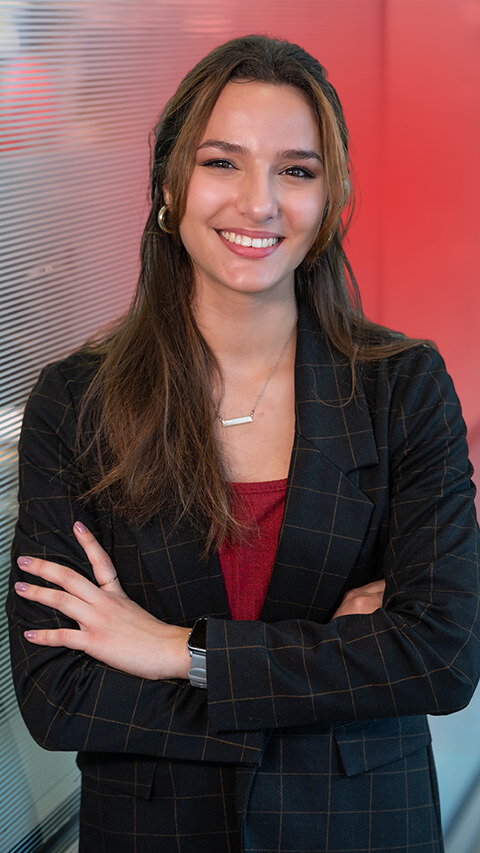
Angelo Capati
For senior Angelo Capati, fire protection engineering (FPE) felt like a natural fit. His mom, who is a nurse, taught him a lot about caring for people’s wellbeing. “That’s why I chose FPE,” he says about the department, which empowers engineers to reduce fire losses of life and property. “To me, no other engineering discipline has the same kind of lifesaving impact.”
Capati has noticed an uptick in diversity in recent years. This is important, he says, because culture factors into the thinking behind building fire protection systems and the future of the field: “Diversity of experiences means we can incorporate foreign languages and other elements into systems that were originally designed by a single group,” he says.
Outside of his studies, he’s proud to have served as a student ambassador for FPE, a peer tutor in calculus and chemistry for the LSAMP Bridge Program for Scientists and Engineers, and a member of the Society of Hispanic Professional Engineers. He’s also involved with the Latinx Student Union and has helped plan Latinx Heritage Month activities.
After graduation, Capati plans to put his personal and academic background to work designing fire alarm, fire sprinkler, and egress systems at Jacobs.
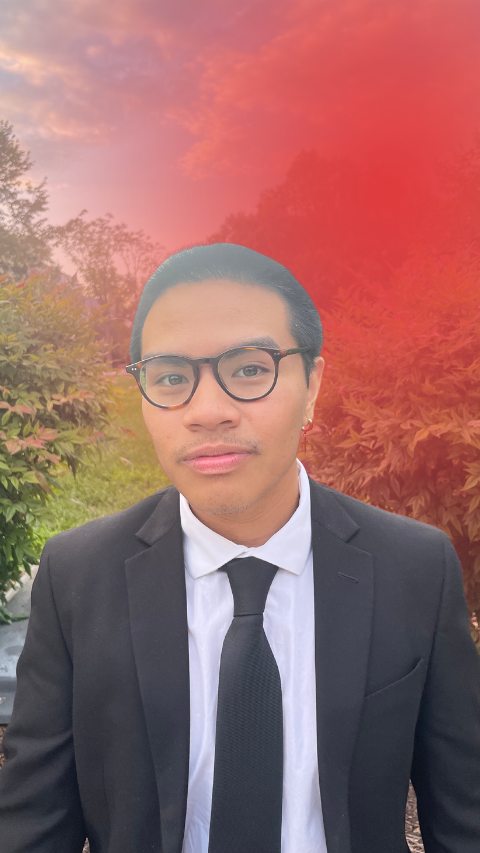
Ariana Capati
A bioengineering senior on the pre-med track, Ariana Capati’s academic passions developed early. In middle school, she took part in an after-school program called Mathematics, Engineering, and Science Achievement. Capati’s team entered a contest that required them to design and build a prosthetic arm. They won second place, and Capati was hooked: “What excites me most about bioengineering work is how critical this type of engineering is to improve the lives of patients.”
With plans to earn a five-year medical doctor/master of science in biomedical engineering, Capati was thrilled to be accepted into the University of Maryland Scholars Summer Research Program. Over the summer she conducted research at the School of Medicine, studying the ethics and beliefs around take-home naloxone kits for opioid overdose. This semester, she is conducting research at the Bioinspired Advanced Manufacturing Lab led by Associate Professor Ryan Sochol.
For Capati, whose mother is from Peru, the UMD chapter of the Society of Hispanic Professional Engineers (SHPE) has provided her with a strong sense of community on campus. Paying forward her positive experiences, she recently initiated a new chapter of SHPEtinas that highlights the Latina perspective within SHPE.
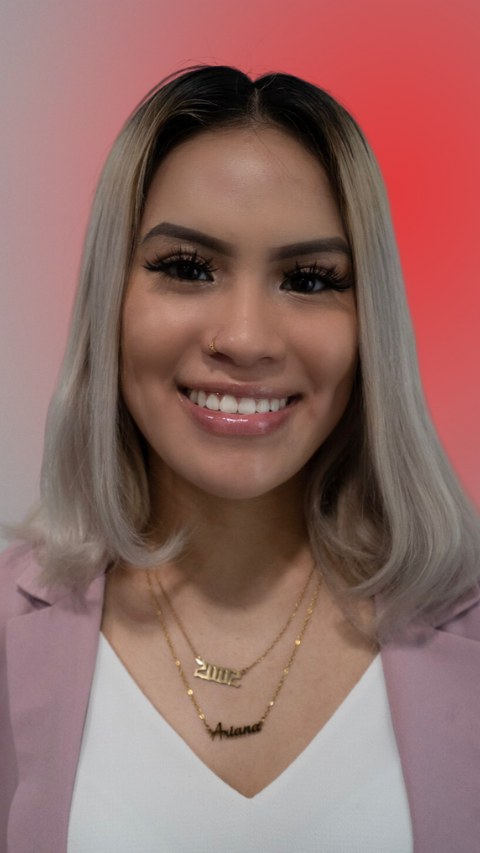
José Gutierrez
For mechanical engineering and Banneker/Key student José Gutierrez, education is all about balance. Pursuing a Latin American and Caribbean Studies minor feeds his interests in history, culture, and human behavior. “I never liked focusing on just one thing,” he says. “I like to get a wider perspective.”
Seeking a breadth of experiences is also what drew Gutierrez to mechanical engineering, a discipline he likes for its wide-ranging applications—from designing and building machine solutions to analyzing their usefulness. Project- and team-based classes, including ENME371: Product Engineering and Manufacturing (better known as “the drill class,” Gutierrez quips), helped set him up for success in his two internships designing for Northrop Grumman. “I like working with a team toward a goal, problem-solving, and compromising,” the senior says.
Outside of his studies, he serves as treasurer for the Banneker/Key Community Council, which promotes community among Banneker/Key students and alums. “I grew up in a tight-knit family—I like feeling like a part of a larger group,” says Gutierrez, who after graduation plans to work for Northrop Grumman and earn a master’s degree.
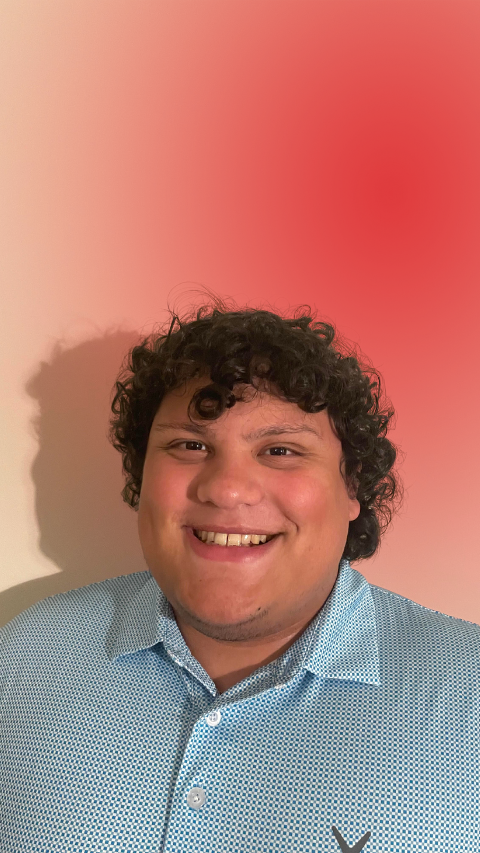
Camila Proano
Camila Proano M.S. ’22 moved from Ecuador to the U.S. at 10, lived in Clarksburg, Maryland, and always wanted to study at UMD. A trip to the Galapagos Islands, where freshwater is scarce, inspired her interest in environmental engineering.
As a master’s student in the Department of Civil and Environmental Engineering (CEE), she explored methods of converting food waste into environmentally friendly renewable energy sources called biogas, which can supply heat, electricity, and vehicle fuel. The solution reduces environmental threats, including greenhouse gas emissions, and provides sustainable energy. She calls completing her thesis “a top 10 lifetime accomplishment.”
Today, Proano is a Ph.D. student, Clark Doctoral Fellow, and president of the CEE Graduate Student Council who works with Assistant Professor Guangbin Li in the N.E.S. (nutrient-energy-smart) Lab. A scholarship recipient from the Environmental Research and Education Foundation and a 2023 UMD Global STEWARDS (STEM Training at the Nexus of Energy, Water Reuse, and Food Systems) Fellow, her research includes an interdisciplinary review of PFAS (a group of synthetic chemicals) in wastewater streams, their uptake into crops, and the potential for human ingestion. She is also working on a related project funded by a Grand Challenges Grant to develop effective treatment technology for removing PFAS from the environment. “Growing up, I didn’t see a lot of Hispanic women who were engineers,” she says. “I want to be the change I want to see in the world.”
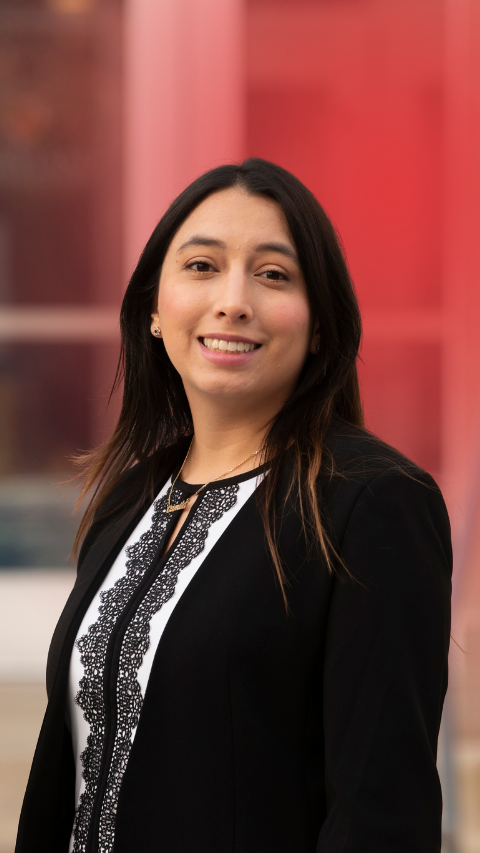
Dahlia Andres
For mechanical engineering senior Dahlia Andres, high school didn’t foster the sense of belonging she was seeking. Finding her place at Maryland Engineering has made all the difference. “For me, the Clark School has been a great fit,” she says. “If you want to learn, there are resources to help—both academically and personally.”
A student in the LSAMP Bridge Program for Scientists and Engineers her freshman year, Andres was introduced to the Center for Minorities in Science and Engineering (CMSE), which quickly became “a home away from home,” she says. She took advantage of academic tutoring programs and personal support and fostered a lasting connection with her CMSE mentor who shared her language and culture. Andres was in the first AmazonNext Scholars program cohort and, in her sophomore year, received a CMSE service award.
She also worked her way up to president of the UMD chapter of the Society of Hispanic Professional Engineers and helped build a chapter for students at Bladensburg High School in Prince George’s County. She hopes the program gives the high schoolers the community they seek and “opens their eyes to what they can do,” she says.
A student in the QUEST Honors Program, Andres is excited to apply what she’s learned to her “real-world” capstone project—from development processes and data analysis to problem-solving and presentation skills. Most importantly, she says she has learned how to hear others and be a voice for them: “Engineering is all about working as a team.”
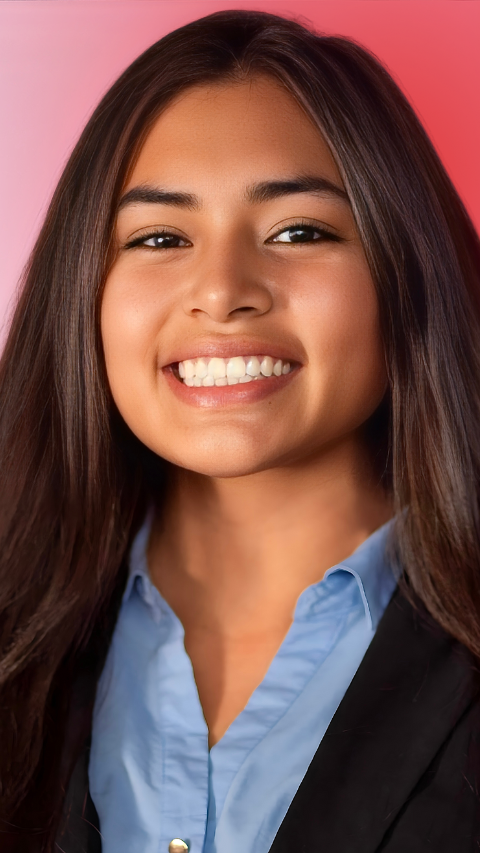
Gustavo Lang Jr.
A “passion for people” drew senior aerospace engineering major Gustavo Lang Jr. to his first career as an educator. The decision to expand his family led him to choose Maryland Engineering, with its highly ranked programs and strong connections to industry, to help him jumpstart his second career.
Lang and his wife, Bo Eun, have two young sons. With the help of his family, including his mother-in-law Misook Kim, Lang balances school, work, and home life—all while maintaining a 4.0 GPA. Outside of his studies, Lang has participated in UMD’s Design, Build, Fly team and Terps Racing Formula EV. “But the most important extracurricular is my family,” Lang says. “They are the reason why I'm here and the motivation behind my success.”
Among his contributions to the Clark School, Lang is most proud of serving as an informal mentor to his peers. A student in the LSAMP Bridge Program for Scientists and Engineers the summer after his first semester, Lang was introduced to the Center for Minorities in Science and Engineering (CMSE)—an “avenue for connections and opportunities both social and professional,” he says. He is proud to have received the 2023 CMSE Director’s Award.
Lang completed a co-op at Apple as a Mac product design engineer and an internship at Boeing as a liaison engineer on the NASA Space Launch System; he continues the internship part-time. His post-graduation goals include working in the space sector.
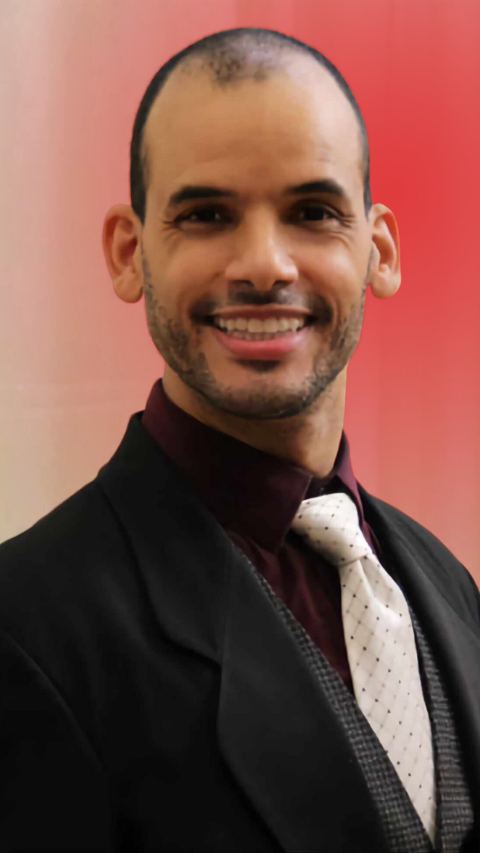
Resources for Latinx Students
Center for Minorities in Science and Engineering
The Center for Minorities in Science and Engineering (CMSE) is committed to the recruitment, retention, development, and graduation of students underrepresented in pre-college, undergraduate, and graduate engineering.
Center for Minorities in Science and EngineeringSociety of Hispanic Professional Engineers
The Society of Hispanic Professional Engineers (SHPE) at UMD seeks to empower the Hispanic community of students to attain careers in the fields of science, technology, engineering, and mathematics and excel as technical and professional leaders.
LSAMP (Louis Stokes Alliances for Minority Participation) Program
The UMD LSAMP (Louis Stokes Alliances for Minority Participation) Program community offers a variety of opportunities to support the retention and graduation of undergraduate students in STEM. An emphasis is placed on achieving academic excellence, gaining research experience, participating in scientific and technical conferences, and preparing competitive graduate school applications.
Louis Stokes Alliances for Minority Participation (LSAMP) ProgramTop