The Keystone Program provides engineering students with first- and second-year experiential learning experiences which lay the foundation for their academic tenure at the University. For permission to enroll in the courses listed, please see the information further down on this page.
The Keystone Program and its Tutoring Center encompass the Clark School’s first and second year students, and those foundational engineering courses required for engineering students of all majors. Each academic year, more than 3,500 students take a course taught under the Keystone Program.
Introduction to Engineering Design is a required course for all first-year engineering students. It is the only course in the Clark School that is taken by all engineering students from all disciplines. This course is offered during the fall and spring semesters. A small number of seats for non-engineering students are offred in ENES 100A.
This is a project-based course that requires working in teams to develop a complex and multidisciplinary product. Students must apply engineering principles, computer software tools, and technical communication skills to meet all of the product performance and project reporting requirements.
The current implementation of ENES 100 requires student teams to design, build, and test a prototype over sand vehicle (OSV) capable of autonomously navigating a course and completing one of several missions. Students learn and apply vehicle mechanics, electronics, programming, computer aided design, and additive manufacturing concepts while designing their OSVs. Students receive the same set of product specifications and mission requirements and compete in a final design competition on the last day of class.
"I learned a LOT from this course and my teammates and I formed extremely strong bonds"
"With a group of people I've never met before, I was able to increase my knowledge on the basic things I would need to succeed as an engineer. I am very grateful for this course"
"This course was very challenging and required a large amount of hard work, but it was a good way to see what engineering is and what is required of a student who wants to become an engineer"
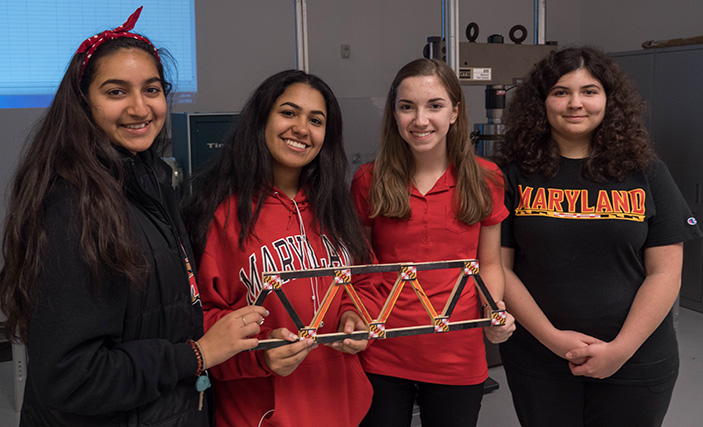
ENES 102 is a foundational course where students are introduced to the fundamental forces and engineering principles that govern the designs of structural systems. Students explore (study, synthesize) concepts from physics such as forces, torque, static equilibrium, moments of inertia and friction as well as principles from material science such as plasticity and stress / strain to better understand how to design structures that can be as small as a heart stent or be as large as the great pyramids. At the end of the semester, students synthesize (apply) their knowledge by working in interdisciplinary teams to design, fabricate, test and analyze the performance of a wooden truss system.
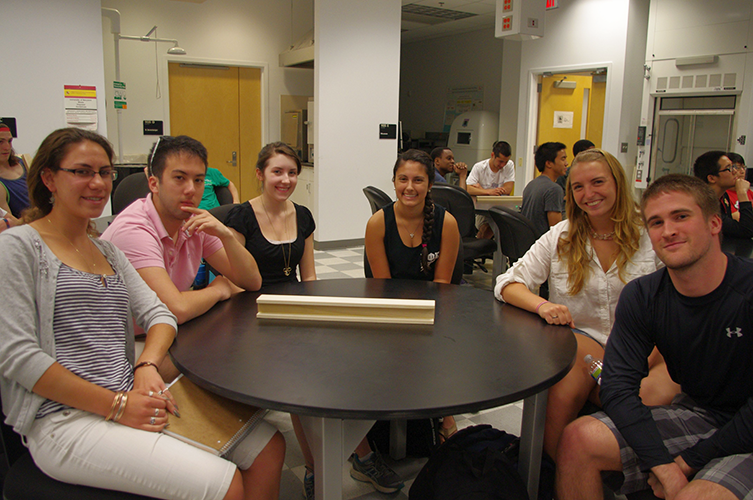
Why are steel beams shaped like the letter “I” often used in the construction of building frames? How much power can a drive shaft transmit between the engine and wheels of an automobile? Is it better to use a spherical tank or a cylindrical tank for storing a pressurized gas? These are some of the questions addressed in the course ENES 220. This course extends the concepts introduced in ENES 102 to determine the internal stresses and deformations of solid bodies subjected to external forces and moments. Components such as rods, shafts, beams, tanks, and other structural shapes are considered. Additionally, students demonstrate their understanding of the lecture concepts by working in teams to design, analyze, fabricate, and test a wooden beam structure. The material covered in this course is a starting point for more advanced topics in mechanical design and structural analysis courses required by aerospace, civil, fire protection, and mechanical engineering students.
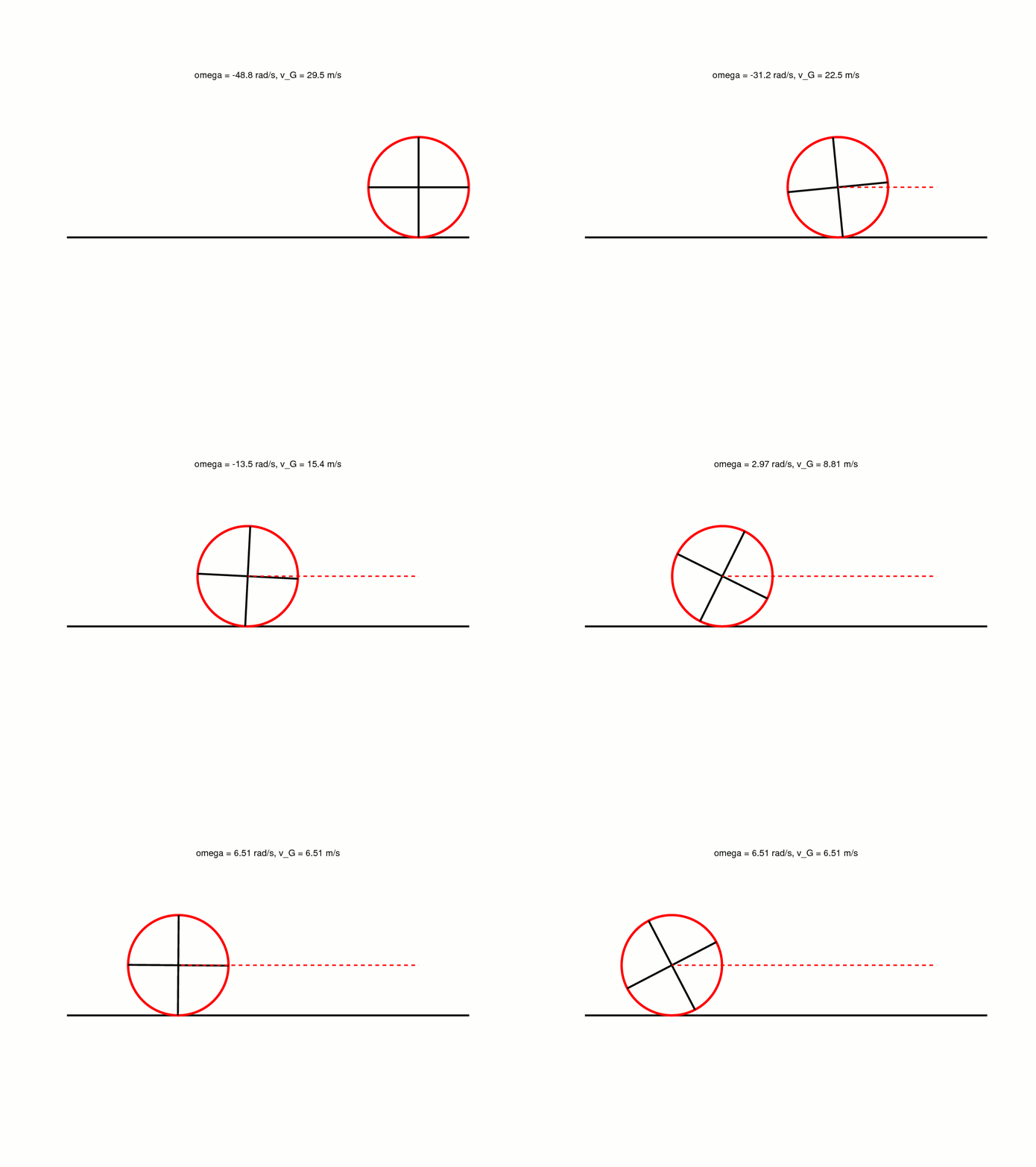
You will learn to apply mathematical and physics concepts to determine the motion of rigid bodies and particles under the action of known applied loads or to determine the loads producing known motions. The course emphasizes developing techniques for engineering problem solving. The physical concepts and the problem solving skills developed in this class are used extensively in later engineering courses such as vibrations, fluid mechanics, and mechanical design, as well as in the careers of most engineering graduates.
Thermodynamics, or the study of energy, is all around us every day. Understanding the transfer and storage of energy allows us to analyze the efficiency of our car’s engine, optimize our energy usage when we heat or cool our homes, or obtain that “perfect water pressure” of our showerheads. Additionally, as climate change continues to become a greater threat to our planet, the ability to create more energy-efficient systems has never been more critical, and mastering thermo concepts is an exciting opportunity for the engineer to be a part of this effort.
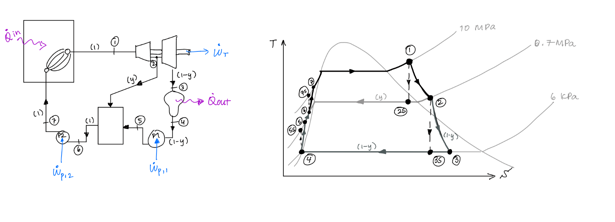
In this Introduction to Thermodynamics course, we explore the thermodynamic properties of matter, the thermodynamic definitions of work and heat transfer, and the first law of thermodynamics. We also study the second law of thermodynamics, and how the first and second laws of thermodynamic relate to power and refrigeration cycles for both vapor and ideal gas systems.
As part of ENES232, students have the opportunity to visit the power plant that provides electrical power, steam, and chill water to UMD’s campus. During this plant tour, students see the scale and complexities of a power plant that often are ignored in a strictly analytic analysis. This plant tour is a wonderful primer for a final project that brings together all of the concepts covered in the course, which is a Rankine Power Plant Design project. For this project, the students work in teams to design, analyze, and optimize an 110MW power plant, within the constraints of a budget, environmental impact, and equipment maintenance restrictions. According to our students, “the end of the year project was […] a huge help with understanding the important aspects of ENES232,” and allows students to gain experience with one of the many practical applications of thermodynamics that they may encounter as practicing engineers.
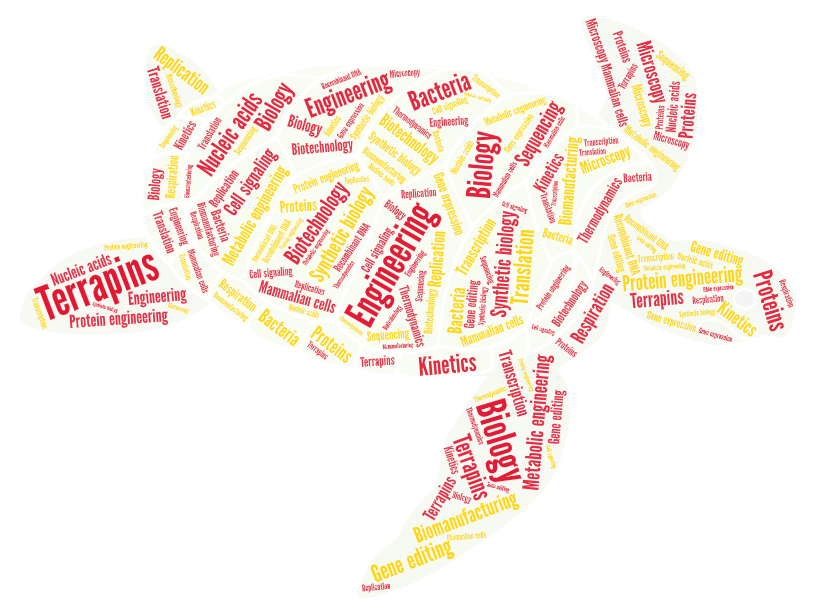
This course explores the role biology can play in engineering and how engineering can solve biological problems. We examine the chemistry and physics of biology and highlight how it is used in real-world applications. In particular, you will learn about fundamentals in cellular and molecular biology and how these are applied in biomanufacturing, metabolic engineering, protein engineering, tissue engineering, biotechnology, synthetic biology, genetic engineering, and much more!
Basic circuit elements: resistors, capacitors, inductors, sources, terminal relationships, diodes and transister models, Kirchoff's Laws, DC and AC steady state analysis, phasors, analysis techniques, superposition, theorems of Thevenin and Norton, transient analysis of first and second-order circuits.
The Engineering for Us All course empowers, engages, and excites students to use what they know and find what they are passionate about to take control and boldly influence the world. Empowerment is built through an awareness of engineering in everyday life, the diversity of engineers, and by interrogating and emphasizing how engineering is embedded in society. Engagement occurs as students practice engineering design at multiple scales, considering local and global engineering design challenges. This course generates excitement as students are provided opportunities to design and create solutions in authentic, student-centered product development challenges. Students in this course are challenged to uncover valuable connections among a variety of disciplines, while creatively seeking and solving problems in teams.
This course introduces students to engineering design practices by challenging them to modify an existing product or design to meet additional specifications and constraints. Using a combination of computational modeling, CAD tools, and rapid prototyping techniques, students will iteratively develop, test, and refine their designs. Teams will justify design choices based on data, performance criteria, and real-world considerations. By the end of the course, students will have built and tested a functional prototype, critically evaluated both their design product and design process, and recommended areas for future improvements to both product and process.
Completion of both ENES192 and ENES193 satisfies the ENES100 requirement and is equivalent to ENES100.