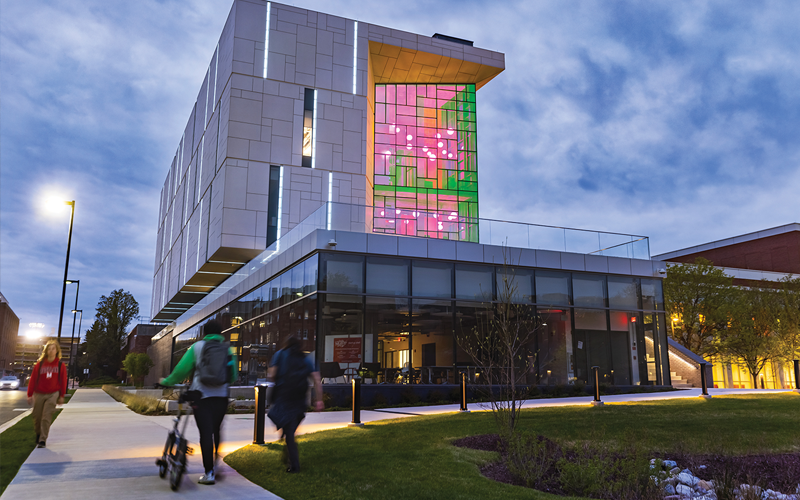
A big investment ($219.5 million) came with big expectations: to launch innovative initiatives, attract top talent, and engineer transformative breakthroughs that address some of the world’s thorniest challenges.
Here’s what happened next.
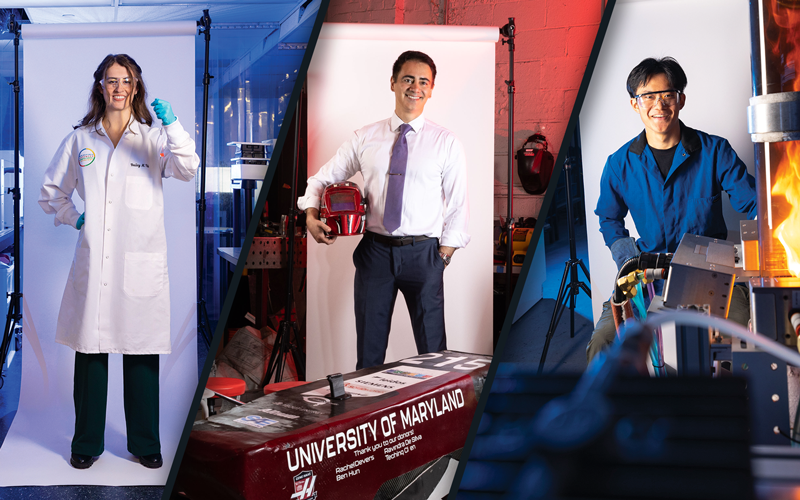
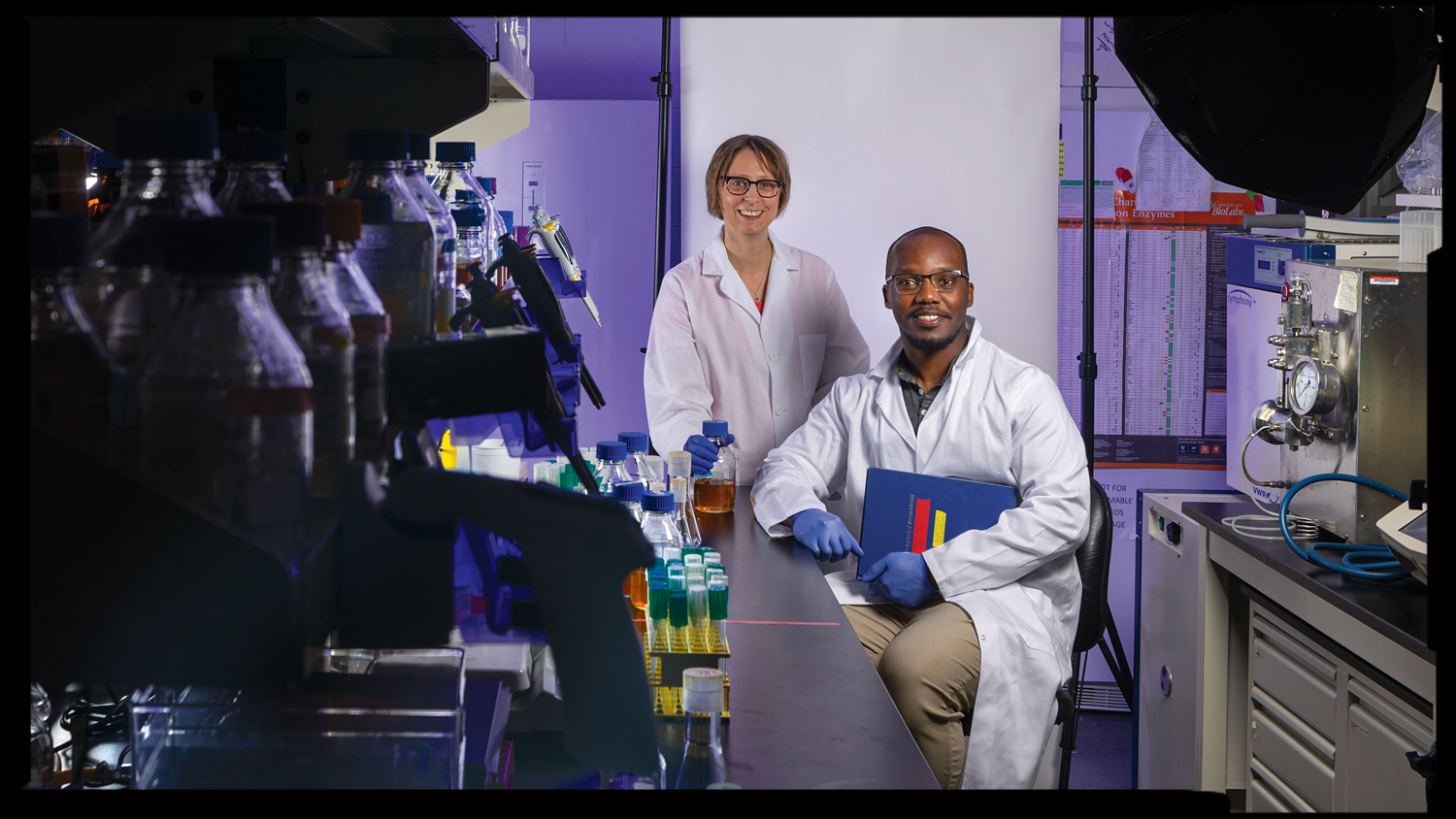
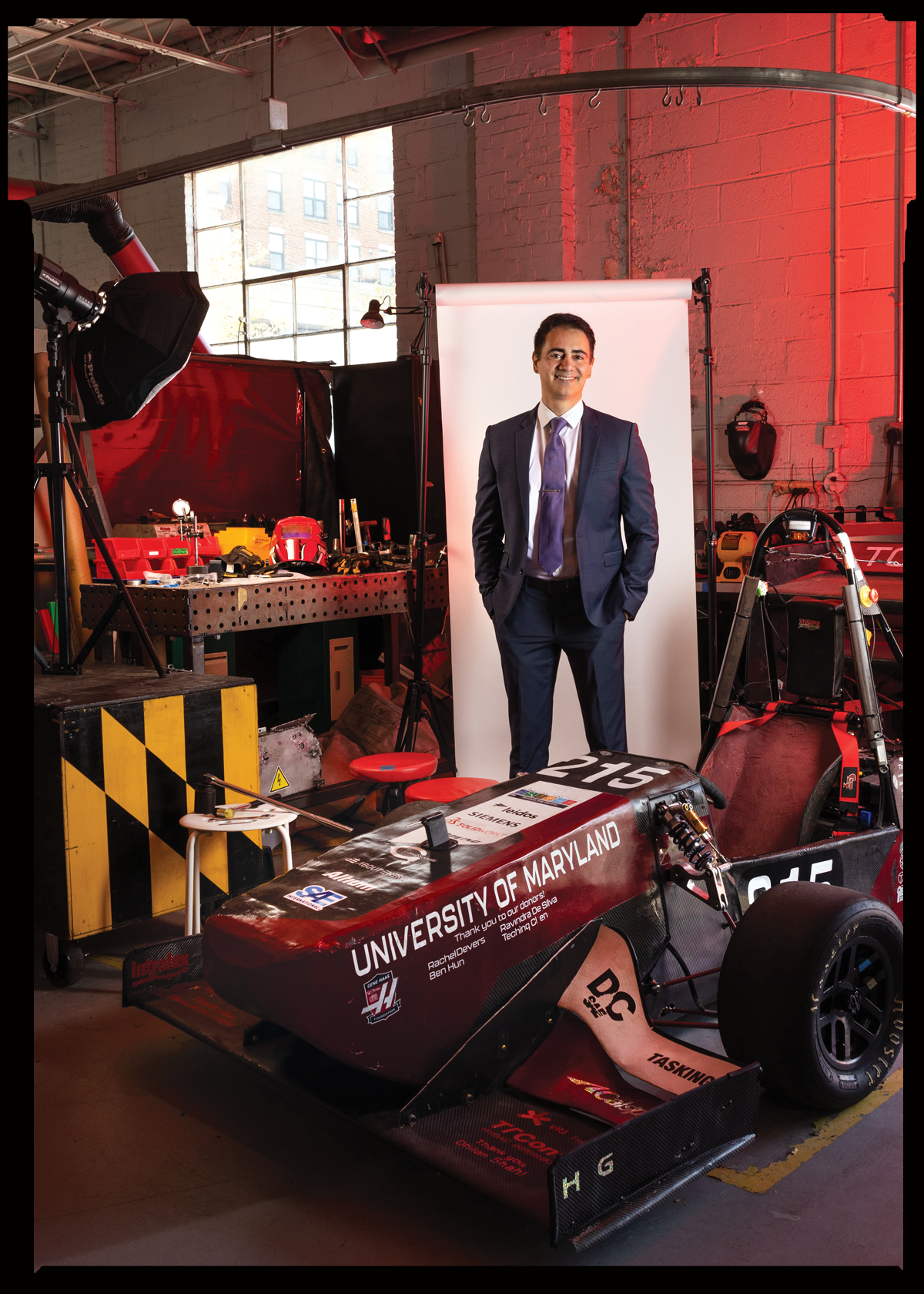
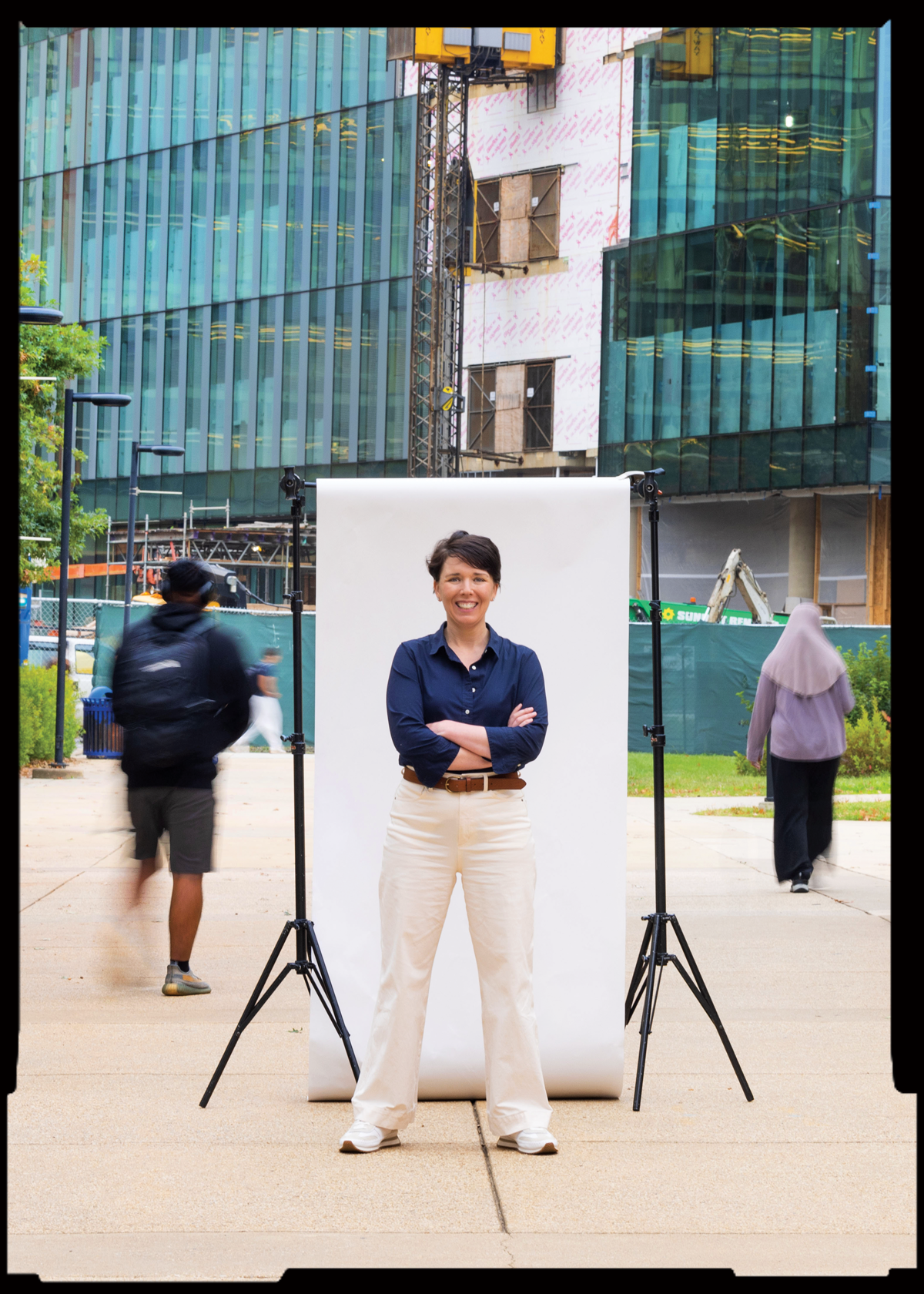
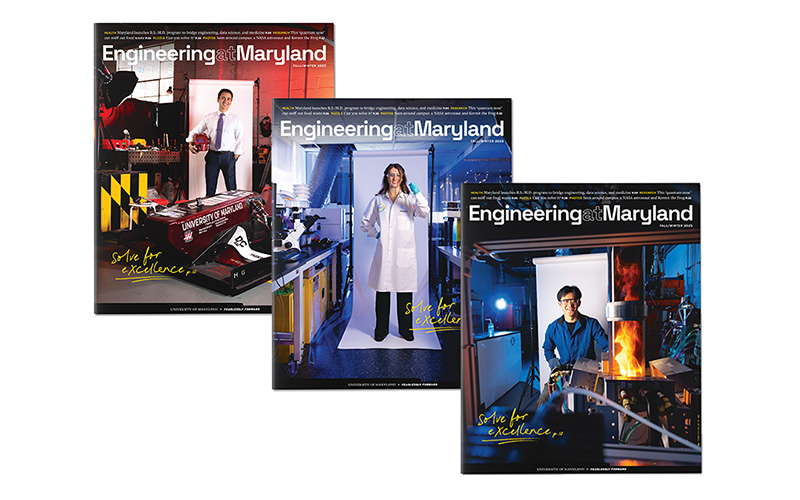
Bailey Felix, Alireza Khaligh, and Colin Chen (left to right) are three leading researchers featured here who represent the multiplicity of disciplines, expertise, experiences, and contributions made by Maryland engineers.
Story by Erin Peterson
Blasting off a rocketship to Mars—or protecting the boiler in your basement from breaking down—requires engine and pipe metals capable of withstanding extreme conditions, like punishing temperatures and intense pressure.
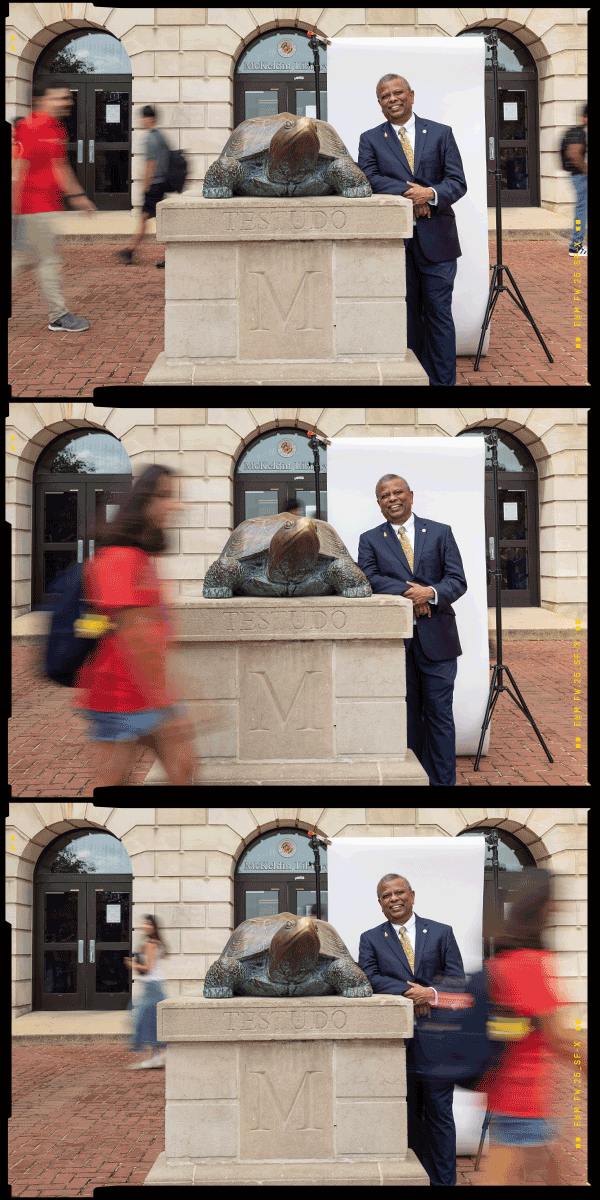
Professor Sudarsanam “Suresh” Babu, with Testudo, in front of the McKeldin Library on the University of Maryland campus. (Photo by John T. Consoli)
To know what it takes to make those metals more resilient, you’ll need Sudarsanam “Suresh” Babu. A professor in the University of Maryland’s Department of Materials Science and Engineering, Babu pairs atom-level insight with hands-on manufacturing experience to turn theory into real-world solutions. (In one project, he and students at the University of Tennessee collaborated with an aerospace company to develop a 3D-printed motor housing for a rocket engine that could tolerate the extreme cold of its fuels: liquid nitrogen and liquid oxygen.)
Babu has rare and valuable expertise honed at prestigious universities in India, England, and Japan. A member of the National Science Board’s class of 2020–26, he held senior technology positions in industry before landing a faculty role at Tennessee and Oak Ridge National Laboratory, America’s largest multi-program science and technology laboratory.
He is the kind of expert and enthusiastic collaborator that universities, industry, and governments dream of having on their teams: No matter where he’s been, recruiters have come calling.
But it was Maryland Engineering that most piqued his interest.
Maryland is known for its excellence in materials science, and he saw tantalizing opportunities to leverage the school’s proximity to federal research agencies—and his own unrivaled Rolodex of top-tier engineers worldwide—for building collaborative relationships across sectors and accelerating promising ideas.
Those advantages, paired with an offer to become a Clark Distinguished Chair (an endowed role created as part of the A. James & Alice B. Clark Foundation’s transformational $219.5 million investment in UMD and the A. James Clark School of Engineering in 2017), helped bring Babu to College Park in early 2025.
He’s wasted no time making progress—teaming up with Maryland colleagues in chemistry and mechanical engineering, and dreaming up new ideas in areas where Maryland has cutting-edge strengths, including quantum computing and artificial intelligence (AI). “I’m passionate about building coalitions of industry, academics, and agencies,” he says. “I’m also excited about the ways we can employ new technologies into advanced manufacturing.”
Babu represents just one facet of a much larger, high-impact strategy launched by the Clark Foundation’s landmark 2017 investment that includes an array of need-based scholarships, graduate fellowships, distinguished faculty chairs, and operational and capital projects. The big vision has seen great returns and created new, tangible momentum for engineering progress on important societal challenges, from sustainable energy to space exploration.
Maryland Engineering is sustaining pioneering programs, harnessing powerful new technologies and spaces, and attracting exceptional people with the ambition and expertise to “solve for excellence”—all while addressing some of the world’s grand challenges.
Here’s exactly what that looks like.
Drug Delivery: Targeting Cancer with Robotics and 3D-Printing
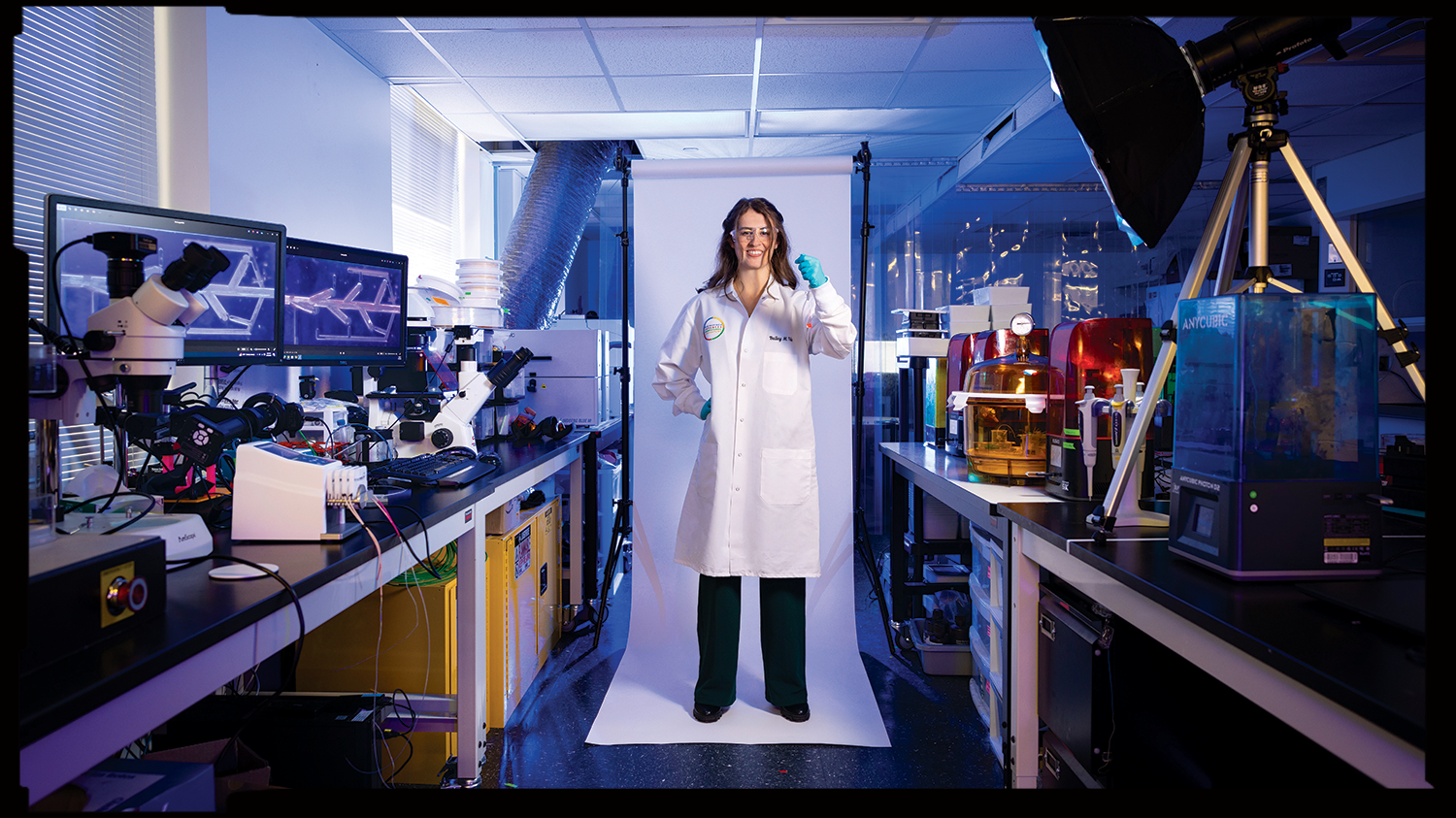
Bailey Felix, bioengineering Ph.D. candidate and Clark Doctoral Fellow, holds a 3D-printed microcatheter in Associate Professor Ryan Sochol's BAM Lab. (Photo by John T. Consoli)
CANCER'S GROWING TOLL: Global deaths from liver cancer are expected to increase by more than 55 percent by 2040. In the U.S. alone, cases have tripled and deaths have doubled since 1980.
ENGINEERING THE SOLUTION: Assistant ProfessorRyan Sochol, and interim director of the Maryland Robotics Center, is developing steerable microcatheters that can deliver life-saving chemotherapy to increasingly targeted locations in the body.
PROOF POINT: Systemic chemotherapy isn’t just devastating to cancer cells; it can also damage healthy tissues and cause devastating side effects. That’s why researchers including bioengineering Ph.D. candidate and Clark Doctoral Fellow Bailey Felix are aiming to deliver the powerful treatments with new levels of precision.
Felix is teaming with Sochol and doctors at Johns Hopkins University and the University of Maryland School of Medicine to 3D-nanoprint robotic microcatheters that can be steered through tiny blood vessels to deliver chemotherapy directly to cancerous liver tumors.
The devices, which are about as thin as a credit card, offer tantalizing new possibilities for ultra-targeted drug delivery. “The closer we can get to the tumor, the fewer the side effects, the more effective the treatment, and the better the outcome,” she says.
Felix loves being able to work on these ambitious goals that have direct outcomes on patient care and is grateful for the opportunity to advance medical device research under Sochol’s advisement. She says the Clark Doctoral Fellowship helped her land there, giving her the flexibility (and financial breathing room) to find a research lab that truly fit, and that helped her win a National Science Foundation Graduate Research Fellowship, one of the highest honors awarded to U.S. doctoral students. “I feel like I have an advisor who really supports me and wants to see me succeed,” she says.
SOLVE FOR EXCELLENCE: The Clark Doctoral Fellows Program provides attractive funding terms to talented graduate researchers, elevating the caliber and output of Maryland’s most innovative research.
The Man Behind the Vision
The Terp engineer who turned business success into philanthropy aimed at solving global challenges
A. James “Jim” Clark ’50 was known to say that “engineers are among society’s most important problem solvers.”
He believed it because he’d lived it. Clark’s engineering education at Maryland helped him launch an empire in the construction industry: Clark Construction, one of the largest privately held companies in the country that boasts a portfolio of more than 2,000 projects from coast-to-coast. (Among the structures the company would build during Clark’s lifetime included Nationals Park, the National Museum of African American History and Culture, and 29 UMD campus buildings such as the Jeong H. Kim Engineering Building.)
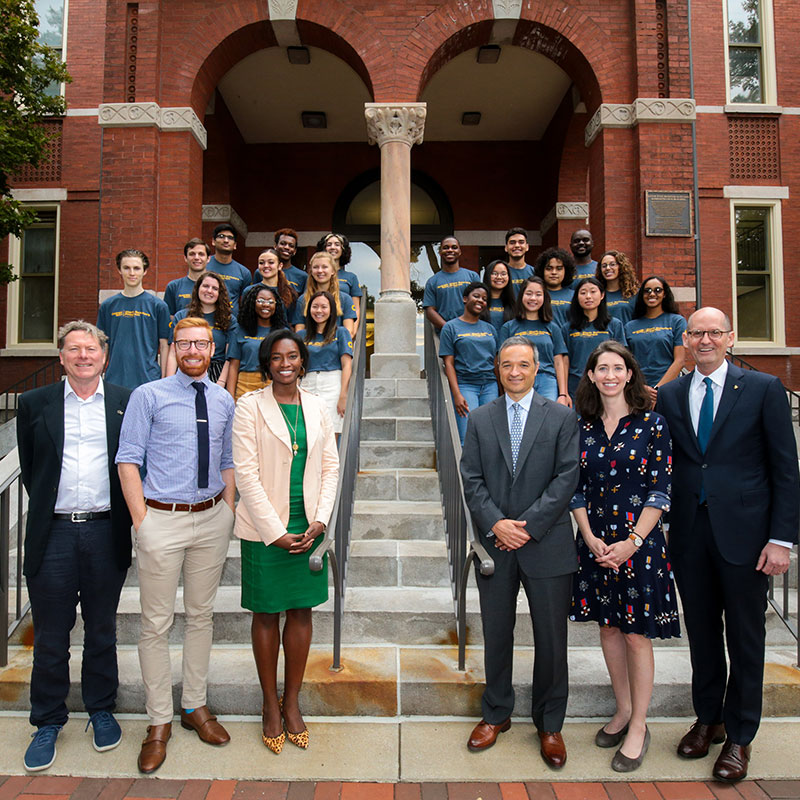
His experiences and success motivated him to become a transformational philanthropist with education as a top priority. As his business grew, so did his philanthropy: In 2017, the A. James & Alice B. Clark Foundation invested $219.5 million in UMD. The mission of Building Together: An Investment for Maryland was clear: leverage the university’s strengths to inspire the next generation of engineering leaders, and spark innovations that tackle today’s most daunting problems.
“Mr. Clark was a visionary who never lost the connection to his local community. He was influenced by the investment made in him through a state scholarship and, in turn, invested his own resources to help others achieve their dreams,” says Clark School Dean Samuel Graham. “Like Mr. Clark, the leaders who will build our future are equipped with a problem-solving mindset and a belief in engineering’s power to improve people’s lives. We’re training those leaders here at Maryland Engineering.”
Birth Risks: Engineering Therapies to Prevent Health Risks
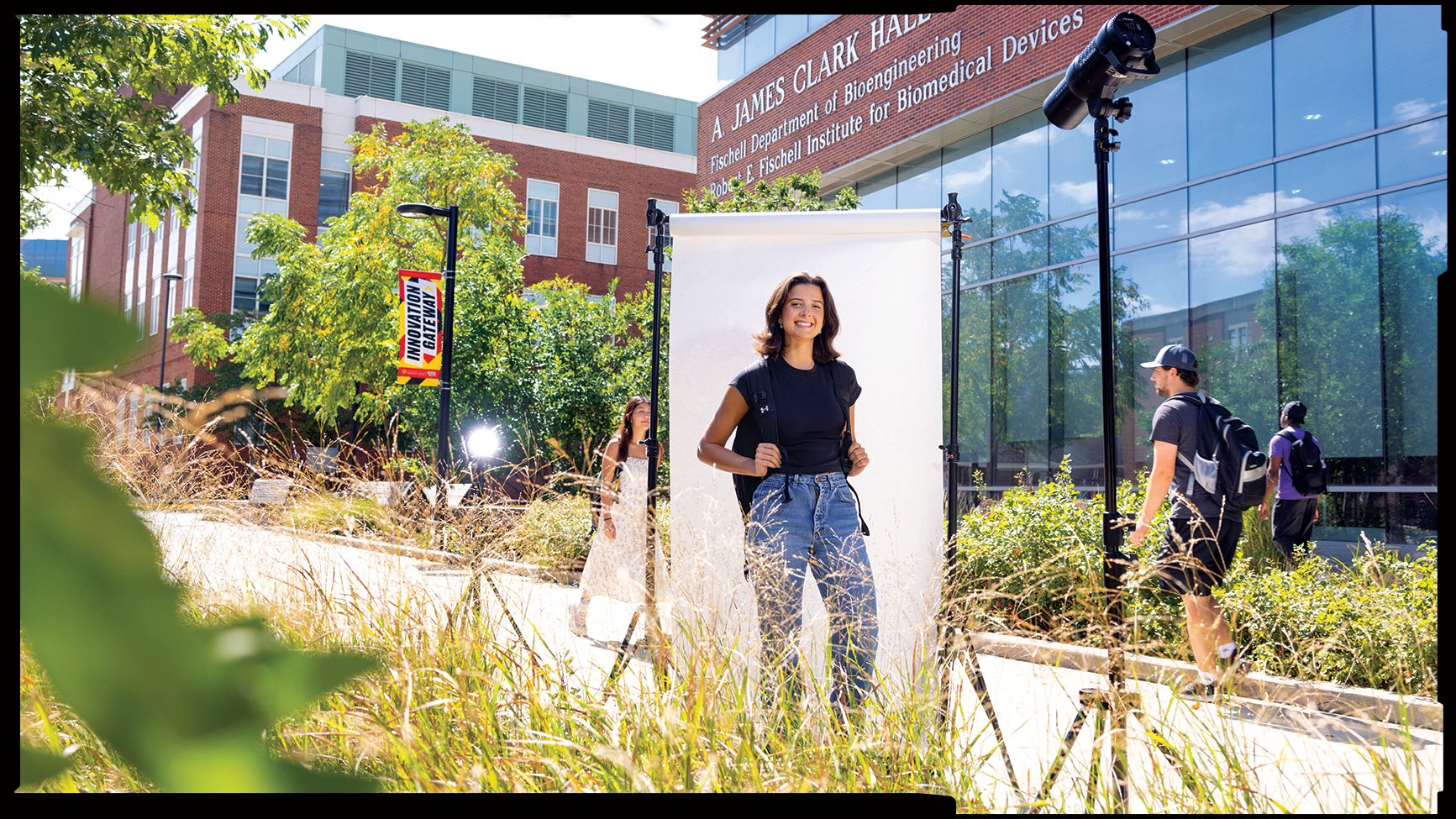
Caroline King, Clark Opportunity Transfer Scholar, poses in front of A. Jame Clark Hall, home to the Fischell Institute for Biomedical Devices. (Photo by John T. Consoli)
BORN TOO SOON: In some countries, up to 16 percent of births are preterm, leading to serious health risks for newborns.
ENGINEERING THE SOLUTION: Chemical and biomolecular engineering Assistant Professor Hannah Zierden leads a team of experts and student researchers developing new therapies to prevent preterm birth and improve health outcomes for parents and babies worldwide.
PROOF POINT:Caroline King was diligently working her way through coursework at Anne Arundel Community College when a chemistry class flipped a switch in her. “I was like, Oh my gosh, this is what I want to do.”
She was eager to take her education further at a four-year university, but costs were daunting. When she learned that her grades qualified her for the Clark Opportunity Transfer Scholars Program at UMD, she leapt at the opportunity. The full-tuition scholarship meant she could completely immerse herself at Maryland, where the senior has since gone on to serve as vice president for the UMD student chapter of the American Institute of Chemical Engineers.
As part of the scholarship, she also completed paid summer research experiences in Zierden’s lab, where she explored chemical and biological mechanisms linked to vaginal drug delivery—work that could lead to more effective treatments to prevent preterm birth.
King recently wrapped up her second summer in the lab with a foundation that she hopes will lead to a career in biopharmaceuticals. “It’s a place I think you can do a lot of groundbreaking work,” she says.
SOLVE FOR EXCELLENCE: The Clark Opportunity Transfer Scholars Program connects talented students from Maryland community colleges with needed funding, enabling them to take advantage of once-in-a-lifetime Terp pathways that empower them to make an impact.
Leadership: Shaping Minds to Think and Lead
INNOVATION BOTTLENECK: The world’s most ambitious companies—whether they’re designing assistive robotics, or reinventing manufacturing—need more than technically sharp engineers. They need talented collaborators who can navigate human and business challenges, too.
Engineering the solution: Training up the next generation of engineering leaders who will help drive innovation in any context doesn’t just happen. Maryland Engineering pairs a technically rigorous curriculum with socially aware, entrepreneurial aptitude.
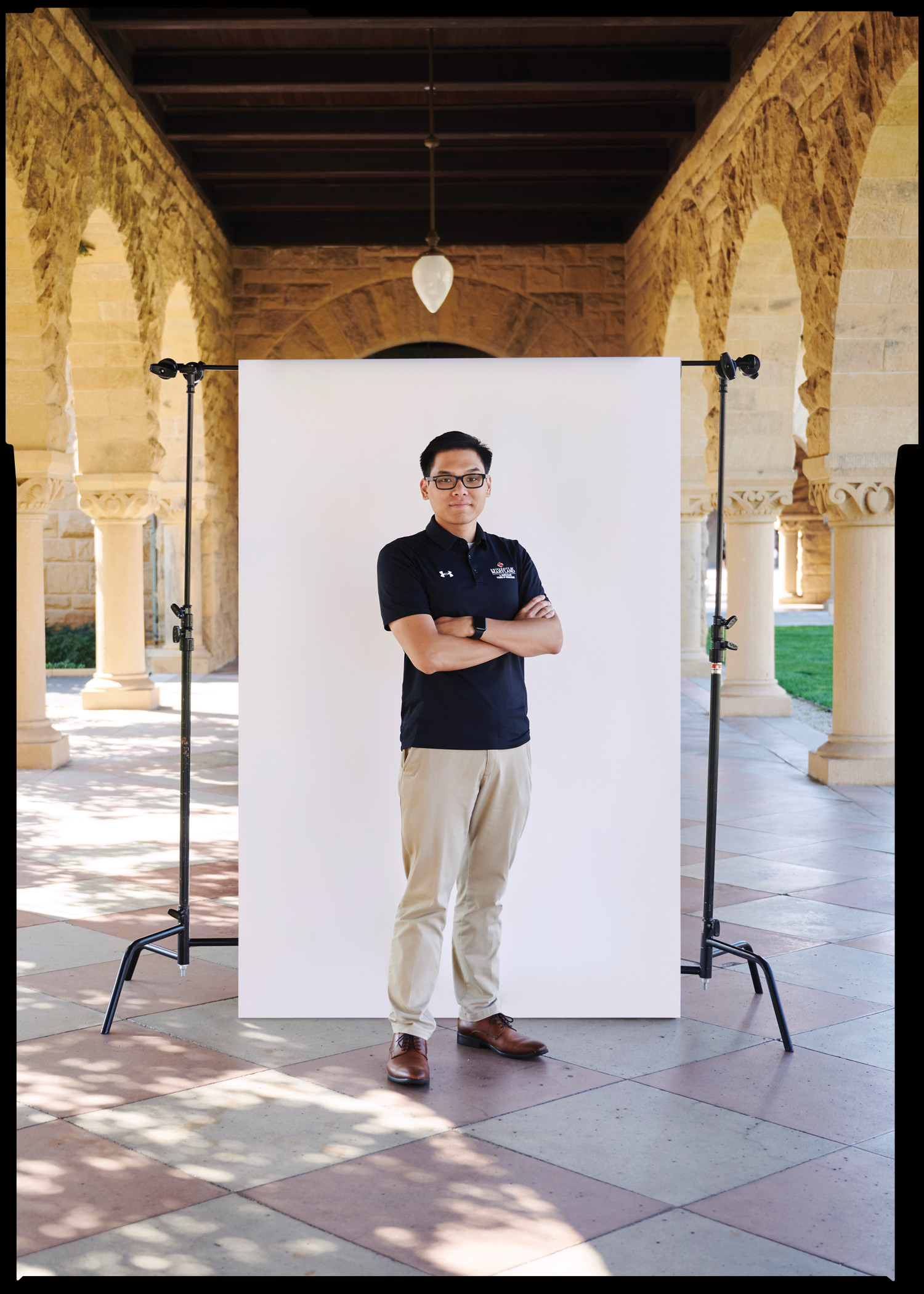
Giuse Pham ’23 stands on Memorial Court at Stanford University. (Photo by Drew Kelly)
PROOF POINT: Giuse Pham ’23 was eager to study robotics and mechanical engineering at UMD, and he was selected for the A. James Clark Scholars Program to pursue it. Pham expected a great education in the classroom, but what surprised him was the skills he gained beyond it.
As a Clark Scholar, he received training in accounting, project management, and engineering leadership, expanding his breadth as an engineer. He designed a bioretention garden for campus with his Clark Scholar cohort. Then, he paired those experiences in an internship at Northrop Grumman, where he used his academic grounding in electronics and mechatronics to improve one of the company’s flow meter systems that ensures the functional integrity of the satellite's critical electronic components.
THE RESULT? Pham’s well-rounded experience earned him a spot at Stanford University’s Assistive Robotics and Manipulation Lab for a master’s degree. At Stanford, he focuses on projects linked to tactile sensing. It’s technology that has earned interest from Amazon Robotics and Toyota Research Institute—and also could be adapted for devices to help older and aging people stay in their homes for longer.
This past summer, he interned with Apple to help advance manufacturing automation in the tech space through the use of robotics.
“Being able to engage in so many different activities at Maryland is one of the reasons I’m here right now,” he says from his sunny apartment at Stanford. “Having the opportunity to go through undergraduate school debt-free, then working toward a career that I’m passionate about, wouldn’t have been possible otherwise."
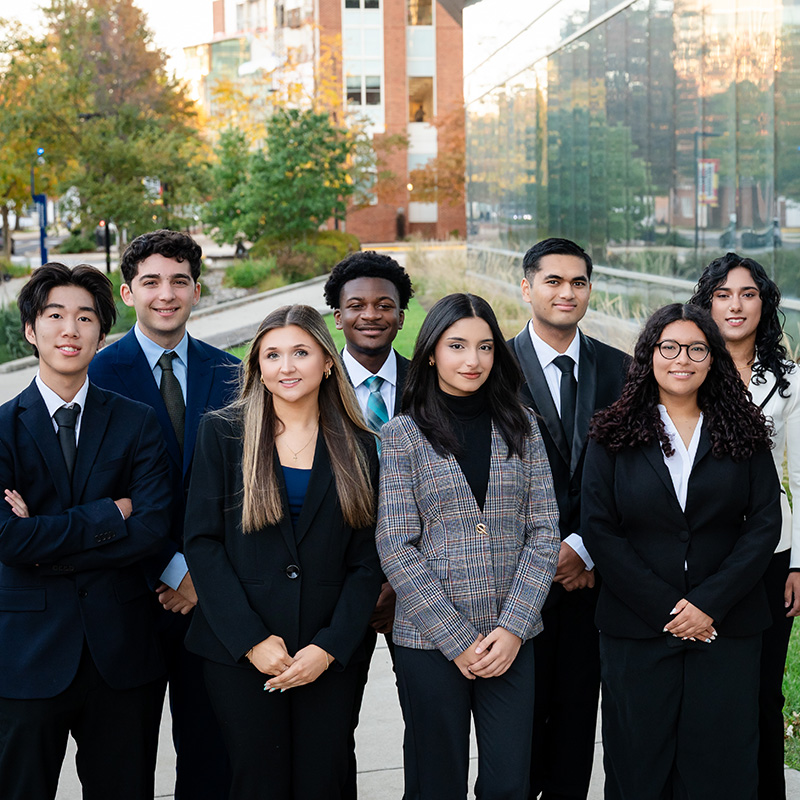
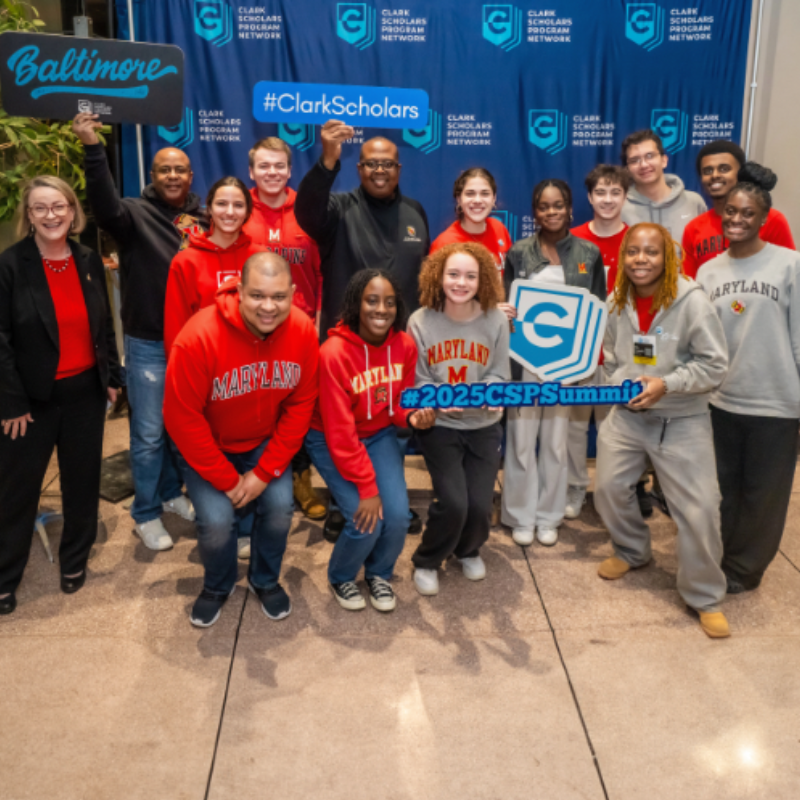
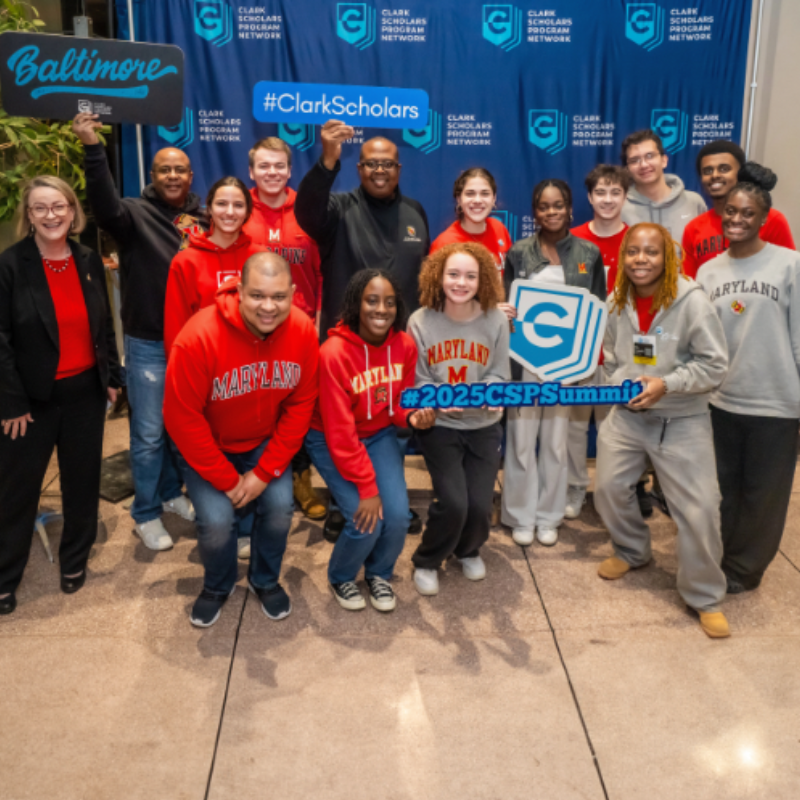
SOLVE FOR EXCELLENCE: The Clark Scholars Program—implemented at 11 of the nation’s top engineering institutions and led by the Clark Scholars Program Network housed at UMD—provides full scholarships to exceptionally talented students, combined with structured learning and projects linked to business, leadership, and community service. The experiences prepare them to succeed at the highest level in companies and organizations doing innovative work.
Clark Scholars … for life
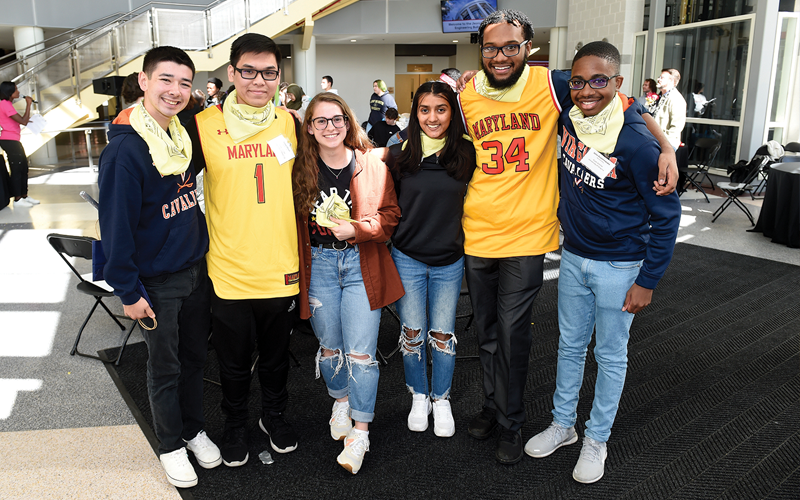
The Clark Scholar experience doesn’t end when students toss their caps at graduation. Alums are invited to return to campus to share their advice with new cohorts of students each year, and encouraged to maintain this network as they advance in the world.
“I value the chance to come back,” says Pham. “I’m happy to share what I’ve learned—and help new students to be as prepared as possible.”
Fire Protection: Engineering Innovative Fire Suppression Approaches
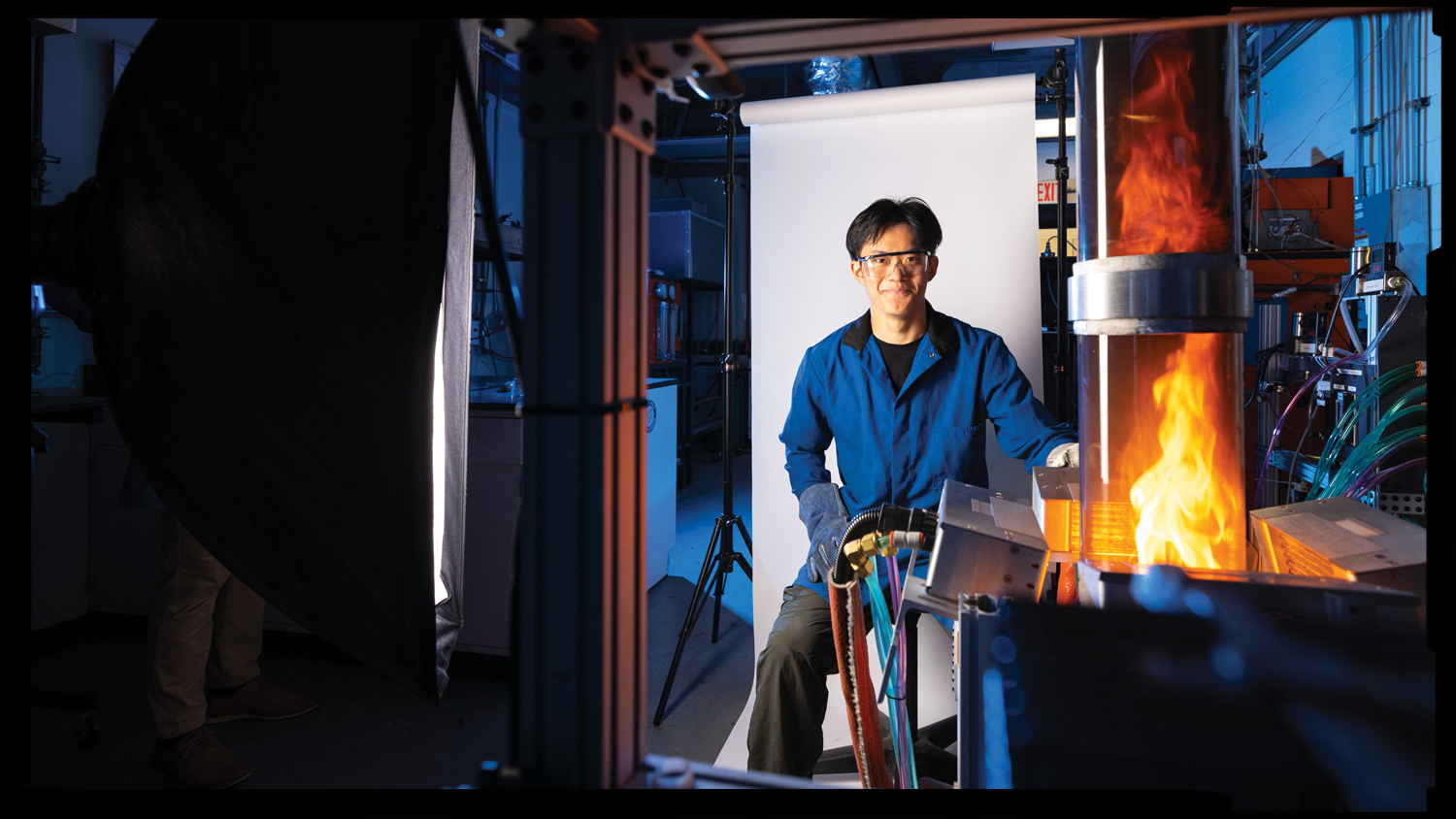
Colin Chen, senior in fire protection engineering, is pictured in UMD's Koffel Associates Fire Standards Laboratory. (Photo by John T. Consoli)
FIRE’S HEAVY TOLL: In 2024, some 68,000 fires burned more than 7 million acres of land in the U.S. alone—and 85 percent of those fires were human-caused.
ENGINEERING THE SOLUTION: Graduates of Maryland’s fire protection engineering program (the only fully ABET-accredited undergraduate program and one of three graduate degree programs in the U.S.) have the expertise and skills needed to reduce fire losses of life and property.
PROOF POINT: When senior Colin Chen was just five years old, his grandfather was killed in a house fire—a devastating event that would years later shape his life. During Chen’s college search, he says, “I didn’t know what kind of major I could confidently pursue, but when I saw fire protection as an option, I was immediately interested.”
His parents, who worked 12-hour days running their own restaurant, couldn’t make significant financial contributions towards his education. However, Chen was able to attend UMD thanks to financial aid including the Linda Gooden and Laird Lott Maryland Promise Scholarship and the William V. Meyers ’61 and Karen A. Meyers ’62 Maryland Promise Scholarship—which allows him to focus more fully on his studies, including class assignments on innovative approaches to fire suppression. It also freed his time to pursue outside projects, like XPRIZE Wildfire. (UMD’s team, Crossfire—which is investigating the use of sophisticated drone systems—was announced in July as one of the competition’s 15 semifinalists.)
Over the past two summers, Chen has completed internships with companies including Arora and GHD, which offer fire protection consulting for airports, offices, and data centers. As he looks ahead, Chen is most interested in designing fire protection systems for buildings and other structures that minimize the risk of fire in the first place. “The deeper I’ve gotten into my major, the more I notice fire protection systems all around me—and the more I understand how they work,” he says. “It’s given me a new perspective.”
SOLVE FOR EXCELLENCE: The Maryland Promise Scholarship Program matches donor gifts in support of need-based scholarships for hundreds of students every year from all majors. Since its launch in 2019, the program has supported 297 Terps.
Rotorcraft: Educating the Next Generation of Professionals
FLYING IN EXTREME ENVIRONMENTS: Military helicopters must land on ships tossed by massive ocean waves in enemy territory; Mars helicopters must navigate a unique and unfamiliar atmospheric gravitational environment. Navigating these seemingly impossible flight scenarios requires advanced technology—and a generation of engineers who have the skills to design for these real-world extremes.
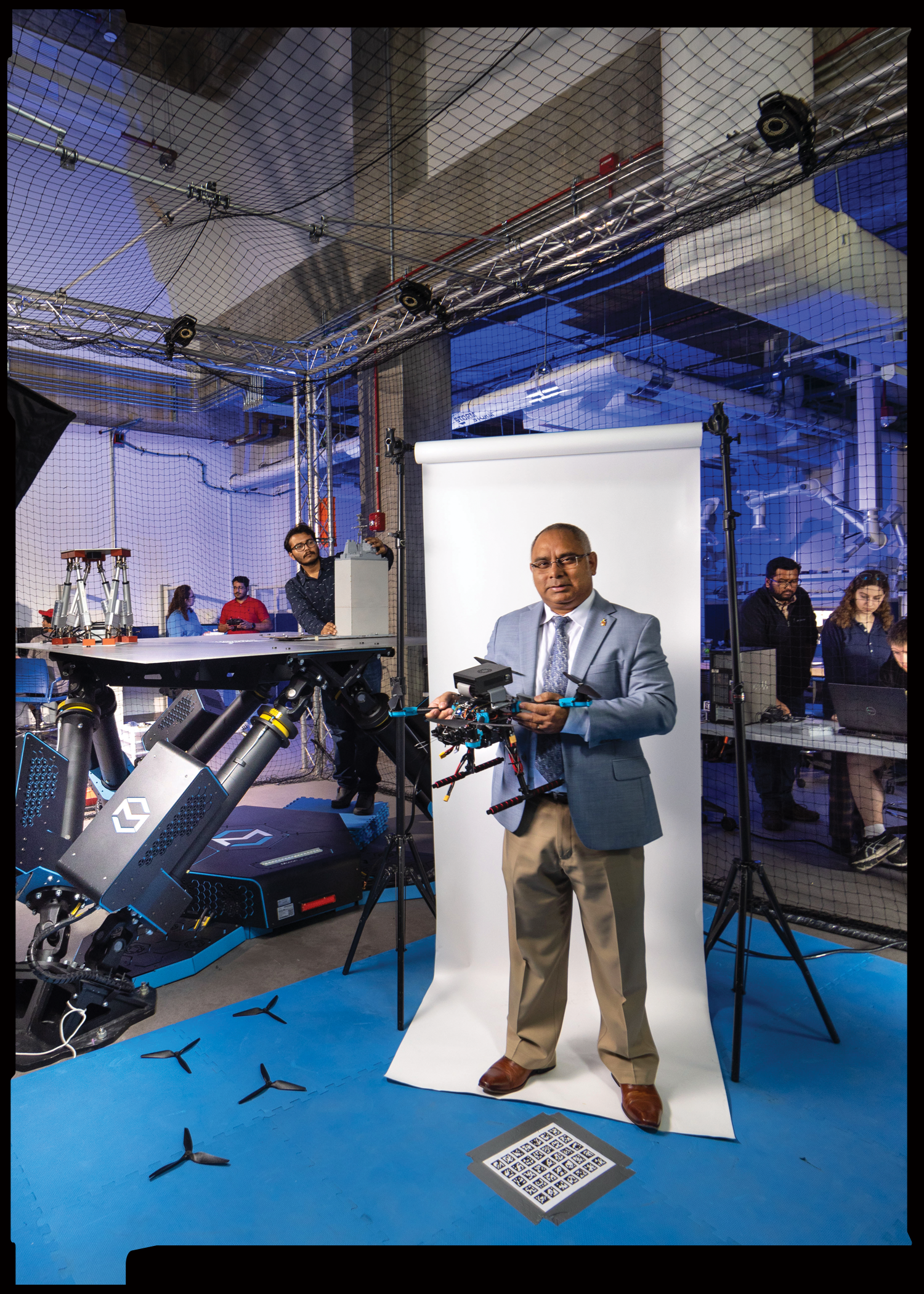
Alfred Gessow Chair in Rotorcraft Engineering Anubhav Datta Ph.D. ’04 is pictured in the UAS and Flight Simulator Laboratory housed in UMD's E.A. Fernandez IDEA Factory. (Photo by John T. Consoli)
ENGINEERING THE SOLUTION: Students and faculty push the limits of flight in the new Lockheed Martin Rotorcraft Labs: a massive indoor facility complete with rotor rigs, motion platforms, an unmanned aircraft systems flight facility, and augmented- and virtual-reality-based flight simulators within the three-year-old E.A. Fernandez IDEA (Innovate, Design and Engineer for America) Factory.
PROOF POINT: Alfred Gessow Chair in Rotorcraft Engineering Anubhav Datta Ph.D. ’04 worked on some of the most vexing problems in flight during his time with the U.S. Army at NASA’s Ames Research Center. But he admits that some of the most difficult of all challenges weren’t technical or even financial: “We could not find the right people to hire,” he acknowledges. So in 2016, he returned to his alma mater to help develop the next generation of talented rotorcraft engineers.
Making that job easier is the IDEA Factory, a 60,000-square-foot building that houses some of the most advanced rotorcraft facilities in the field, including ship deck landing platforms, the Maryland Tilt Rotor Rigs, haptic flight simulators, and the High Performance Rotorcraft Computational Fluid Dynamics Laboratory.
Today, graduate students are designing special blades that perform in the low-gravity challenges of the Mars environment, and using the lab to simulate high-stakes helicopter landings on moving ship decks.
Such preparation helps train students for further research—and also makes them ideal candidates for companies and other organizations hungry for experienced experimental engineers, says Datta, including Lockheed Martin, Sikorsky, Boeing, Bell, NASA, and the Department of Defense.
SOLVE FOR EXCELLENCE: The IDEA Factory’s showstopping design, paired with equipment and spaces found in few other institutions, has provided faculty and graduate students what they need to take their ideas as far as they can go.
Powered by Generosity
The E.A. Fernandez IDEA Factory—the only building at UMD funded entirely by private philanthropy—is also home to the Maryland Robotics Center, Quantum Technology Center, xFoundry, and Startup Shell, a student-run startup incubator.
Biotechnology: Solving Deadly Risks Quickly and Accurately
Associate Professor Amy Karlsson and Wright Makambi ’19, Ph.D. ’24 in the Karlsson Lab, housed in the Chemical and Nuclear Engineering Building. (Photo by Stephanie S. Cordle)
THE DEADLY RISKS OF EVERYDAY INFECTIONS: Oral thrush—a common but uncomfortable infection in young children that can make it difficult to eat and swallow—can have serious and even life-threatening consequences for older or immunocompromised individuals, such as cancer patients. Antifungal-resistant strains pose even greater risks.
ENGINEERING THE SOLUTION: In the Department of Chemical and Biomolecular Engineering, Associate Professor Amy Karlsson engineers proteins and peptides to make them deadlier to Candida albicans, the yeast that causes oral thrush.
PROOF POINT:Wright Makambi ’19, Ph.D. ’24 loved the protein engineering class he took with Karlsson as a UMD undergraduate, and knew that he wanted to contribute to the biotechnology field. Still, he was torn between industry and graduate school—until Karlsson mentioned that he could receive tuition remission and be paid to pursue a Ph.D. “I was like, Wait, are you serious? I don’t need to get a loan?” he says, flashing back to the conversation that changed everything. “It was a no-brainer.”
Through a Clark Doctoral Fellowship, Makambi made the most of his time in the program: He published multiple papers, he mentored two undergraduates, and he served on the Chemical and Biomolecular Engineering Graduate Student Association.
Today, as a postdoctoral associate at UMD’s Institute for Bioscience and Biotechnology Research, Makambi supports AI-linked projects designed to help researchers identify the next generation of germ-fighting antimicrobial peptides more quickly and accurately. He dreams of one day turning his best research into a commercial venture. “I hope to come up with an idea that’s not only well-received in academia, but also has potential in the business world,” he says.
SOLVE FOR EXCELLENCE: The Clark Doctoral Fellows endowment increases research productivity and graduates outstanding Ph.D.s every year, helping Maryland Engineering attract and train outstanding innovators who create breakthroughs.
Transportation: Developing Clean Emissions with Speed
TRANSPORTATION’S TOXIC TOLL: Passenger vehicles account for more than 16 percent of the U.S.’ annual greenhouse gas emissions tally. They also spew toxic chemicals including carbon monoxide, sulfur dioxide, and formaldehyde.
Professor Alireza Khaligh with the Terps Racing formula EV car in UMD's Cypress Building. (Photo by John T. Consoli)
ENGINEERING THE SOLUTION: Coursework and labs focused on electric vehicle (EV) design—and a Formula EV Terps Racing team—tap into enormous student interest in cleaner, innovative transportation.
PROOF POINT: When electrical and computer engineering Professor Alireza Khaligh launched an advanced design lab and capstone design project on EVs in 2018 (with the support of an Mpact Challenge grant), the interest was immediate and massive. “They were among the most popular courses I’ve taught,” he recalls.
A related Formula EV addition to the Terps Racing team was just as well-received: Students were so passionate about their vehicle that they often sent Khaligh photos of themselves power-napping in the Cypress Building during all-night work sessions. During the first year alone, Khaligh estimates that more than 70 students participated in a class, on the team, or both.
And while students love Terps Racing on its own merits, it’s also a résumé builder that often makes students irresistible hires. “If you’ve got that Formula EV line in your résumé, you’re getting interviews for sure at major car companies like Tesla, GM, and Ford,” Khaligh says.
SOLVE FOR EXCELLENCE: The Mpact Challenge, which commemorated the Clark School’s 125th anniversary in 2019, incentivized students and faculty who mapped out clear plans to advance a technology, create something new, or solve a major societal challenge with funding—and the spirit of friendly competition. The one essential ingredient? Speed. All projects needed to be completed within two years.
Disaster Aid: Advocating for Resilient Rebuilding Efforts
Associate Professor Allison Reilly is seen in front of the new Zupnik Hall, the future home of UMD's Department of Civil and Environmental Engineering. (Photo by John T. Consoli)
MONEY FOR NOTHING? When communities rebuild after disasters without strengthening their infrastructure, history threatens to repeat itself.
ENGINEERING THE SOLUTION: Associate Professor Allison Reilly’s study of disaster-aid policies is helping pinpoint effective strategies to encourage communities to minimize future damage after extreme weather events by strengthening critical infrastructure.
PROOF POINT: Funding that pays for the reconstruction of a washed-out road after a major storm flood might seem like a lifeline for a community—until a similar storm wipes it out again a few years later.
In the Department of Civil and Environmental Engineering, Reilly explores how to encourage smarter rebuilding. For instance, it might make more sense for the federal government to require that a reconstructed road be elevated—or to incentivize smarter design through adjusted insurance premiums. “We’re trying to understand if there are different types of financial or policy structures that, through mitigation and risk reduction, can lead everyone to be better off,” she says.
SOLVE FOR EXCELLENCE: Reilly says the new Stanley R. Zupnik Hall will make it easier for her students to collaborate on these kinds of big ideas in an inspiring, fully equipped environment; Zupnik Hall will also serve as a home base for visiting scholars to share their research and collaborate with Maryland experts and students. ┅ M
Take Your Fearless Idea Forward
Together, we can build real opportunities for tomorrow’s trailblazers—along with the many lives they will touch.
JOIN US.
Contact: Jennifer L. Schwartz, Chief Development Officer and Assistant Dean for Advancement
Phone: 301-405-0317 | Email: jschwar2@umd.edu
This page is adapted from the feature story in the Fall/Winter 2025 issue of Engineering at Maryland magazine. Learn more about the ways Maryland engineers are built for the breakthrough and explore the impact of their research in the current and previous issues.