Beaudoin, Brian

-
H. McCright, I.G. Abel, I. Haber, P.G. O'Shea, B.L. Beaudoin, "First Observation of Dispersive Shock Waves in an Electron Beam," arXiv:2510.19786 [physics.acc-ph]
-
Measurements of fusion yield on the Centrifugal Mirror Fusion Experiment

John Leland Ball, Shon Mackie, Jacob van de Lindt, Willow Morrissey, Artur Perevalov, Zachary Short, Nick Raoul Schwartz, Timothy W Koeth, Brian Beaudoin, Carlos Romero-Talamas, John E Rice and Roy Alexander Tinguely
-
Investigating beam dynamics with measurement-driven initialization
Liam A. Pocher, Shiyi Wang, Kevin L. Hermstein, Brian L. Beaudoin, Dan T. Abell, Thomas M. Antonsen, Irving Haber, Patrick G. O'Shea
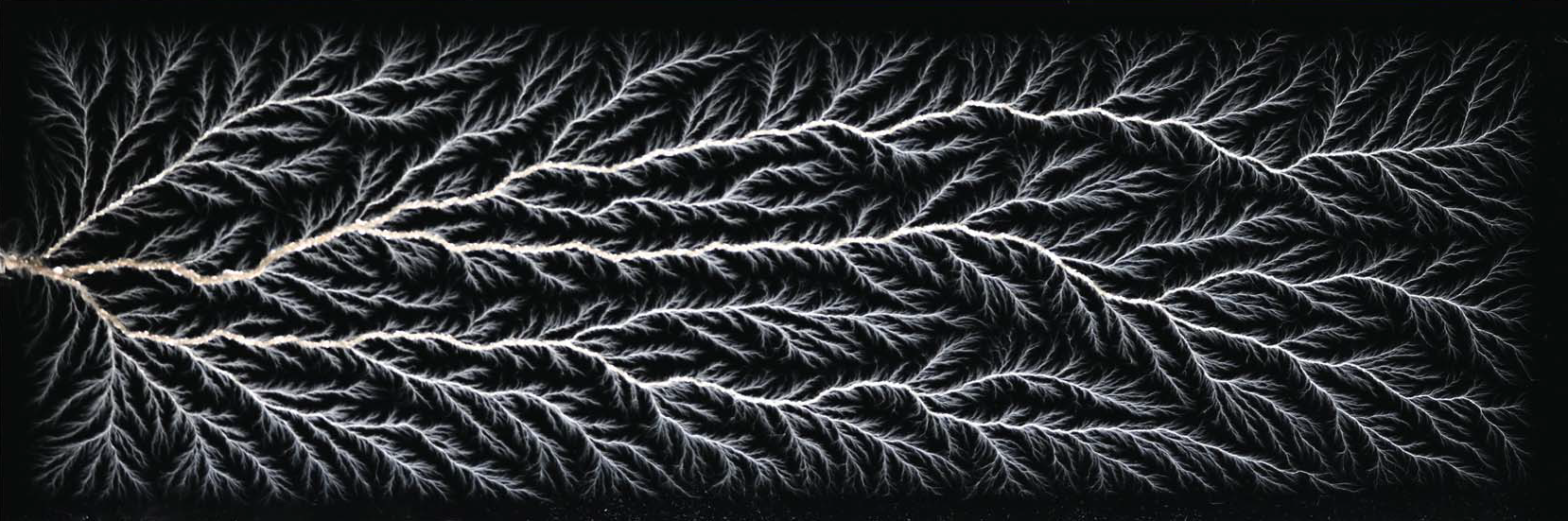
Centrifugal Mirror Fusion Experiment (CMFX)
IREAP's CMFX Group, under the direction of Professor Carlos Romero-Talamás (IREAP, UMBC) and Professor Brian Beaudoin (IREAP) will be featured on the APS TV Youtube channel at this year's APS March meeting.
Centrifugal Mirror Fusion Experiment receivies funding through BETHE program at ARPA-e
Centrifugal Mirror Fusion Experiment receives funding through BETHE program
Curriculum Vitae, Orcid: 0000-0001-9935-4658, Google Scholar
TEACHING AND MENTORING in ECE and the Keystone Program

As an Associate Research Professor, I created a new capstone course in 2023 called ENEE408J, "Audio Electronics Engineering." This course teaches 4th-year undergraduates the theory and experimental implementation of audio electronics that covers various implementations of filters/effects with multi-channel audio amplifiers, digital signal processing, electromagnetics, and physics of the various transducers, room acoustics, etc. The course has been taught in the spring of 2023, 2024 and will be offered in 2025.
I'm also teaching ENES100, "Introduction to Engineering Design" this fall 2024. This course provides new engineering students with a roadmap to becoming a professional engineer. This is achieved through the planning, investigation, design, manufacturing, assembly, and evalulation of a product, conducted within the context of a team.
I have also co-created a capstone course and offered it every spring semester (from 2016-2022), ENEE408T, "Building the 5 MeV Cyclotron." This course educates 4th-year undergraduates in the theory and operation of a particle accelerator known as the cyclotron. The students learn the fundamentals of the machine, and how to simulate various aspects of the machine: from the magnetic and RF fields to the particle dynamics. The course was taught in the spring semesters from 2016-2022.
I also continue to volunteer as an instructor for the United States Particle Accelerator School (USPAS). This 1-2 week school ventures around the country educating anyone interested in particle accelerators as well as the various subsystems. I have co-taught "Fundamentals of Accelerator Physics and Technology with Simulations and Measurements Lab", "Cyclotrons", "The effect of radiation on electronics and materials".

RESEARCH EXPERIENCES FOR UNDERGRADUATES (REU)-MENTOR FUNDED
by the National Science Foundation 
TREND 2012 – Carlos Blanco, Purdue University, Non-Linear Wave Dynamics in Charged Particle Beam Systems
TREND 2014 – Jared Ginsberg, Cornell University, Modeling and Characterization of Soliton Trains in an Electron Beam
TREND 2017 – Joseph Betz, Widener University, X-band Microwave Accelerating Cavity
TREND 2018 – Kathleen Hamilton, University of Maryland, Longitudinal RF Confinement in UMER
TREND 2020 – Ambar C. Rodriguez Alicea, University of Puerto Rico, Predicting Cross-section Images of Particle Beams for UMER Using Neural Networks
TREND 2021 – William Matava, University of Texas at Austin, Design and Simulations of a Small-Scale Electron LINAC
TREND 2022 – Ariana Bussio, University of Maryland, Compact Ion Generation, Focusing & Filtering for Nuclear Decay Studies
TREND 2024 – Cheyenne Valles, University of Texas at San Antonio, Nonlinear Effects of Laser Beatwave Wakefield Acceleration Near Critical Density for Weakly Relativistic Intensities in 1-D
GEMSTONE HONORS PROGRAM-TEAM CHARGEX-MENTOR
I also mentor a small, selected group of students enrolled into the University of Maryland College Park program, known as the Gemstone Honors Program. The group I mentor is called "ChargeX" and they are interested in developing novel devices that could be used to charge electric vehicles and electric boats. I mentor them weekly to ensure their project stays on track with Gemstone deadlines. This mentoring occurs over a period of three years where I start working with the students in their 2nd year and by the time they graduate in their 4th year, they present an undergraduate thesis and a full report that includes all the work they have done. I assist the students with this report, both in editing and guiding them with the content.