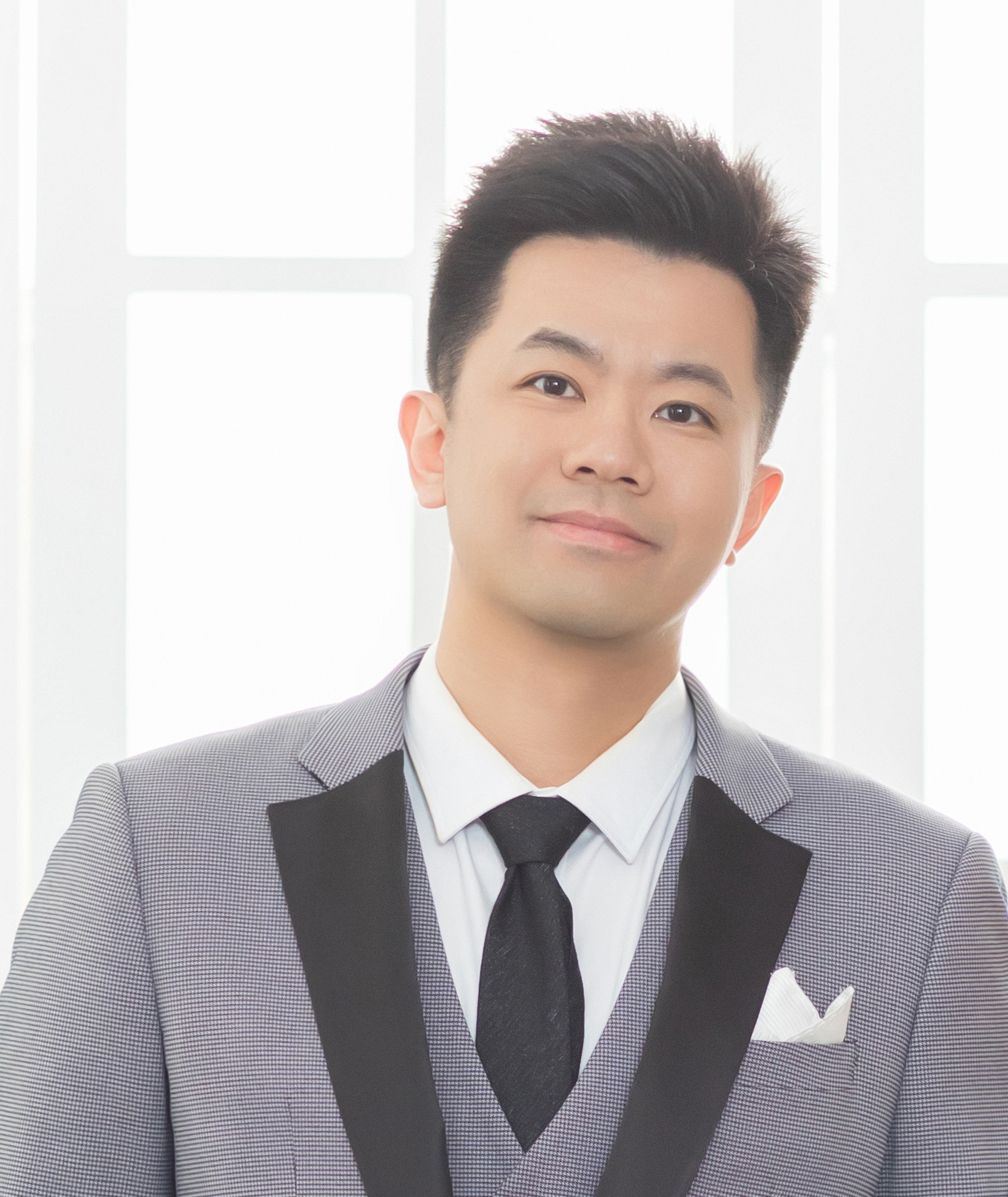
Chen, Po-Yen
Maryland Robotics Center
The Institute for Systems Research
Maryland Energy Innovation Institute
Electrical and Computer Engineering
Dr. Po-Yen Chen is an Associate Professor in the Department of Chemical and Biomolecular Engineering at the University of Maryland, College Park (UMD), with an affiliate appointment in the Department of Electrical and Computer Engineering. He is also a core member of the Maryland Robotics Center (MRC) and the Artificial Intelligence Interdisciplinary Institute at Maryland (AIM). Dr. Chen earned his B.S. in Chemical Engineering from National Taiwan University (NTU) and his Ph.D. in Chemical Engineering from the Massachusetts Institute of Technology (MIT). Prior to joining UMD, he served as an Assistant Professor at the National University of Singapore (NUS) and conducted independent research as a Hibbitt Early Career Fellow at Brown University.
Awards & Honors
- 2026: Honoree, Taiwan’s 64th Ten Outstanding Young Persons Award, Special Award for Overseas Chinese Youth, 第64屆十大傑出青年・華裔青年特別獎
- 2026: Winner, IC Taiwan Grand Challenge (Leafy Lab; team award)
- 2026: Allan P. Colburn Memorial Lecturer, Department of Chemical and Biomolecular Engineering, University of Delaware
- 2026: Maryland Research Excellence Honoree, University of Maryland, College Park
- 2025: Maryland Research Excellence Honoree of UMD
- 2024: Shining Star Award, American Institute of Chemical Engineers (AIChE)
- 2023: Winner of UMD’s Invention of the Year Award (Information Sciences)
- 2023: Faculty–Student Research Award (FSRA) of UMD
- 2023: Young Innovator Award by Nano Research, Springer
- 2022: John C. Chen Young Professional Leadership Scholarship, AIChE
- 2022: Innovative Early-Career Engineers, National Academy of Engineering (NAE)’s U.S. Frontiers of Engineering Symposium
- 2022: Finalist of UMD’s Invention of the Year Award (Information Sciences)
- 2021: Member of Global Young Academy (GYA)
- 2020: AIChE 35 Under 35 Award, AIChE
- 2020: Innovator Under 35 in Asia, MIT Technology Review (MITTR)
- 2020: Inspiring Research Mentor Award, NUS High School of Mathematics & Science
- 2019: Outstanding Young Principal Investigator Award, AIChE Singapore Local Section
- 2019: Emerging Investigator, J. Mater. Chem. B, Royal Society of Chemistry, UK
- 2018: A*STAR AME Young Investigator Award, A*STAR, Singapore
- 2015: Hibbitt Early Career Fellowship, Brown University, USA
- 2014: MIT-Eni Energy Fellowship, MIT, USA
- 2013: National Study Abroad Fellowship, Taiwan
- 2011: MIT-Eni Energy Fellowship, MIT, USA
- 2009: Dr. An-Tai Chen Scholarship (Best Undergraduate Researcher), NTU, Taiwan
- 2009: Presidential Awards (Top 5% Undergraduates), NTU, Taiwan
Dr. Chen’s research brings together machine learning, robotic experimentation, and materials science to accelerate the discovery of functional and sustainable materials. His group connects predictive and generative models with experimental fabrication and testing to understand how composition, structure, and processing shape material performance.
The group focuses on challenges that require balancing multiple properties, often with limited experimental data. By combining automated experimentation, active learning, data augmentation, and model interpretation, the team develops workflows for designing materials with properties tailored to practical needs.
Research areas
- AI for sustainable materials discovery: Biobased plastic substitutes and food packaging designed to balance mechanical performance, barrier properties, and produce preservation.
- Machine learning for data-sparse experiments: Predictive models, active learning, and data augmentation that guide material selection and experimental design.
- Programmable materials for electronics and soft robotics: Conductive aerogels, stretchable sensors and electrodes, and mechanically engineered surface architectures.
- Nanoconfined synthesis and assembly: Metal nanocrystals and 2D-material heterostructures for catalytic and multifunctional applications.
Dr. Chen’s teaching connects chemical engineering fundamentals with data science, machine learning, and robotic experimentation. His courses combine collaborative problem solving, computational projects, and hands-on laboratory activities to help students apply engineering principles to practical challenges.
Courses taught
- CHBE 426: Chemical and Biomolecular Separation Processes Analysis and design of separation processes using equilibrium and mass-transfer principles, including distillation, gas absorption, liquid extraction, adsorption, and ion exchange. Learning activities include group process-simulation projects, interactive discussions, and in-class separation demonstrations.
- CHBE 452/652: Introduction of Machine Learning in Chemical Engineering An undergraduate and graduate elective connecting data science and machine learning with chemical engineering and materials science. Students gain experience with robotic sample preparation, automated characterization, and predictive modeling, complemented by student-led journal discussions and interviews with researchers and industry professionals.
Research mentoring
Dr. Chen mentors undergraduate, master’s, and doctoral researchers through independent research, thesis projects, and interdisciplinary teamwork. He served as a faculty mentor for a UMD Gemstone Honors team from 2021 to 2024.
Please see our full publication list on Our Group Website or Google Scholar.
In the publication list below, * indicates the corresponding author, and ^ marks equal contribution. My name is underlined, and contributions from my Ph.D., master’s, and undergraduate students are marked with #.
REPRESENTATIVE PUBLICATIONS
- Y. Li^,#, T. Chen^,#, P. Ma^, T.-C. Chung#, B. Zhou, L. Wu, A. R. Golatkar, S. Mukta, J. M. Little#, H. C. Whitley, Y. Luo, Q. Wang, G. Curtzwiler, L. Hu, T. Li, P.-Y. Chen*, “Sustainable biobased packaging via integrated robotics/machine learning workflow for improved postharvest preservation.” Science Advances 12, eaef6378 (2026). Link
- S. Shrestha^,#, Y. Li^,#, N. U. T. Le, P.-Y. Chen*, “Predictive discovery of sustainable biopolymers for circularity by design.” Chem Circularity 1, 100070 (2026). Link
- H. Yang#, Q. Chen, T. Chen#, Y. Li#, E. A. Norris#, J. M. Little#, J. Sun, S. Shrestha#, E. Chen, S. Ren, T. Li*, P.-Y. Chen*, “Predictive design of stretchable electrodes with strain-insensitive performance via robotics- and machine learning-integrated workflow.” Nature Communications 17, 1778 (2026). Link
- Y. Li^,#, S. Schreiber^, H. Yang#, M. Liu, J. M. Little#, W. Cao, Y. Luo, Y. Bao*, C.-J. Shih*, H. Bai*, P.-Y. Chen*, “From molecules to machines: a multiscale roadmap to intelligent, multifunctional soft robotics.” Chemical Reviews 125, 8123–8245 (2025). Link
- S. Shrestha#, K. J. Barvenik, T. Chen#, H. Yang#, Y. Li#, M. M. Kesavan#, J. M. Little#, H. C. Whitley#, Z. Teng, Y. Luo, E. Tubaldi*, P.-Y. Chen*, “Machine intelligence accelerated design of conductive MXene aerogels with programmable properties.” Nature Communications 15, 4685 (2024). Link
- T. Chen^,#, Z. Pang^, S. He^,#, Y. Li#, S. Shrestha#, J. M. Little#, H. Yang#, T.-C. Chung#, J. Sun, H. C. Whitley, I-C. Lee, T. J. Woehl, T. Li*, L. Hu*, P.-Y. Chen*, “Machine intelligence-accelerated discovery of all-natural plastic substitutes.” Nature Nanotechnology 19, 782–791 (2024). Link
- H. Yang^,#, J. Li^, X. Xiao^, J. Wang^, Y. Li, K. Li#, Z. Li, H. Yang#, Q. Wang, J. Yang#, J. S. Ho, P.-L. Yeh, K. Mouthaan, X. Wang, S. Shah*, P.-Y. Chen*, “Topographic design in wearable MXene sensors with in-sensor machine learning for full-body avatar reconstruction.” Nature Communications 13, 5311 (2022). Link
- H. Yang^,#, J. Li^, K. Z. Lim, C. Pan, T. V. Truong, Q. Wang, K. Li#, S. Li#, X. Xiao, M. Ding#, T. Chen#, X. Liu, Q. Xie, P. Valdivia y Alvarado, X. Wang*, P.-Y. Chen*, “Automatic strain sensor design via active learning and data augmentation for soft machines.” Nature Machine Intelligence 4, 84–94 (2022). (Link)
- L. Jing#, Q. Xie, H. Li, K. Li#, H. Yang#, P. L. P. Ng#, S. Li#, E. H. T. Teo, X. Wang*, P.-Y. Chen*, “Multigenerational crumpling of 2D materials for anticounterfeiting patterns with deep learning authentication.” Matter 3, 2160–2180 (2020). Link
- H. Yang^,#, B. S. Yeow^, Z. Li^, K. Li#, T.-H. Chang#, L. Jing#, Y. Li#, J. S. Ho, H. Ren, P.-Y. Chen*, “Multifunctional metallic backbones for origami robotics with strain sensing and wireless communication capabilities.” Science Robotics 4, eaax7020 (2019). Link