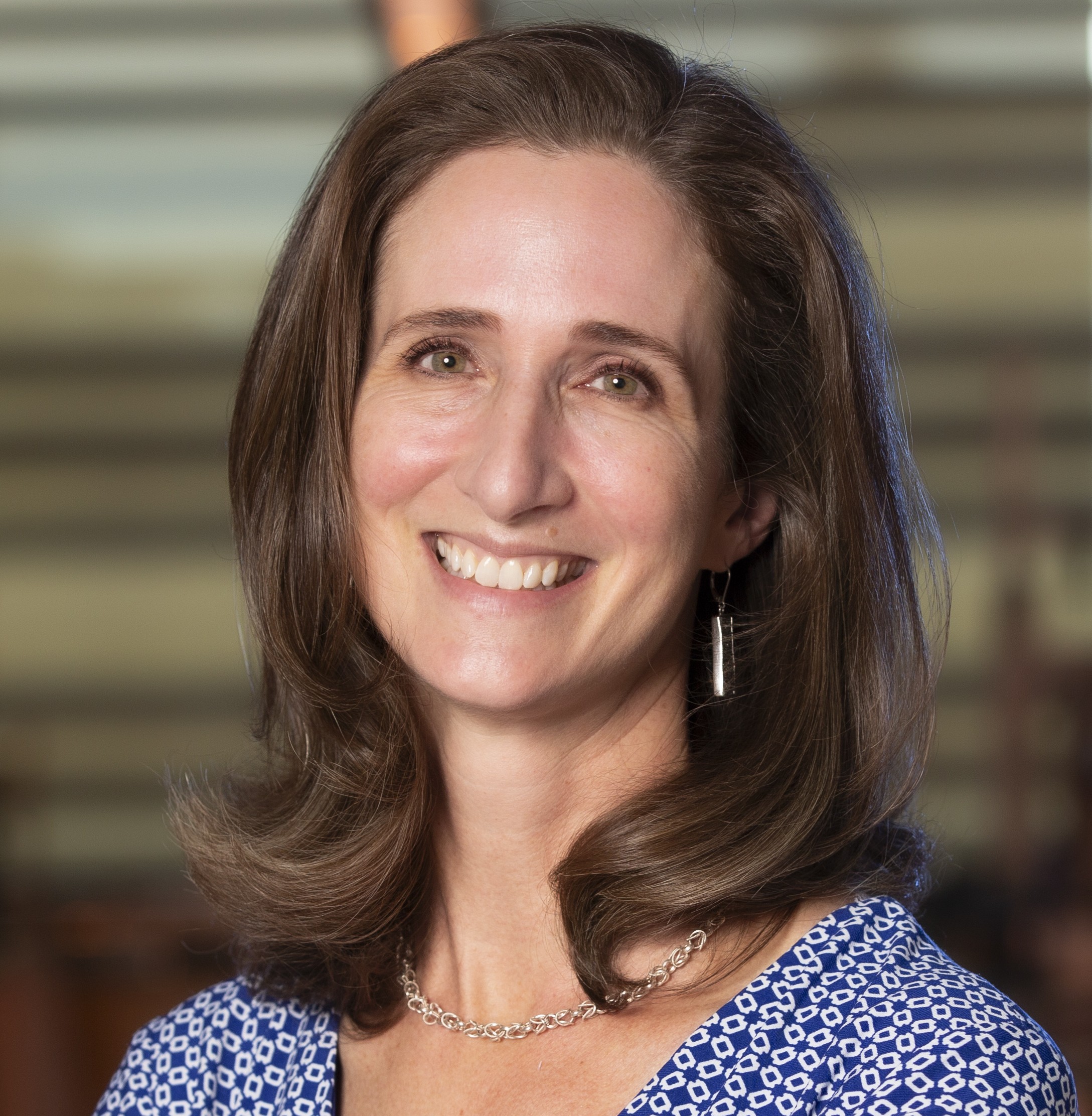
Clyne, Alisa Morss
Professor
Fischell Fellow
Brain and Behavior Institute
Robert E. Fischell Institute for Biomedical Devices
B.S., Mechanical Engineering, Stanford University
Dr. Clyne's Vascular Kinetics Laboratory conducts research at the interface of engineering, biochemistry, and vascular biology. Dr. Clyne and her lab previously demonstrated that vascular endothelial cells in altered metabolic environments (e.g., high glucose) do not respond appropriately to mechanical stimuli (e.g., shear stress). Today, her laboratory creates innovative 3D in vitro vascular models and novel computational techniques to uncover how endothelial cells metabolize and transport nutrients under physiological mechanical stimuli. They hope to use metabolic engineering to decrease morbitidy and mortality from cardiovascular disease and cancer, among others.
- Laminar and disturbed flow effects on endothelial glucose metabolism
- Integrated endothelial nutrient metabolism and transport
- Lipid-induced modification of vascular inflammation
- Computational models of endothelial and multicellular metabolism
- In vitro models of xenotransplantation and post-partum cardiovascular complications
- Impaired endothelial mechanosensing and metabolism in pulmonary arterial hypertension
ENES100: Introduction to Engineering Design
BIOE331: Biofluid Mechanics
BIOE416: Cardiovascular Engineering
Publications on Google Scholar
Kheradmand M, Zhou X, Okunrinboye F, Sriram G, Morss Clyne A. (2026) Excess glutamine rewires endothelial cell metabolism. Metabolomics 22, 143. doi: 10.1007/s11306-026-02515-4.
Sangha G, Sapp R, Weber C, Torbit D, Rangachar N, Barnes A, Morss Clyne A. (2026) Perivascular adipose tissue from female rats fed a high-fat diet impaired mesenteric artery vasodilation before significant weight gain. Physiological Reports 14, e70746. doi:10.14814/phy2.70746.
Kheradmand M, Sangha G, Sissons C, Sun M, Zhou X, Smith L, Bauer M, Chen C, Morss Clyne A. (2026) Glutamine enhances endothelial cell survival and vasodilation by increasing glutathione and NADPH to reduce oxidative stress. Physiological Reports, 14, e70737. doi:10.14814/phy2.70737.
Moiz B, Alpizar V, Brandon K, Sangha G, Weber C, Li A, Pepper T, Walls M, Qin A, Hart S, Davidson C, Stroka K, Porter F, Morss Clyne A. (2025) Cholesterol depletion with U18666A and methyl-β cyclodextrin increase small molecule permeability across brain microvascular endothelial cells. Annals of Biomedical Engineering,53(11):3222-3236. doi: 10.1007/s10439-025-03841-9.
Sangha G, Smith L, Kheradmand M, Munir K, Rangachar N, Weber C, Safari Z, Rogers S, Doctor A, Morss Clyne A. (2025) Piezo1 activates nitric oxide synthase in red blood cells via protein kinase C with increased activity in diabetes. Mechanobiology in Medicine, 28;3(3):100145. doi: 10.1016/j.mbm.2025.100145.
Weber C, Kheradmand M, Moiz B, Scott A, Kettula C, Wunderler B, Alpízar Vargas V, Morss Clyne A. (2025) Glutamine metabolism is systemically different between primary and induced pluripotent stem cell-derived brain microvascular endothelial cells. Journal of Cerebral Blood Flow and Metabolism, 45(6):1082-1099. doi:10.1177/0271678X241310729
Shamul J, Wang Z, Gong H, Ou W, White A, Moniz Garcia D, Gu S, Morss Clyne A, Quinones-Hinojosa A, and He X. (2025) Meta-analysis of the make-up and properties of in vitro models of the healthy and diseased blood–brain barrier. Nat. Biomed. Eng. doi: 10.1038/s41551-024-01250-2
Moiz B, Walls M, Alpizar V, Addepalli A, Weber C, Li A, Sriram G, Morss Clyne A. (2025) Instationary metabolic flux analysis reveals that NPC1 inhibition increases glycolysis and diminishes mitochondrial metabolism in brain microvascular endothelial cells. Neurobiology of Disease, 204. doi:10.1016/j.nbd.2024.106769
Weber C, Moiz B, Pena G, Kheradmand M, Wunderler B, Kettula C, Smith JC, Morss Clyne A. (2025) Impacts of APOE4 and exercise training on brain microvascular endothelial cell barrier function and metabolism. eBioMedicine, 111, 105487.
Peirce-Cottler S, Sander E, Fisher M, Deymier A, LaDisa J, O’Connell G, Corr D, Han B, Singh A, Wilson S, Lai V, Morss Clyne A. (2024) A Systems Approach to Biomechanics, Mechanobiology, and Biotransport. J Biomech Eng. Jan 25:1-65. doi: 10.1115/1.4064547.
Basehore S, Garcia J, Morss Clyne A. (2024) Steady laminar flow decreases endothelial glycolytic flux while enhancing proteoglycan synthesis and antioxidant pathways. Int. J. Mol. Sci., 25(5), 2485. doi: 10.3390/ijms25052485
Basehore S, Morss Clyne A. (2024) Human pulmonary artery endothelial cells increased glycolysis while decreasing nitric oxide synthase O-GlcNAcylation in pulmonary arterial hypertension. Int. J. Transl. Med. 4(1), 140-151. doi: 10.3390/ijtm4010007
Morss Clyne A, McCarty OJT, King MR. (2023) The 2023 CMBE Young Innovators: ChatGPT Gets the Final Word. Cell Molec Bioeng 16 (5), 427-429.
Sangha G, Weber C, Sapp R, Setua S, Thangaraju K, Pettebone M, Doctor A, Buehler P, Morss Clyne A. (2023) Mechanical stimuli such as shear stress and piezo1 stimulation generate red blood cell extracellular vesicles. Front Physiol 14:1246910.
Weber C, Harris M, Zic S, Sangha G, Arnold N, Dluzen D, Morss Clyne A. (2023) Angiotensin II increases oxidative stress and inflammation in female, but not male, endothelial cells. Cellular and Molecular Bioengineering 16: 127-141.
Hevaganinge A, Weber C, Filatova A, Musser A, Neri A, Conway J, Yuan Y, Cattaneo M, Morss Clyne A, Tao Y. (2023) Fast-training deep learning algorithm for multiplex quantification of mammalian bioproduction metabolites via contactless short-wave-infrared hyperspectral sensing. ACS Omega 8: 14774-14783.
King MR, McCarty OJT, Morss Clyne A. (2023) The 2023 Young Innovators of Cellular and Molecular Bioengineering. Cell Molec Bioeng 16 (4), 241-242.
Moiz B, Sriram G, Morss Clyne A. (2023) Interpreting metabolic complexity via isotope-assisted metabolic flux analysis. Trends in Biochemical Sciences 48 (6):553-567.
Weber C, Moiz B, Zic S, Alpizar Vargas V, Li A, Morss Clyne A. (2022) Induced pluripotent stem cell-derived cells model brain microvascular endothelial glucose metabolism. Fluids and Barriers of the CNS 19:98. https://doi.org/10.1186/s12987-022-00395-z
Moiz B, Li A, Padmanabhan S, Sriram G, Morss Clyne A. (2022) Isotope-assisted metabolic flux analysis: a powerful technique to gain new insights into the human metabolome in health and disease. Metabolites, 12(11), 1066; https://doi.org/10.3390/metabo12111066
Basehore S, Bohlman S, Weber C, Swaminathan S, Zhang Y, Jang C, Arany Z, Morss Clyne A. (2021) Laminar flow on endothelial cells suppresses eNOS O-GlcNAcylation to promote eNOS activity. Circ Research 129: 1054-1066.
Moiz B, Garcia J, Basehore S, Sun A, Li A, Padmanabhan S, Albus K, Jang C, Sriram G, and Morss Clyne A. (2021) 13C Metabolic flux analysis indicates endothelial cells attenuate metabolic perturbations by modulating TCA activity. Metabolites 11(4):226. https://doi.org/10.3390/metabo11040226.
Sangha G, Ranadive S, Prior S, Goergen C, Morss Clyne A. (2021) Preclinical techniques to investigate exercise training in vascular pathophysiology. Am J Physiol Heart Circ Physiol, 320: H1566–H1600.
Vo J, Mastoor Y, Mathieu P, Morss Clyne A. (2021) A simple method to align cells on 3D hydrogels using 3D printed molds. Biomedical Engineering Advances 1, https://doi.org/10.1016/j.bea.2021.100001.
Weber C, Morss Clyne A. (2021) Sex differences in the blood-brain barrier and neurodegenerative diseases. APL Bioengineering 5 (1), 011509.
Morss Clyne A. (2021) Endothelial cell response to glucose: dysfunction, metabolism, and transport. Biochem Soc Trans 49 (1): 313–325. doi: https://doi.org/10.1042/BST20200611.
BIOE Celebrates Five Award Recipients at Ninth Annual 2026 EPIC Retreat
Five members of BIOE were recognized for research, service, and contributions to the department.UMD Bioengineering Undergraduate Program Continues Strong National Standing
Department highlights cross-campus partnerships and hands-on student innovationGrand Challenges 2.0: Engineers Partner to Unlock Solutions
Seven of 11 collaborative projects include contributions from engineeringAlisa Morss Clyne Named Interim Chair of UMD Bioengineering
Alisa Morss Clyne will serve as interim chair of UMD Bioengineering starting Aug. 1, 2026.Cholesterol Found to Play Key Role in Protecting the Blood-Brain Barrier
Clyne Lab uncovers how cholesterol helps maintain the brain’s protective barrier.BIOE Students Earn Top Honors for Health Innovation at 2025 Capstone Expo
BIOE and BCE students showcased innovative health tech solutions at the 2025 Capstone Design Expo.Clyne Discusses Gene-Exercise Connection in Alzheimer’s Research on Podcast
Clyne discusses how the APOE4 gene may affect the brain’s response to exercise on a new podcast.Guiding the Future Direction in Modeling the Blood-Brain Barrier for Improved Brain Health
BIOE researchers publish innovative research in blood-brain barrier modeling.Goldberg Appointed Associate Chair of Diversity, Equity, Inclusion, and Belonging in BIOE
This Fall, Senior Lecturer Deborah Goldberg will lead Diversity, Equity, Inclusion, and Belonging in BIOE.Agents of Positive Change: Highlighting Women Maryland Engineers
In celebration of Women's History Month, we highlight some of the important contributions of women engineers within our campus community.24 Teams Present at BIOE Capstone Competition Including First BCE Students
On May 8, 2023, 24 teams presented novel designs at the BIOE Capstone Design Competition.Five BIOE Students & Alumni Named NSF Graduate Research Fellows
The NSF Graduate Research Fellowship Program (GRFP) was established to ensure the vitality and diversity of the scientific and engineering workforce of the United States.Recent Bioengineering Graduate Awarded National Mitchell Scholarship
Neelesh Mupparapu (B.S. bioengineering '22) named one of 12 winners to pursue graduate study in IrelandDo Suddenly Self-Centered Brain Cells Promote Disease?
NSF Award Funds UMD Alzheimer’s Research Into Brain Glucose Metabolism$7.9 Million in NIH Awards Propel UMD Aging Research
New multidisciplinary collaborations take on challenges like Alzheimer’s disease prevention.Celebrating 14 Participants of 2021 BIOE REU Program
The BIOE REU program promotes collaboration between UMD and the FDA, making it unlike any other in the countryMaisel to Investigate Little-Known Organ in the Body
Dr. Katharina Maisel was awarded a $1.8 million NIH NIGMS grant to study the interstitium and lymphatics.Maryland Graduate Engineering Ranked #10 Public in the Nation
From extreme batteries to windows made from wood, Clark School’s trendsetting work ranks it among the country’s Top 10 public engineering schools for the 3rd consecutive year.One Size Does Not Fit All
To advance inclusive medical therapies and diversity in fundamental science, one Maryland engineer leads by example.BBI Awards Seed Grants to Six Interdisciplinary Projects
Funded teams feature UMD faculty from 15 academic departments and six centers and institutesClyne Named BIOE Associate Chair, Diversity, Equity & Inclusion
Role will support efforts to enhance diversity within the department and in the STEM fields at large.BIOE Capstone Class Virtually Presents 24 Novel Projects
BIOE seniors present Capstone projects and celebrate winners virtually.Clyne, Jewell Inducted into AIMBE College of Fellows
BIOE faculty awarded one of the highest professional distinctions accorded to a medical/biological engineer.Clyne, Maisel to Join BIOE Faculty in 2019
Associate, assistant professors bring expertise in endothelial cell biology, mucosal drug delivery.American Society of Mechanical Engineers (ASME)
- American Heart Association
- American Institute for Medical and Biological Engineering
- American Society of Mechanical Engineers