News Story
Alisa Clyne Examines 3D Printing’s Role in Cardiovascular Care
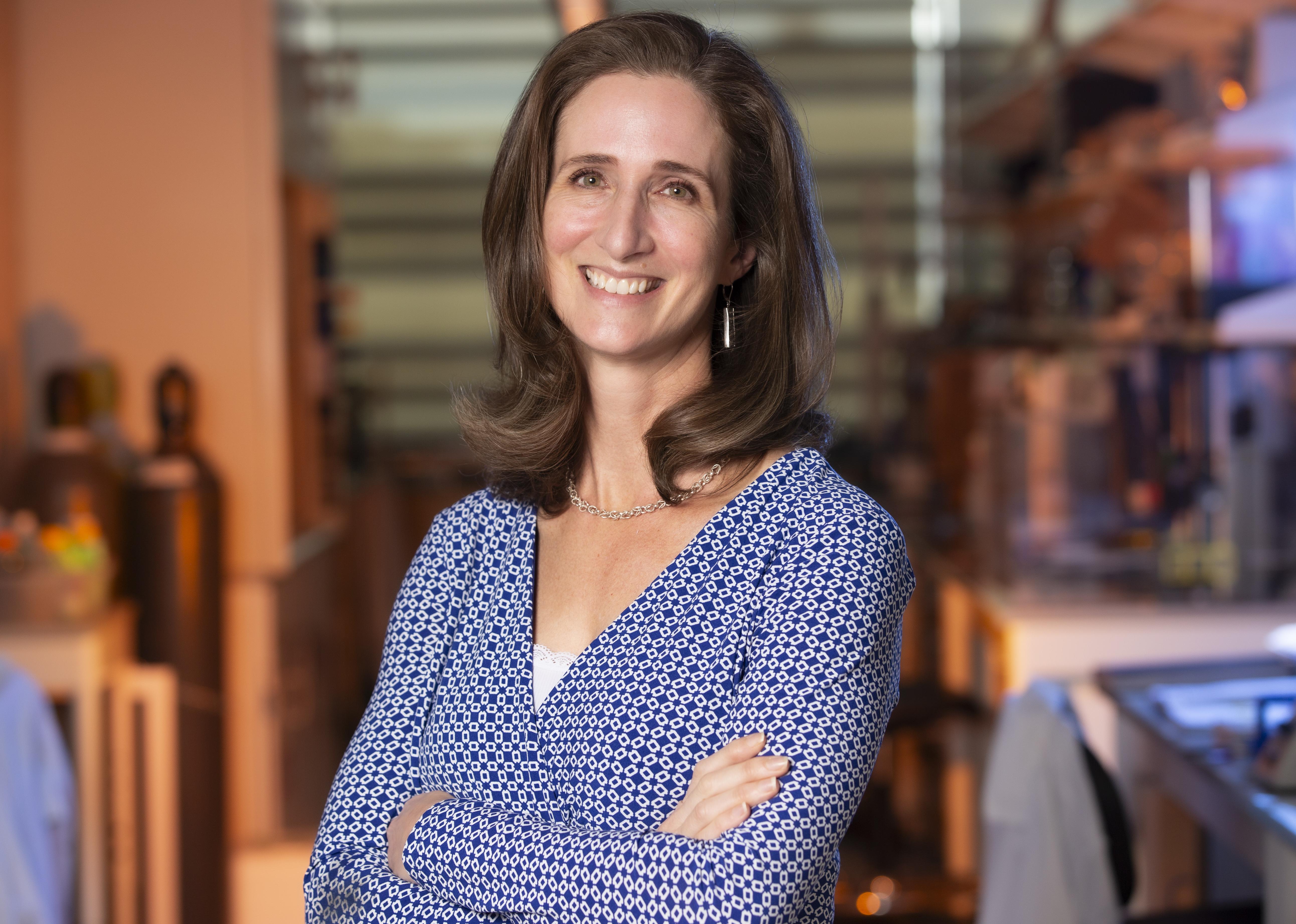
Alisa Morss Clyne, interim chair and professor in the Fischell Department of Bioengineering (BIOE), has co-authored a paper in Circulation, a leading cardiovascular medicine journal, reviewing how 3D printing and bioprinting are being applied to heart and vascular care. Written with Elazer R. Edelman, a professor in the Massachusetts Institute of Technology (MIT) and Harvard Medical School, the paper appeared in the journal’s Nov. 3 issue. Clyne also discussed their work in an episode of the journal’s podcast, Circulation on the Run.
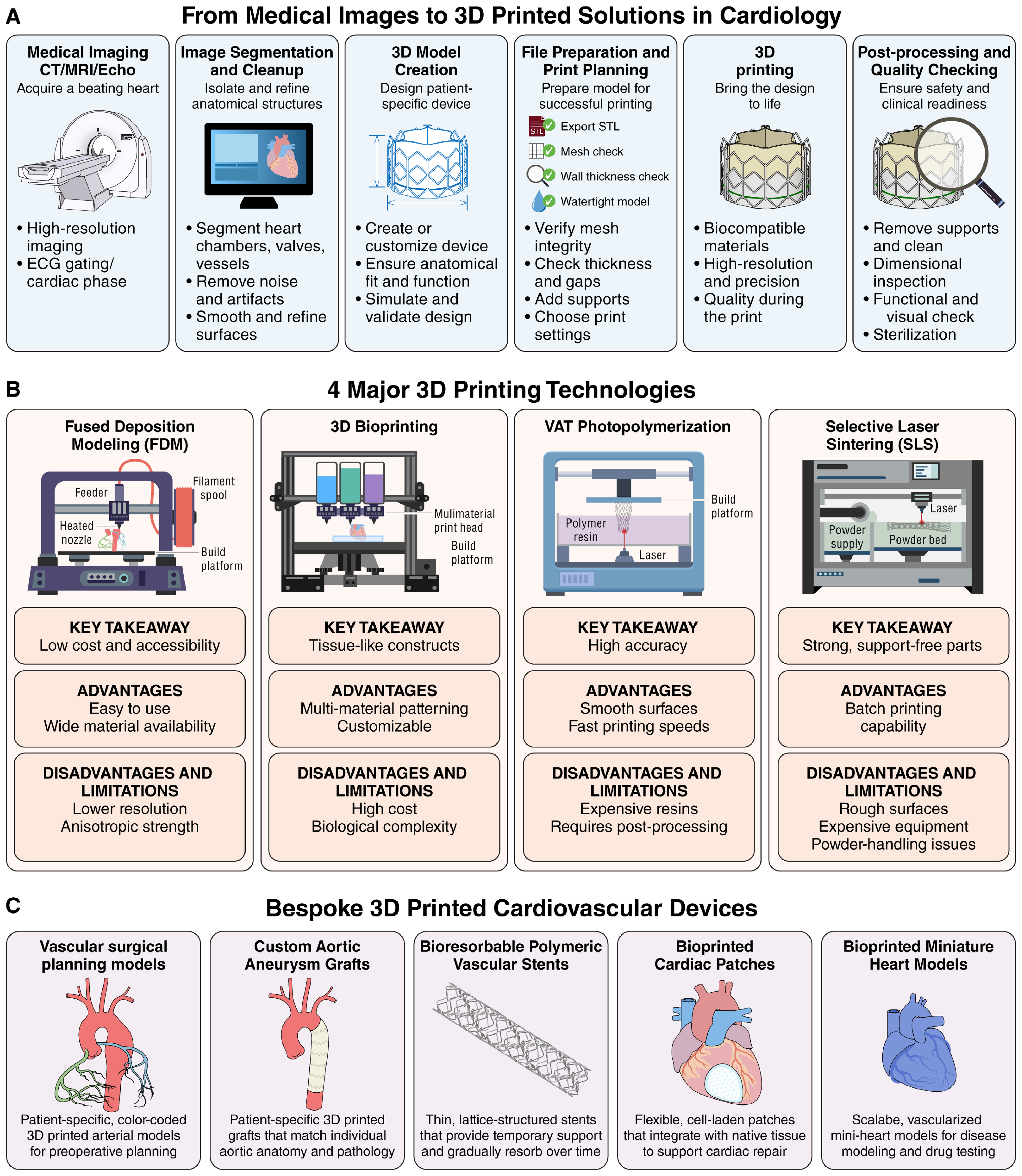
Cardiovascular devices such as stents and grafts are typically cut or molded into standard shapes, which limits how closely they fit an individual patient. In the paper, Clyne and Edelman describe how 3D printing, which builds objects layer by layer from digital designs, is beginning to change that.
The most established use is surgical planning. Surgeons can print a model of a patient’s heart or blood vessels from CT or MRI scans and rehearse a procedure before operating, which is especially valuable in infants and children. The paper cites a case in which a model of a 13-month-old’s heart helped surgeons plan the repair of a congenital defect. Models used to plan 3D printed models can be used for custom grafts that can be made in a few days for less than $50, compared with four to six weeks for other custom devices to arrive.
Bioprinting extends the approach to living tissue, using cells mixed into a gel-like “bioink.” The paper highlights two preclinical studies. In one, a bioprinted cardiac patch improved heart function in rats with right ventricular failure. In the other, researchers printed a two-chamber heart, sized for a mouse, from human stem cells. The heart contracted in synchrony and moved fluid from one end to the other. Constructs like these give researchers new ways to study heart function and test potential treatments.
“3D printing makes it possible to create bespoke products such as running shoes tuned to a runner’s gait. The same ability to tailor shape could enable us to create a cardiovascular device designed for a specific patient’s heart or blood vessels, which may fit and function better than a standard option.”
-Alisa Morss Clyne
“3D printing makes it possible to create bespoke products such as running shoes tuned to a runner’s gait,” Clyne said. “The same ability to tailor shape could enable us to create a cardiovascular device designed for a specific patient’s heart or blood vessels, which may fit and function better than a standard option.”
To move the field forward, the paper calls for printable materials that are biocompatible and sterilizable, clinical trials showing that custom devices improve patient outcomes, and reimbursement codes that allow hospitals to bill for patient-specific models and implants. For engineered tissue, larger constructs will also need built-in blood vessels, because oxygen delivery limits tissue without them to about 100 to 200 micrometers thick.
As principal investigator of the Vascular Kinetics Lab, Clyne and her team examines how blood flow alters the way cells use glucose and contribute to cardiovascular disease. The lab also uses 3D culture systems to study human cells under physiologically relevant conditions like increased arterial stiffness and heart disease risk following spinal cord injury.
On Circulation on the Run, Clyne told Editor-in-Chief Bradley Maron and co-host Mercedes Carnethon that surgical planning models are available in some places, with wider access the main hurdle, and that custom devices such as endovascular grafts and stents will likely arrive before printed tissues. Printed organs, she said, will require billions of patient-specific cells, rapid tissue maturation and engineered capillaries. A mechanical engineer who began her career building aircraft engines, Clyne also noted that regulators can learn from aviation, where 3D-printed parts are tested nondestructively before use.
The paper and podcast appearance are the first in a planned series on bioengineering in cardiovascular medicine.
“We really need to work collaboratively — clinicians, biologists, engineers, regulators — to overcome these challenges, because the potential is so incredible that we can make you an organ from your own cells that would function, match your physiology, and then grow and develop with you to avoid future intervention,” Clyne said.
Published November 19, 2026
Related Stories
Stories / November 5, 2026
UMD Faculty Recognized for Program Development

Stories / September 14, 2026
Project, Problem, Solution: MATRIX Interns Make an Impact
Stories / August 19, 2026
Smooth Sailing: MATRIX Dives Into Ship Inspecting

Stories / August 5, 2026
New Speech Model Reads Mouth Movement Across Languages

Stories / June 25, 2026
Grand Challenges 2.0: Engineers Partner to Unlock Solutions

Stories / June 25, 2026
Aircraft May Refuel Themselves - With Help From AI

Stories / February 26, 2026
AIM Welcomes 5 Distinguished Artificial Intelligence Scholars

Stories / February 9, 2026
Struggling With Fibroids, UMD Researcher Seeks to Engineer a...

Stories / February 6, 2026
UMD Bioengineering Contributes to ARPA-H PRINT Program Focusing...

Stories / January 30, 2026
BIOE Researchers Publish Study Advancing Probiotic Vesicle...