News Story
Project, Problem, Solution: MATRIX Interns Make an Impact
University of Maryland (UMD) A. James Clark School of Engineering MATRIX Lab interns don’t just learn how engineers solve problems - they get the chance to solve some themselves.
From underwater robots to ingestible sensors, six students from three campuses spent the summer tackling seven real-world engineering challenges with the MATRIX.
Seven Problems, Seven Solutions
Engineers are known as professional problem solvers. Their work doesn’t start with a technology, but a challenge - 3D printed metal warping, underwater robots cracking under pressure, sensors failing in their environment, floors snapping from subsurface damage. These aren’t hypothetical issues - they’re real-world problems that served as starting points for MATRIX intern summer research projects.
What Improvements Would Make Metal 3D Printing More Predictable and Reliable?
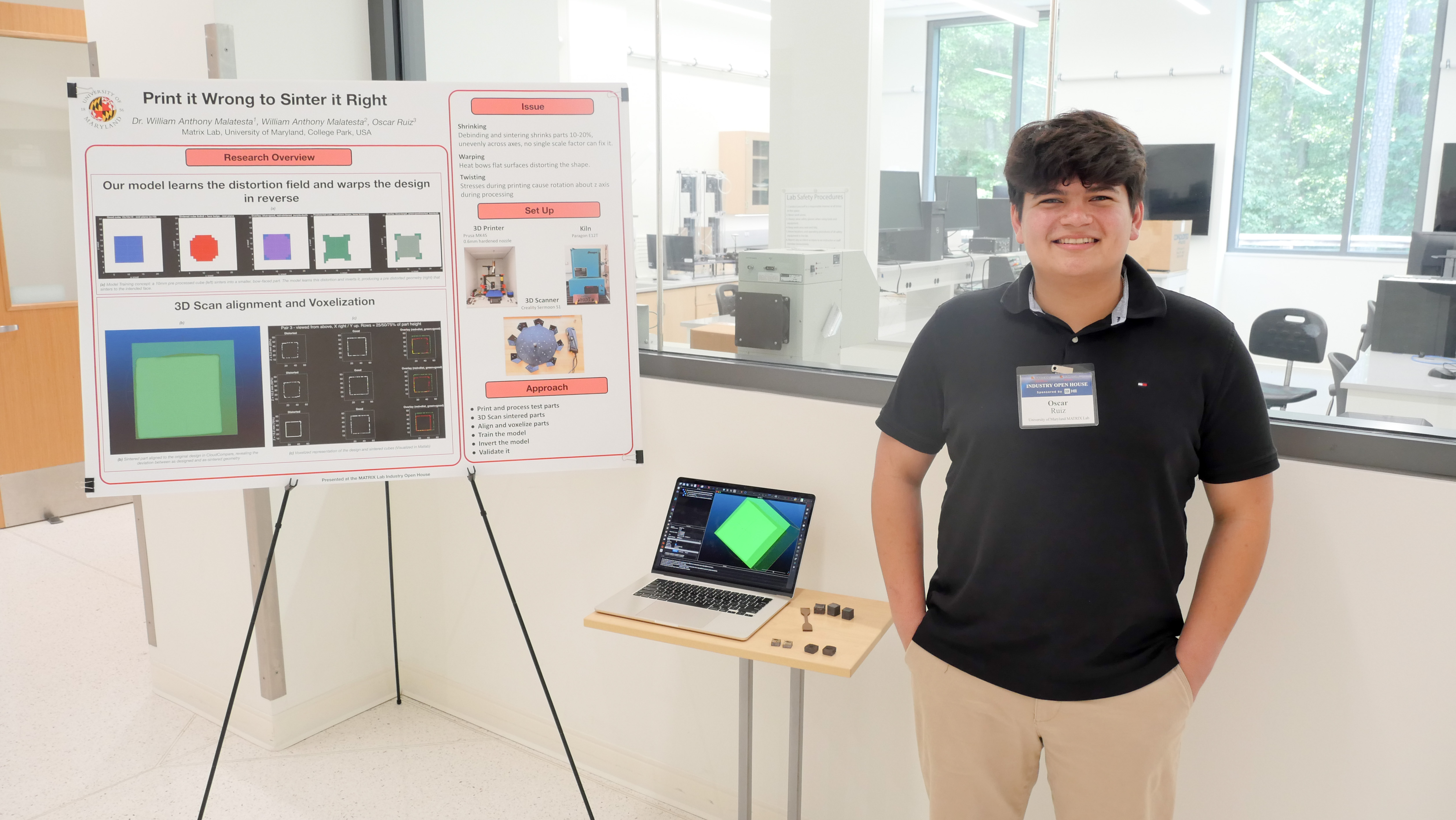 Parts printed using composite metal filaments can undergo significant shrinkage, swelling, and warping, particularly during the de-binding and sintering stages. These changes can affect the final part’s strength and overall performance. Oscar Ruiz (UMD at USMSM, mechanical engineering, ’27) recognized this and worked on a solution. Under the mentorship of Dr. Anthony Malatesta and Mr. Bill Malatesta, he developed a machine learning model to predict distortions and modify designs to compensate for them, helping produce more accurate parts while improving their strength and overall performance.
How Do We Build Better Hardware for Underwater Robots?
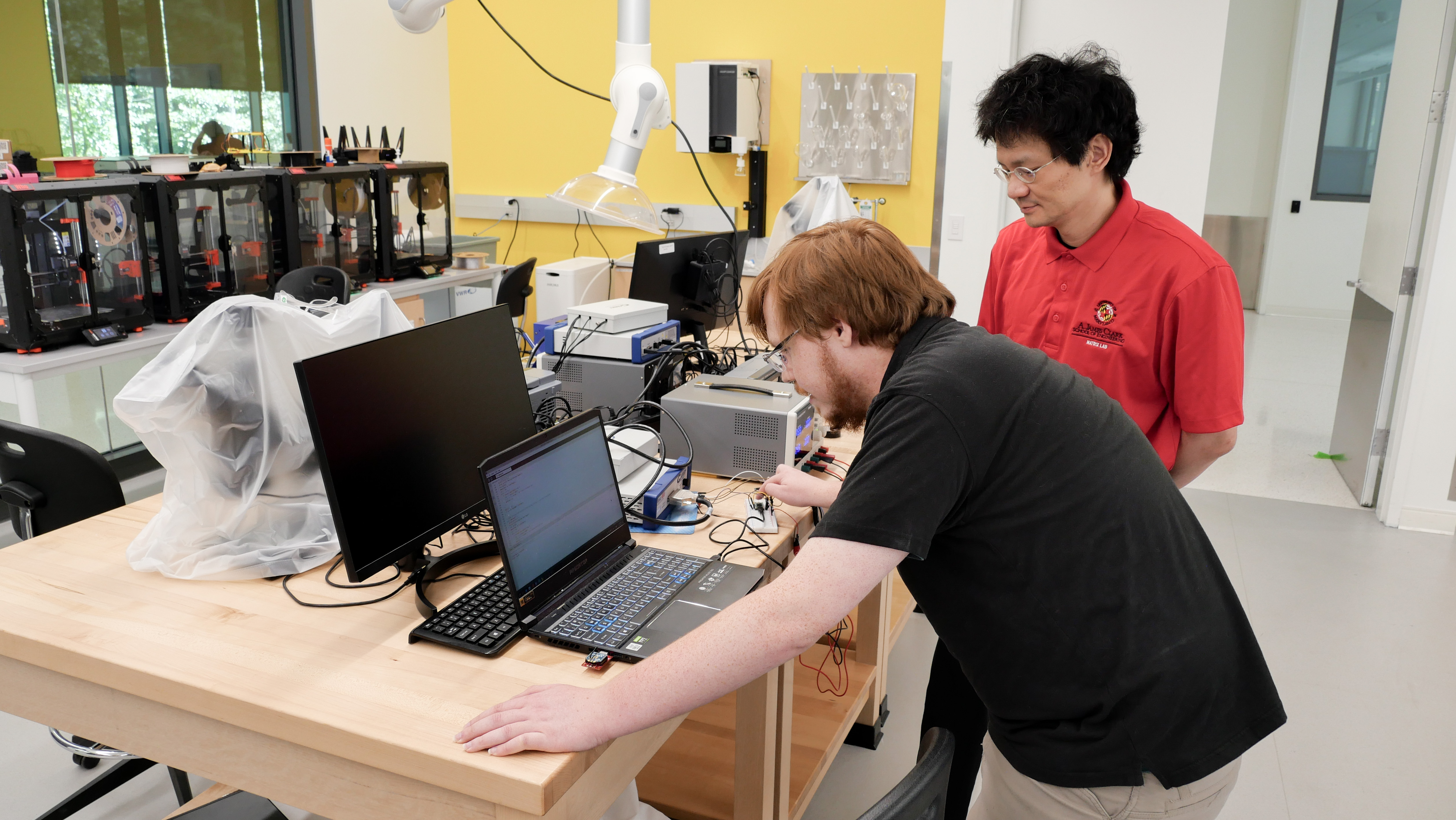
 Energy efficient autonomous systems are the future of long-term marine research data collection. MATRIX researchers Dr. Justin Stine and Dr. Wei-Kuo Yen mentored interns on developing new and improved systems with the goal of longer, more thorough underwater exploration.
A specific data collection need is measuring disruptive buildup (biofouling) on ship hulls. Traditional methods include human divers, which is time consuming and can lead to subjective results. Micheal York (College of Southern Maryland, engineering, ’26) found a way to normalize and quantify this process: A robot takes a picture of a ship’s hull from a set distance, and artificial intelligence evaluates if there is biofouling, and if so, how much.
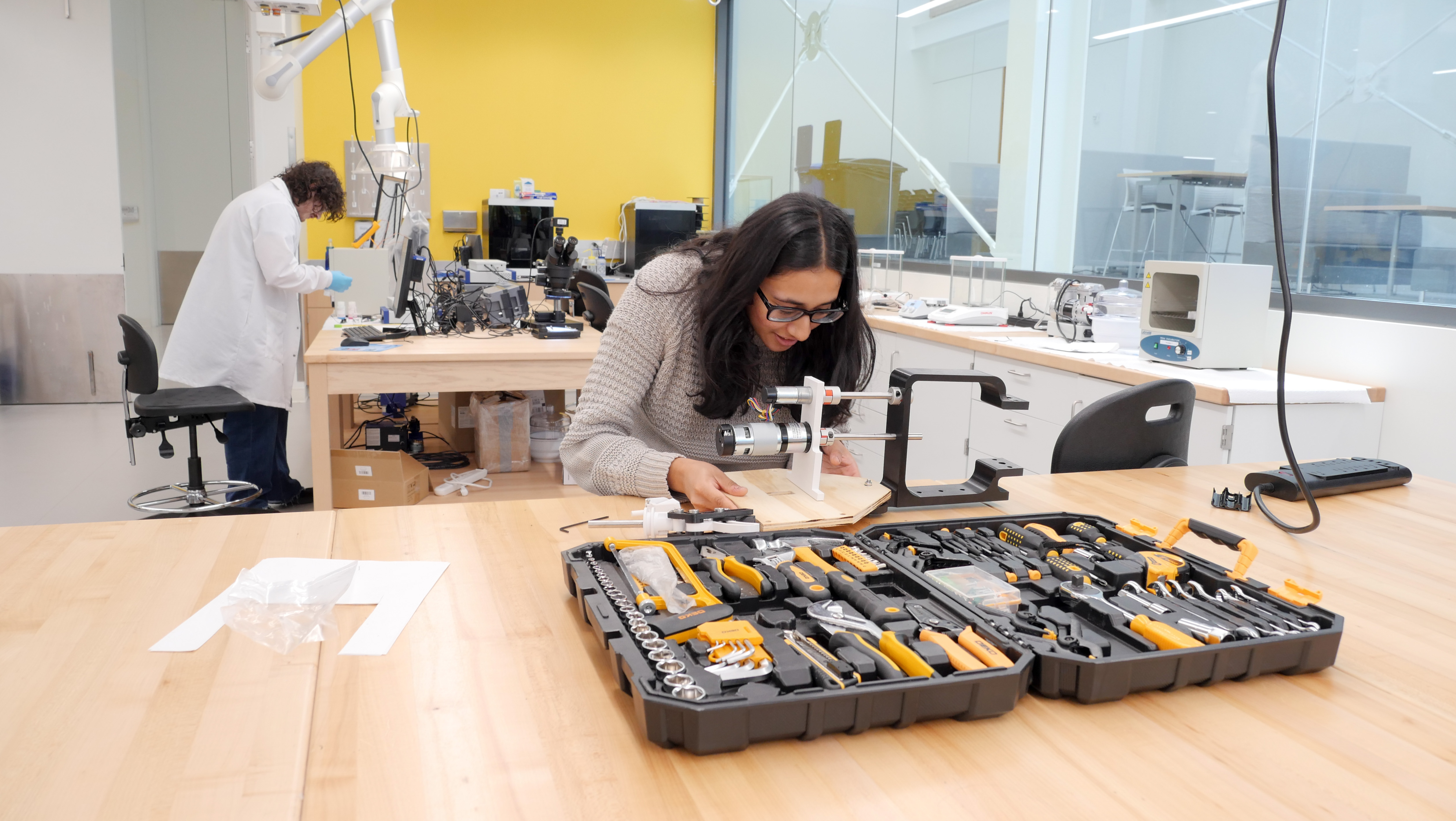
 Another system, the buoyancy-operated ro-bottle (or BoB) is in its third year as a MATRIX intern project - with each student researcher making their own improvements to it. This year, Levi Paugh (College of Southern Maryland, engineering, ’26) made the design more reproducible and added components specialized for underwater robotics. He built a printed circuit board (PCB) to address wiring issues and replaced the standard water bottle exterior with a new waterproof enclosure to make it more pressure resistant.
Efficient movement is the key to making autonomous systems energy efficient. Conventional motors make it difficult for robotic fish to rapidly change direction and quickly move their tails, so Saniya Apte (UMD, bioengineering, ’28) found a better way. She developed a mechanism that makes the fish’s tail move rapidly and built a flexible, fish-inspired tail to test it.
Can Ingestible Capsules Provide an Alternative to Invasive Health Monitoring Techniques?
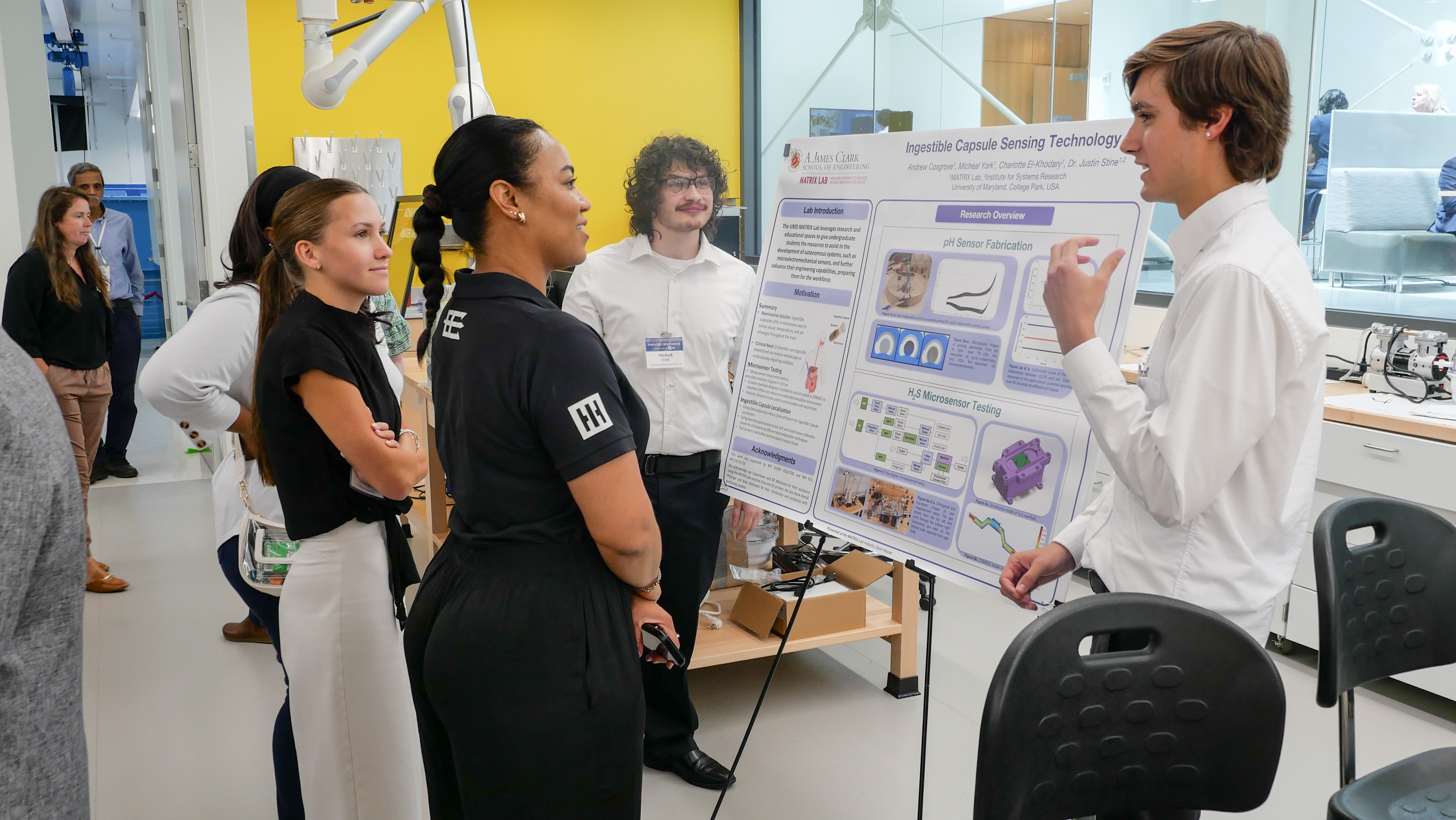 UMD researchers, including project mentor Dr. Justin Stine, are working on ingestible capsule technology designed to make gastrointestinal (GI) disease diagnosis less invasive and more accessible. The gut monitoring “smart pill” could be an alternative to invasive techniques like endoscopies by autonomously detecting early signs of disease and monitoring tissue health.
Several efforts go into making this pill a success, and MATRIX interns tackled two of them. Andrew Cosgrove (UMD, civil engineering, ’28) worked toward successfully sensing a gas, hydrogen sulfide (H2S), which is used as an indicator of gut health. He created a test chamber that accurately emulated the gut and tested custom microsensors small and sensitive enough to measure H2S.
Researchers need to know where exactly the capsule is to take measurements in specific areas. pH levels change throughout the GI tract, and different levels are tied to specific areas. Knowing the pH level of the capsule’s current location indicates where it is. To work toward this, Micheal York tested the capsule’s pH sensor. He also added a protective barrier to keep the readings stable.
Are There Non-Damaging Ways to Check for Early Wood Damage?
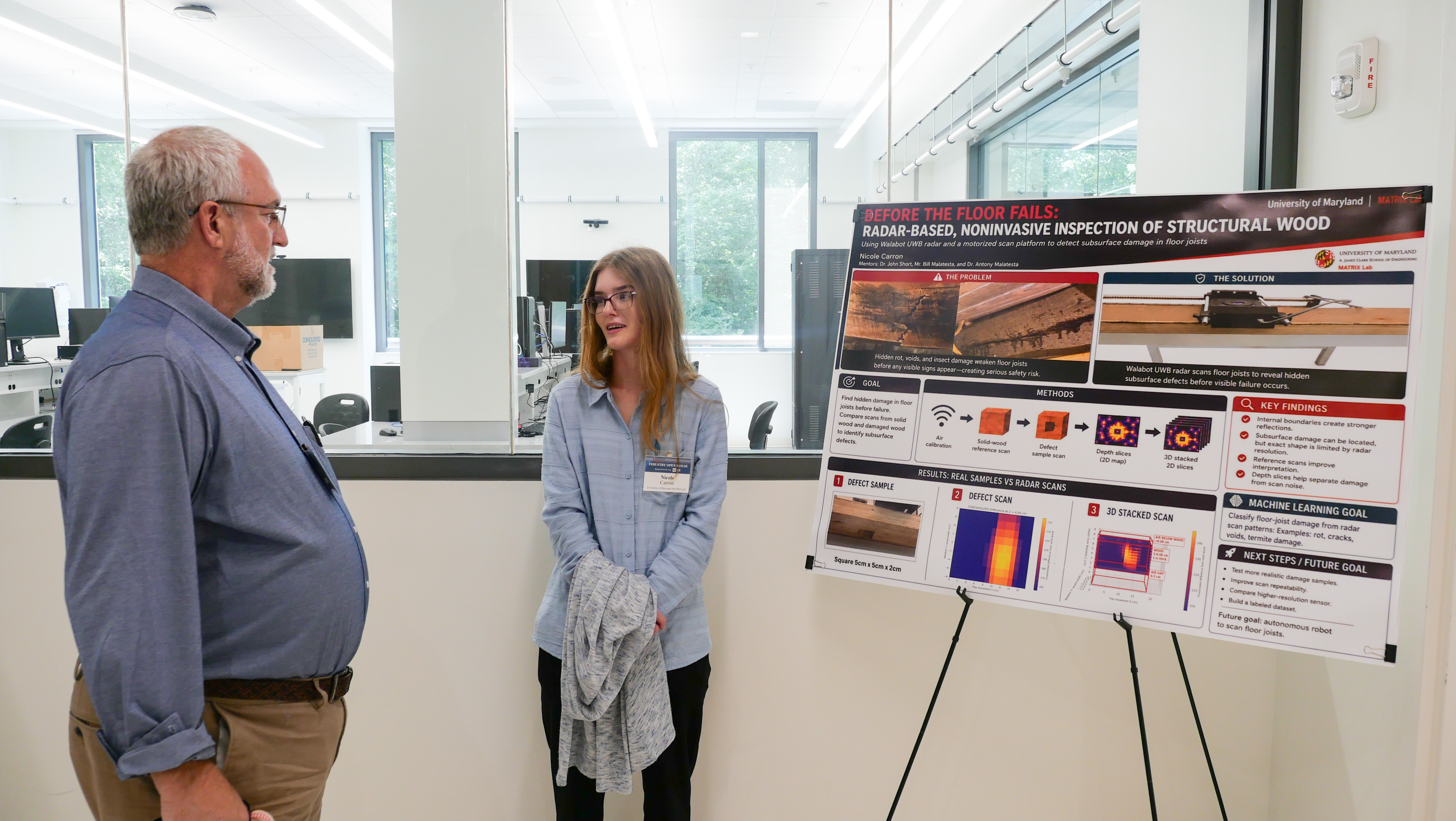 Wood can deteriorate from the inside out. Rot can cause a safety hazard before it’s even visible, but traditional methods of early detection (e.g. drilling) damages wood that may be perfectly fine. Nicole Carron (UMD at USMSM, mechanical engineering, ’27) explored a non-damaging, radar-based approach that uses RF waves to detect abnormalities beneath the surface and created a controlled scanning setup to make inspections more repeatable. Dr. John Short, Dr. Anthony Malatesta, and Mr. Bill Malatesta mentored Nicole on this project.
The Work Continues
For the interns, the summer was about more than solving technical problems. It was an opportunity to discover what it takes to identify a real-world problem and develop a solution. Regardless of the project, MATRIX interns said they appreciated the opportunity to learn new skills and collaborate with each other.
Their work doesn’t end with these internships – Oscar, Micheal, and Andrew will continue working with UMD and the MATRIX Lab throughout the school year, Levi will transfer to UMD at USMSM in Spring 2027 to pursue a bachelor's degree in electrical and computer engineering, and Saniya and Nicole will focus on finishing their bachelor's degrees. All will carry their new technical and problem-solving skills with them throughout their journeys.
Published September 14, 2026
Related Stories
Stories / August 8, 2025
MATRIX Interns Overcome Setbacks and Succeed
Stories / September 10, 2025
AI Robotics Research at UMD Puts Safety and Trust First
Stories / July 18, 2025
MATRIX Lab Hires Assistant Director for Research Development
Stories / February 28, 2025
MATRIX Lab Hiring Research Development Director
Stories / January 8, 2026
MATRIX Faculty to Present at International Conference
Stories / October 21, 2025
UMD Student Bridging Research Innovation and Education Advocacy
Stories / August 19, 2026
Smooth Sailing: MATRIX Dives Into Ship Inspecting

Stories / August 5, 2026
New Speech Model Reads Mouth Movement Across Languages
Stories / June 25, 2026
Grand Challenges 2.0: Engineers Partner to Unlock Solutions

Stories / June 25, 2026
Aircraft May Refuel Themselves - With Help From AI
