News Story
Fueling the Future of Fire Protection: Dean’s Circle Spotlight

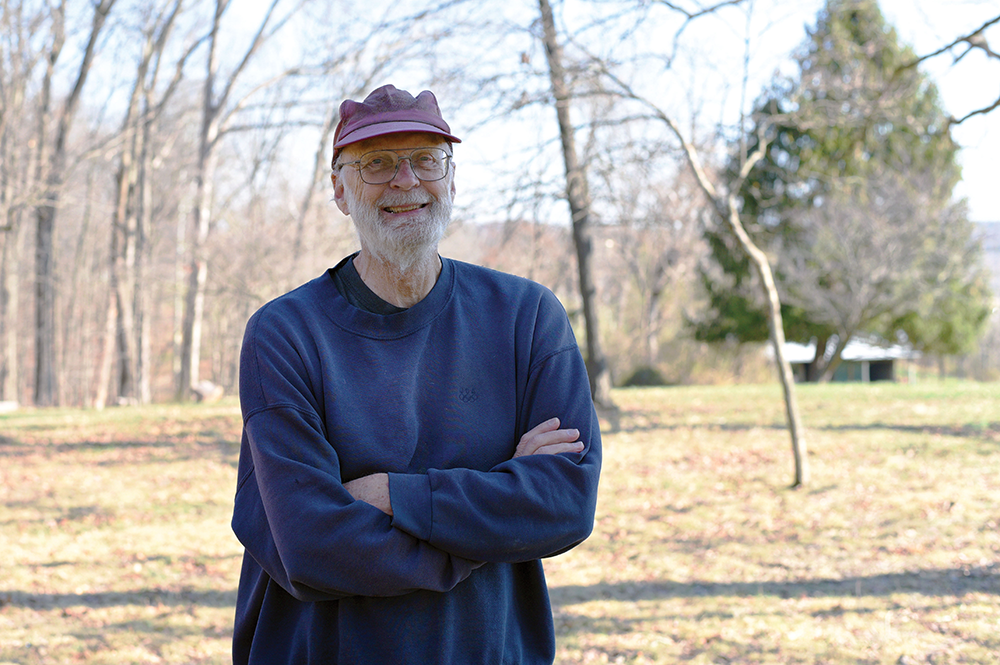
The dream of becoming a firefighter began early for Robert “Bob” C. Andrews Jr. ’80.
At age 5, he played in his Pennsylvania front yard wearing the battered fire helmet his father had salvaged from the dumpster behind a fire station; at age 16, presenting a permission slip with his mother’s signature, he became a junior member of the East Whiteland Volunteer Fire Association in his hometown of Malvern, near Philadelphia.
A first-generation college student, Andrews wasn’t sure where to apply or how to “major in firefighting.” He consulted his volunteer chief, who put Maryland’s Department of Fire Protection Engineering (FPE) on his short list. By this time, Andrews’ mother was a single parent, and he and his brother were getting by with help from food stamps. Andrews wrote a letter of interest to John Bryan, who was then department chair of FPE; Bryan sent two pieces of encouragement in return. First was an application to UMD, which Bryan had already signed to approve Andrews’ admission. The second was a note: Bryan had put Andrews on the waiting list for the student dormitory at the College Park Volunteer Fire Department (CPVFD) across the street from campus, an accommodation affectionately called the Sackroom. By covering most of his living expenses, the arrangement (which eventually allowed Andrews to gain Maryland residency and pay in-state tuition) brought the cost of college within reach.
He went on to a career fighting fires in industrial settings including oil refineries, chemical plants, tank farms, ships, and factories and settled in Texas. Three decades after graduation, he returned to College Park and to the CPVFD, where he was surprised to learn that no FPE students were living in the dorm. Wanting to rebuild the relationship between FPE and the fire service across the street, he played a significant role in funding the James A. Milke, Ph.D. Endowed Professorship of Practice to ensure the FPE curriculum includes applied coursework for future firefighters like himself. (The endowment now exceeds $3.4 million.) He also created the Dr. Robert C. Andrews, Jr., P.E. College Park Volunteer Fire Department Scholarship to support FPE students who face the same financial challenges he once did. The scholarship is aimed at out-of-state students who serve as volunteer firefighters and, ideally, live in the Sackroom—gaining applied experience while they study. The first recipient of the scholarship will begin studies this fall.
The Dean’s Circle
recognizes those who have committed $100,000 or more during their lifetime to the Clark School. To learn how your charitable donation can make a significant difference in the future of Maryland Engineering, contact Jennifer L. Schwartz, assistant dean for advancement, at 301-405-0317 or jschwar2@umd.edu.
“Even if you never get on a fire truck again once you leave College Park, you will be a much better fire protection engineer having had the experience,” Andrews says. “You’ll be more empathetic. You’ll observe firsthand the emotional and financial impact of a fire, and you will better appreciate how fire protection engineering can make a significant contribution in reducing that loss.”
Two additional gifts are also inspired by elements of his own biography. Andrews earned his master’s degree in executive fire service through an online program of Grand Canyon University in 2002, when remote learning was still a novelty. When Maryland began developing its online FPE program, Andrews—a “walking, talking apostle” for online education—wanted to help. He created both the Dr. Robert C. Andrews, Jr., P.E. Online Course Operating Fund to underwrite curriculum development and technology acquisition and the Dr. Robert C. Andrews, Jr., P.E. Scholarship for students in the online program.
Andrews also plans to donate part of his estate to the university and is engaged in ongoing discussions with the department. “I’m always looking for other ways to help and other needs that can be fulfilled, for the good of fire protection engineering and the good of the fire service,” he says.
“How do we make the world better through this profession I’ve enjoyed? By promoting the merits of fire protection engineering to the world at large, showing how it can dramatically reduce the risk of fire in the built environment, ultimately improving the human condition. That’s the overarching goal.”
Published April 20, 2026
Related Stories
Stories / November 7, 2025
Taking a Shot at Success: Dean's Circle Spotlight
Stories / April 28, 2025
Wired to Contribute
Stories / October 29, 2024
Dean's Circle Spotlight: Terps Cement Legacy—and Leadership...
Stories / April 10, 2024
Dean's Circle Spotlight: Investing in Ideas, and Access
Stories / October 13, 2023
Dean's Circle Spotlight: Sparking Opportunity and Success
Stories / April 26, 2023
Dean's Circle Spotlight: Rewriting the Story of Access and...
Stories / October 24, 2022
Dean's Circle Spotlight: A Blueprint for Human-Oriented...
Stories / April 13, 2022
Dean's Circle Spotlight: A Pursuit that "Matters"
Stories / December 14, 2021
Dean's Circle Spotlight: Supporting the Engineering Pipeline

Stories / February 2, 2021
Making Success, and Giving, Seem Natural