News Story
New Open-Access Database for Accelerating Solid-State Battery Research and Innovation

[College Park, Maryland]—Thousands of peer-reviewed papers on battery devices are published each year. Despite this rapid growth, the data contained within these publications are often reported in different formats, with varying levels of detail and accessibility. The resulting patchwork of information makes it difficult for scientists, engineers, industry partners, and policymakers to fully leverage published research and identify opportunities for innovation.
Now, a research team led by Paul Albertus—associate professor of chemical and biomolecular engineering at the University of Maryland and associate director of the Maryland Energy Innovation Institute—has announced the publication in Joule of a pioneering study that tackles these persistent challenges in battery science. Their groundbreaking approach to a battery database and datasets, spanning from materials to components to fabrication to device testing and performance, addresses critical gaps in battery reporting and provides a foundation for improved analysis, visualization, experiment design, and artificial intelligence (AI)-driven research.
The publication contributes three major advantages to the battery research community by:
- integrating the complete set of information needed to describe a solid-state battery device;
- examining reporting practices across the scientific literature and assessing the presence and significance of information not reported; and
- establishing a structured approach to battery data reporting through clearly defined variables and standardized terminology.
About the Research
The study presents an ontology-informed database of research-level solid-state batteries containing 245 battery records, 167 structured variables, and more than 40,000 data points. The framework captures the materials, components, fabrication methods, and testing conditions needed to fully describe battery devices while supporting Findable, Accessible, Interoperable, and Reusable (FAIR) data practices, advanced analytics, visualization, experiment design, and artificial intelligence applications.
Published July 28, 2026
Related Stories
Stories / June 25, 2026
MEII Director serves on Daily Record virtual panel discussion

Stories / March 4, 2026
Wachsman comments on solid-state battery readiness

Stories / October 1, 2025
Will your next EV have a solid-state battery — and improved...

Stories / August 12, 2025
ION Storage Systems Launches "Cornerstone"
Stories / June 23, 2025
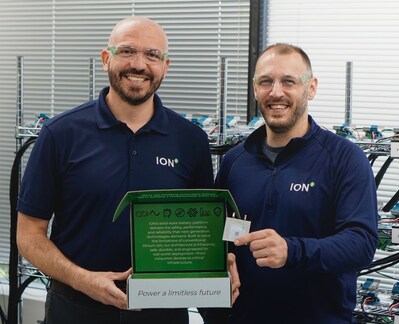
A Battery That Lasts 50% Longer Is Finally in Production
Stories / May 6, 2025
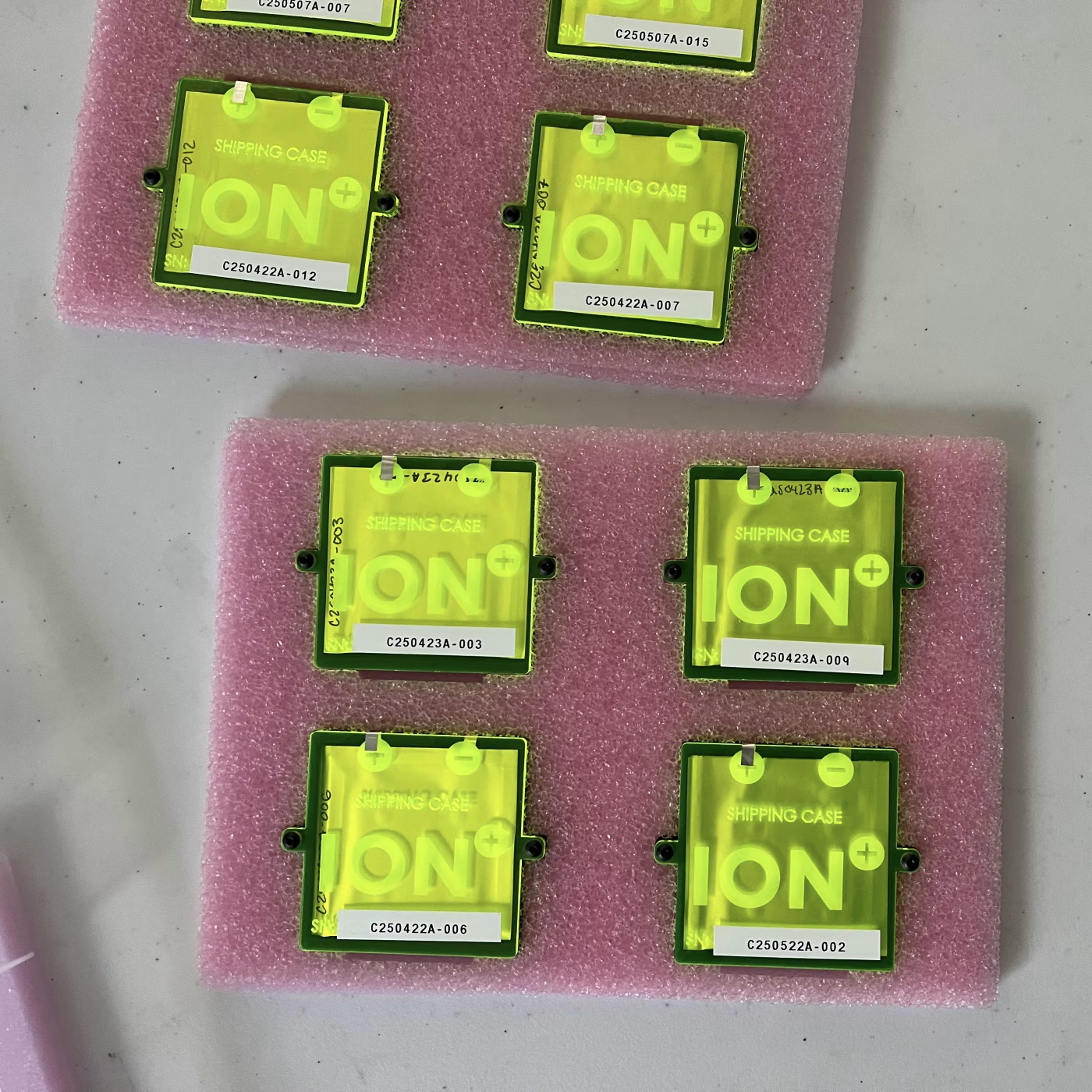
New Solid-State Sodium Battery Offers Energy Density Comparable...
Stories / March 26, 2025
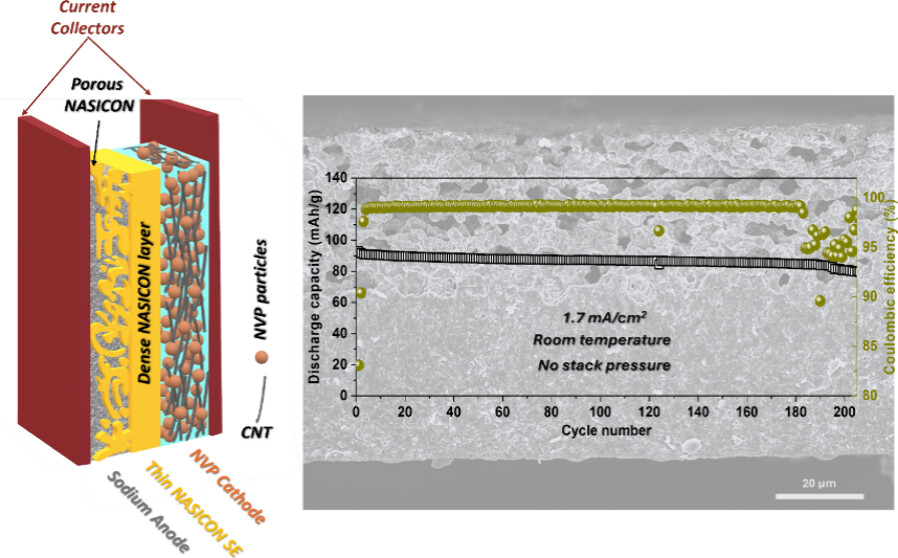
ION Storage Systems Continues March Toward Commercialization
Stories / January 8, 2025
Ion Storage Systems names new CEO
Stories / August 7, 2024
ION honored by federal and state officials

Stories / July 1, 2024
“Build Our Future” grants include two MEI2 energy companies