News Story
Life After the Clark Scholars Program: Three Engineering Careers, One Clark Legacy

Three engineers.
Three different journeys.
One very powerful career launching pad: the Clark Scholars Program.
The Clark Scholars Program aims to graduate engineering students across 11 top universities with little to no college debt. But the Clark Scholarship is just the beginning. In addition to generous financial support, the program provides Clark Scholars with business training, leadership development, and community service opportunities aimed at positioning them to address society’s grand challenges—and affect positive change in their own unique way.
The Clark Scholars Program Network (CSPN), the network that fosters connection and collaboration among its members, caught up with three recent alums from three different CSPN campuses who are advancing technology—and society—through engineering leadership. As alums in the workforce, they each contribute to the legacy established by legendary builder, philanthropist, and Clark Scholars eponym, Mr. Jim Clark ’50, whose number one commitment was to building opportunity for others.
The Extreme Project Manager
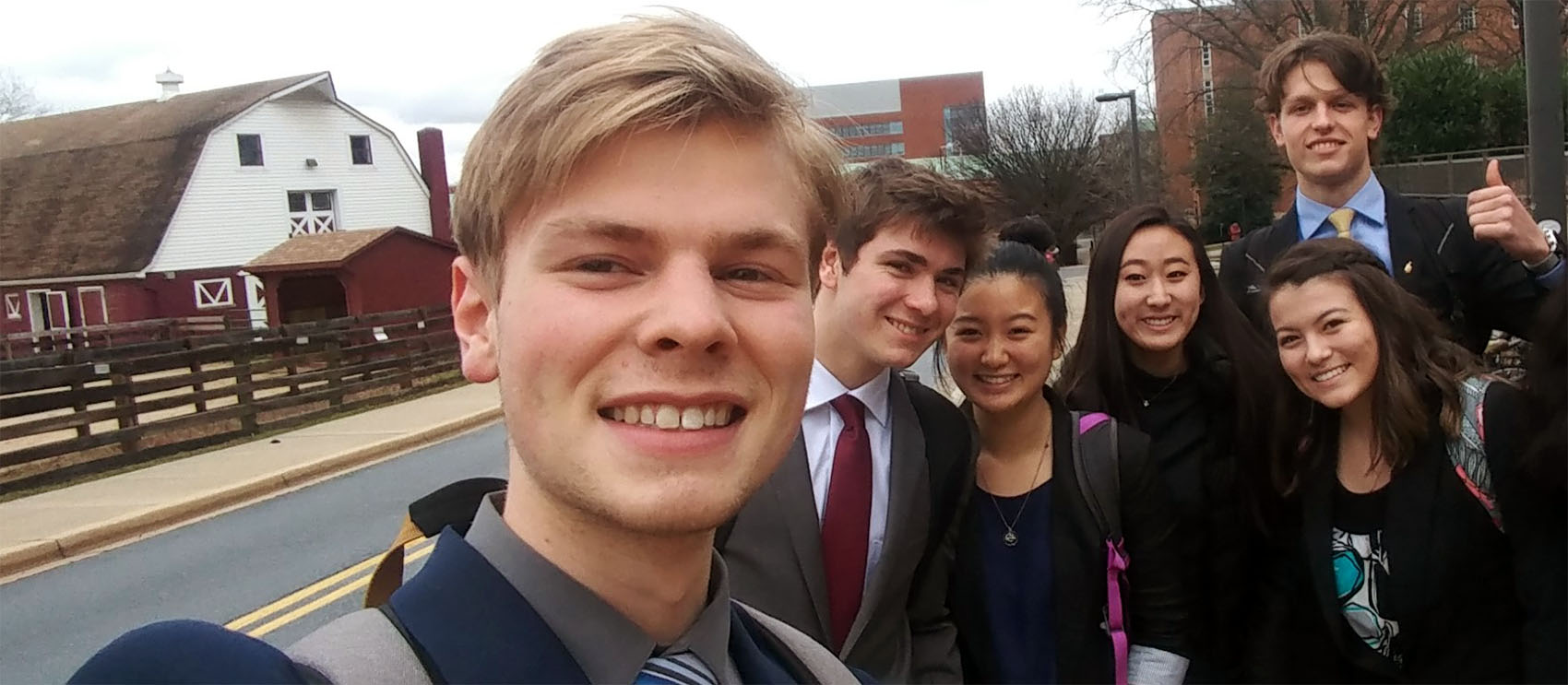
Noah Zipin ’23 earned a bachelor’s degree in mechanical engineering from the University of Maryland. Now, he is leveraging his mechanical engineering degree as a Build Engineer II for SpaceX in Brownsville, Texas. Previously a Build Engineer I, he is responsible for the final integration build of the Starship Super Heavy booster, the SpaceX rocket powering Artemis missions. The destination? “We’re going to go to the Moon in the next five years or so, and Mars after that,” says Zipin.
This rocket—the most powerful and largest in human history—will make it happen. It’s no wonder Zipin calls his role “extreme project management” and his work environment “very intense.”
The near-term goal: laser communication and extending the SpaceX Starlink system to include lunar internet, which will unlock several different industries. Longer-term? “To expand human consciousness to other areas of the solar system.”
Warfare’s Moral Compass

After being involved in an active shooter situation at her high school, Najarie Williams (who graduated from the University of Virginia in 2024 with her bachelor’s in mechanical engineering and master’s in systems engineering) began thinking more about safety and technology as a career path. “It made me weigh what kind of engineer I could be, how I could serve as a moral compass in the creation of smart technologies.”
Earning the Clark Scholarship as well as the Science, Mathematics, and Research for Transformation (SMART) Scholarship funded by the Department of Defense, Williams earned both her degrees at 22 years old. Today she serves as an engineer for a Naval Surface Warfare Center.
Her passion? Helping to plan what the next generation of defense looks like.
The Biomedical Solution-Seeker
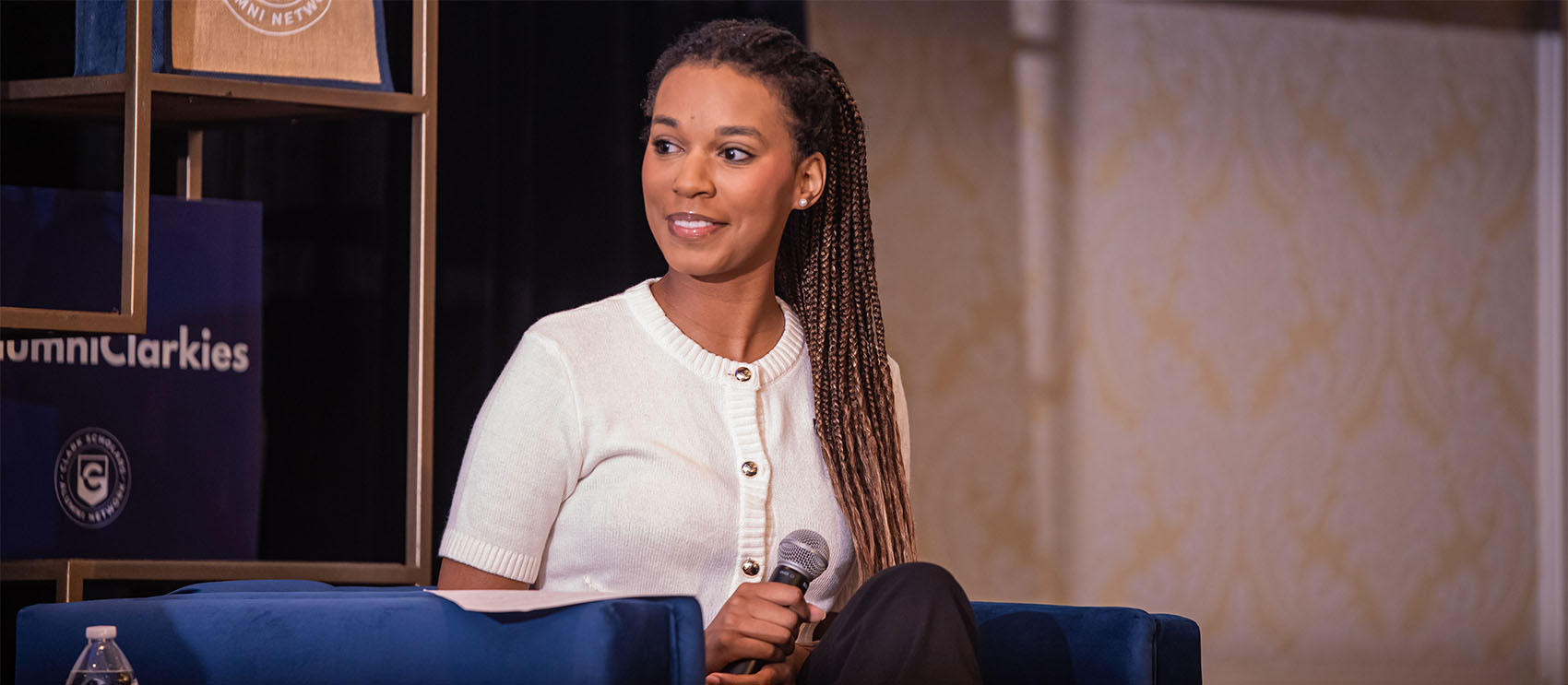
Stella Kibinda (who earned her bachelor’s in biomedical engineering from Penn State University in 2025) began following her passion while still in undergrad, conducting breast cancer research, becoming co-author on published work, and presenting at academic conferences. After graduation, she entered a doctoral program in nanoscience at the Joint School of Nanoscience and Nanoengineering, a collaboration between UNC Greensboro and North Carolina A&T State University.
Now, she’s working at the intersection of nanoscience and medicine, with a focus on advancing technologies that improve disease understanding, diagnostics, and therapeutic strategies.
Her current project? Researching a type of hydrogel for cancer treatment delivery. “It’s a full circle moment,” she says. “In undergrad, I had the opportunity to be involved with this kind of research, even making the gels. But it wasn’t my research.” Now it is.
Finish this sentence:
The Clark Scholars Program gave me…
-
Zipin: “A community through the pandemic made the biggest impact: all of us students going through similar experiences together.”
-
Williams:“The ability to adapt, connect, and network—necessary for working with the government—and earn two degrees with no debt.”
-
Kibinda:“The opportunity to pursue my entrepreneurial side.”
Clark Scholars Innovate for Change
All three Clark Scholar alums took Mr. Clark’s core charge of building community for positive change, seriously. All favored exploration over destination in their academic and career journeys—and learned a lot about engineering and themselves along the way.
“Creating value is something that’s really important to me,” says Zipin, who targeted most of his internship experience toward the medical field. He interned for the FDA, for a startup in the medical technology sector, and for a soft robotics lab with medical applications. But when a recruiter from SpaceX reached out, he changed course. “Working as an engineer at SpaceX is one of the highest value things I can be doing,” he says.
Beyond Financial Support: A Community Unlocks Possibilities
The Clark Scholars Program helps students and graduates pursue their dreams so they can pay their opportunities forward to the next generation. “The Clark Scholars Program offered me so much, and not just academically—but the conferences, networking, and friendships that continue today,” Williams says.
Now, she’s demonstrating the importance of keeping Clark Scholar connections alive after graduation. She first served on the steering committee for the Clark Scholars Alumni Network, which connects hundreds of engineering alumni across 11 top national universities with professional resources and peer networking opportunities. This developed into her working on the CSAN Executive Council with the hopes to foster an engaged community of Clark Scholar alums, starting in the DMV area. The plan? Begin with meetups, including happy hours and dinners, and build up to sessions on topics including creating a budget and investing wisely—critical subjects for new graduates.
“These kinds of resources show that Clark can exist in everyday life after graduation—not just in undergrad,” she says.
Prepared for Work and Life, Ready to Serve
For Kibinda, being a Clark Scholar meant becoming a leader, herself.
Now, as a mentor at her current institution, Kibinda aims to be a voice for students who don’t have a voice and is working to bring back the inactive Black Graduate Student Association.
As an alum participant at the 2025 CSPN Summit, she told current students following in her path that the Clark Scholars Program is about working hard and giving back. “We’re engineers. Persevere, and we can do anything.”
Learn more, Build Better
The most daunting challenges of our time—from energy and the environment to security and human health—demand engineering leaders to open new pathways to bold research and change. Mr. Clark knew the importance of providing an affordable education to promising students, and he invested in the next generation to build his vision. Join in. Follow CSPN on Instagram @CSPN.11 for current and alum Clark Scholar stories.
Published October 21, 2026
Related Stories
Stories / November 4, 2025
Clark Foundation Invests $51.7M to Support Engineering...

Stories / March 2, 2026
Tamunobelema Olungwe Gives Back
Stories / November 17, 2025
Meet the Clark Scholars Class of ’29
Stories / October 30, 2024
Meet the A. James Clark Scholars Class of ’28
Stories / November 28, 2023
Meet the A. James Clark Scholars Class of '27
Stories / October 17, 2023
Introducing the Clark Scholars Program Network
Stories / December 1, 2021
UMD Welcomes A. James Clark Scholars Class of ’25
Stories / October 7, 2020
Paying It Forward
Stories / September 15, 2026
Jonathan Portillo Conducts Success as Fire Protection...

Stories / June 25, 2026
Investing in the Next Generation: Marco Concha ’93
