My biggest advice is to KEEP TRYING. Every rejection is redirection toward an opportunity that may be even better than what you originally had in mind.
Name: Sinthia Alhawamdeh
Major: Civil and Environment Engineering
What Community College did you transfer to the University of Maryland from?
Prince George’s Community College
Why did you decide to attend UMD and the A. James Clark School of Engineering?
I have always had a passion for architecture and civil engineering. Math has always been one of my favorite subjects as well. I wanted to pursue a career where I could combine my creativity, problem solving skills, and love for math while making a meaningful difference in the world. Civil engineering gives me the opportunity to create structures and infrastructure that improve people’s everyday lives and contribute to stronger, safer, and more connected communities.
What company did you work for?
HDR
Where was your internship located? (City, State)
Fulton, MD
Give a brief description of your main roles and responsibilities during your internship.
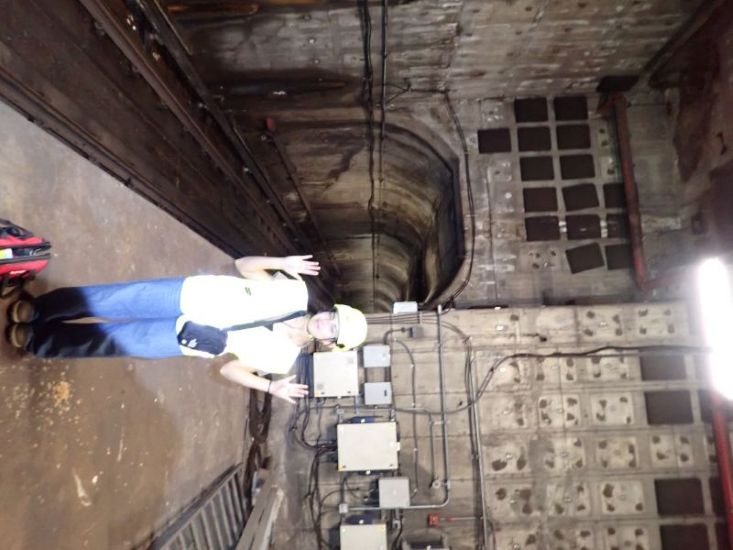
I assisted with structural bridge engineering projects and engineering analyses under the guidance of licensed Senior Professional Engineers. I conducted structural condition inspections at over 200 metro station mechanical and utility rooms, documenting deficiencies and rehabilitation recommendations for inspection reports.
How did you find the internship/co-op? What was the interview process like? What advice do you have for students in their search process?
I attended every career fair and internship opportunity I could find. I went through many interviews and was not chosen for a lot of the positions I applied to. Looking back, I realized that there was a reason for those rejections. Many of the internships I was rejected from were opportunities I was not genuinely interested in, but I wanted the experience and thought I needed to take whatever opportunity came my way. Then came the last career fair of the year in April 2026. It was a university wide career fair held at the Hotel, and I attended all three days because it was my last chance to find an internship. I ended up receiving more than five offers in one day, including one that was exactly what I had been looking and hoping for: a Structural Engineering Internship. My biggest advice is to KEEP TRYING. Every rejection is redirection toward an opportunity that may be even better than what you originally had in mind. Sometimes, the opportunity meant for you is one you never even considered. And most importantly, ALWAYS SHOW UP. You never know what opportunity might come from simply being present. Even when you feel discouraged or think something may not be worth attending, show up anyway. Some of the best opportunities can come from places you least expect.
How was your engineering education relevant to your internship?
This was one of the most relevant lessons I learned throughout my engineering journey. I think one of the biggest goals of engineering is for every engineer to graduate knowing how to PROBLEM SOLVE. I have heard that phrase probably a million times, but it was not until I went through engineering school that I truly understood what it meant. Every class, assignment, mistake, trial and error, and challenge throughout my degree taught me more than just technical knowledge. It taught me how to keep going when I did not immediately know the answer, how to approach problems from different perspectives, and how to face obstacles instead of giving up. Engineering school is not about knowing how to solve every problem before you graduate. It is about learning how to figure things out. The problems you face in your career may look completely different from the ones you see in school, but the ability to think critically, adapt, and keep working toward a solution is something you will carry with you everywhere.
What were your non-technical takeaways from the internship?
Communication can be just as important as your degree. It is so important to learn how to communicate effectively, build relationships, and keep conversations engaging. Your technical knowledge can get you through school, but knowing how to communicate with others can open doors that your degree alone cannot. Practice by going to career fairs and starting conversations, the more you practice the better you become. One of the most important things I learned is to ask questions. Do not be afraid that your question is too simple or that you might sound like you do not know enough. People who are knowledgeable and experienced often genuinely enjoy sharing what they know, giving advice, and helping others learn. You can learn so much just by being curious and starting a conversation. People are around us to help, so do not be shy—ask questions, start conversations, and learn from the people around you. You never know where one conversation or connection might lead.
How has the internship experience changed or contributed to your academic or career goals?
Now that I’m taking senior structural engineering classes, I have so much more background knowledge of the information being taught and how it will be relevant in the real world and my career. It also made me even more passionate and interested in learning about the lectures in courses I’m taking because I see how they are so relevant.
Top