News Story
New Faculty Spotlight: Netanel Korin
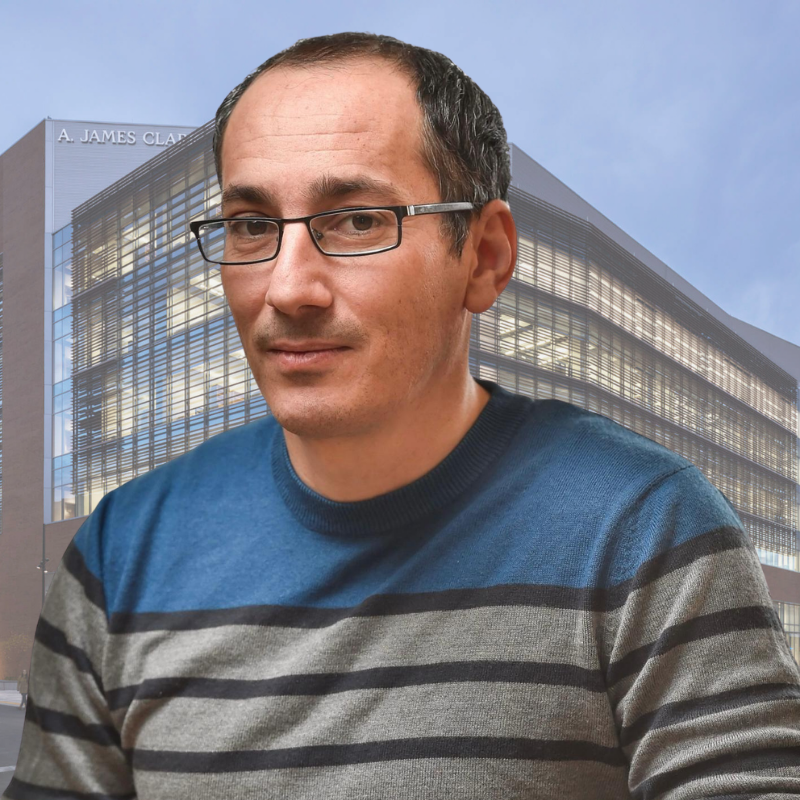
This spring, Dr. Netanel Korin joined the University of Maryland in early March as an Associate Professor in the Fischell Department of Bioengineering (BIOE) and will be based in the newly established Edward and Jennifer St. John Center for Translational Engineering and Medicine (CTEM) at the 4MLK building in Baltimore. Korin is a biomedical engineer whose work sits at the intersection of vascular mechanics and localized cardiovascular therapeutics.
Korin’s research explores how blood flow and vascular mechanics shape both disease and treatment in the cardiovascular system. He and his team design drug carriers and therapeutic systems that respond to disease specific flow conditions so treatments concentrate at sites of vascular disease while limiting effects on healthy tissue.
Before coming to UMD, Korin was an Associate Professor of biomedical engineering at the Technion Israel Institute of Technology and a visiting scholar at the Wyss Institute at Harvard University. His work has been published in leading journals, including Science and Science Advances and has resulted in multiple international patents. Korin’s research has attracted competitive funding, including a European Research Council Consolidator Grant, and has moved toward clinical and commercial applications.
“What excites me most about joining the University of Maryland is the strong integration of engineering, medicine, and translation. The Fischell Department of Bioengineering has built a unique environment where fundamental engineering research is closely connected to real clinical challenges, to facilitate a clear pathway for discoveries to move toward patient impact".
- Netanel Korin
“What excites me most about joining the University of Maryland is the strong integration of engineering, medicine, and translation. The Fischell Department of Bioengineering has built a unique environment where fundamental engineering research is closely connected to real clinical challenges, to facilitate a clear pathway for discoveries to move toward patient impact,” Korin says.
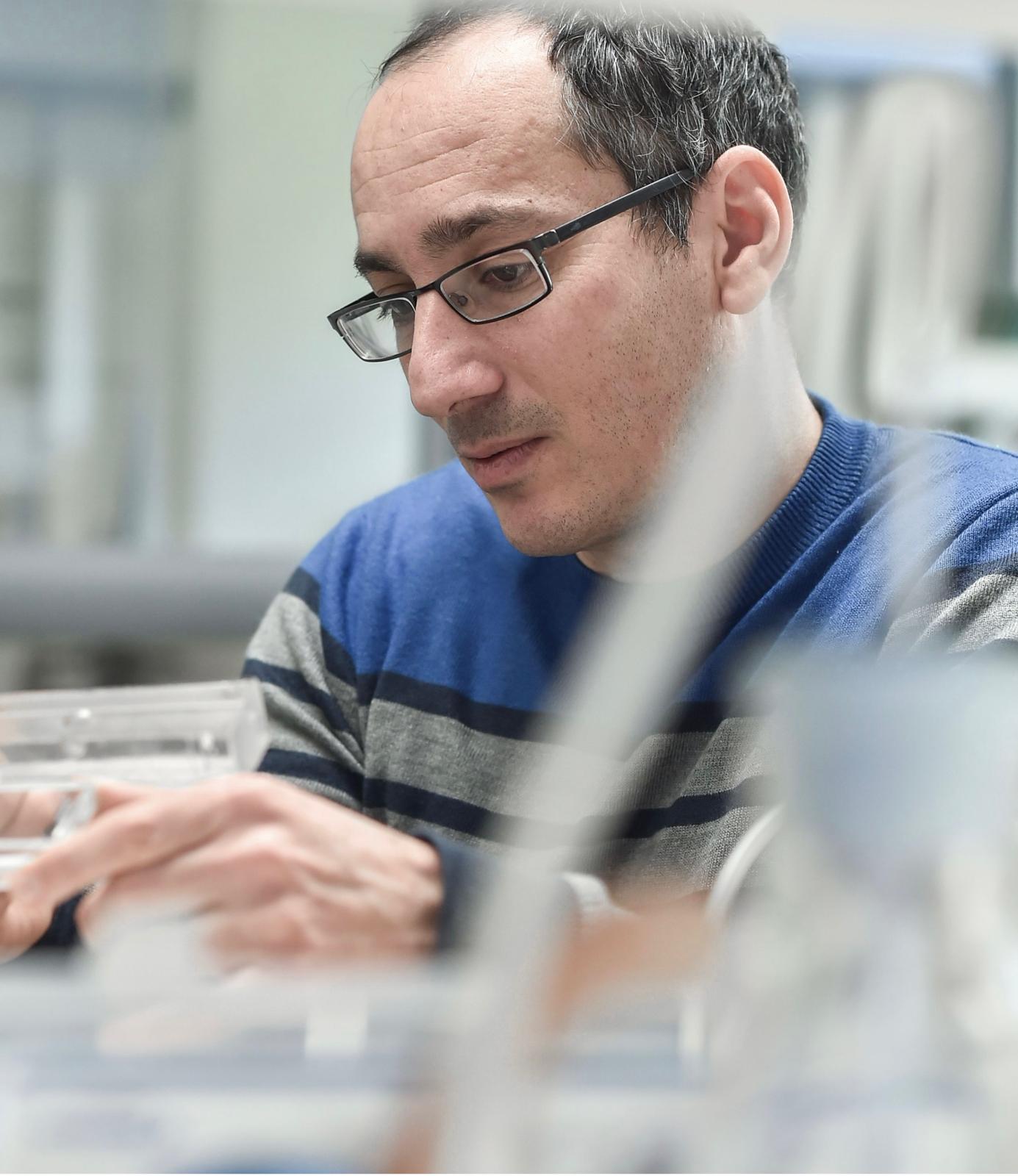
Korin’s lab uses human-relevant experimental models, such as microfluidic systems and reconstructed blood vessels, to study vascular disease and drug delivery under realistic flow conditions. The group also develops cardiovascular devices that actively shape blood flow to improve performance and safety. Examples include intravascular treatment strategies and flow-controlled devices aimed at reducing thrombosis and other flow-related complications.
At UMD, Korin plans to bring together biofluid mechanics, biomaterials, vascular biology, and device design to advance therapies that can improve cardiovascular care. He sees strong opportunities for collaboration across engineers, physicians, and industry partners in the DC Baltimore region and aims to translate laboratory discoveries into technologies that benefit patients.
Published March 6, 2026
Related Stories
Stories / October 5, 2026
Mueller Lab Receives Two NIH Grants to Advance Low-Cost Cancer...

Stories / September 16, 2026
New Faculty Members for 2026-27 Engineer for the Public Good
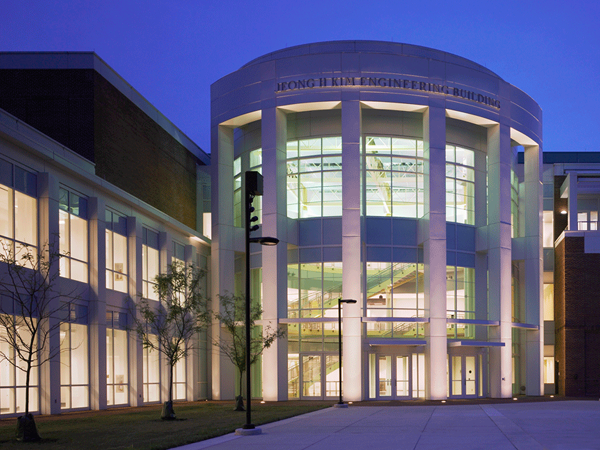
Stories / September 14, 2026
Project, Problem, Solution: MATRIX Interns Make an Impact
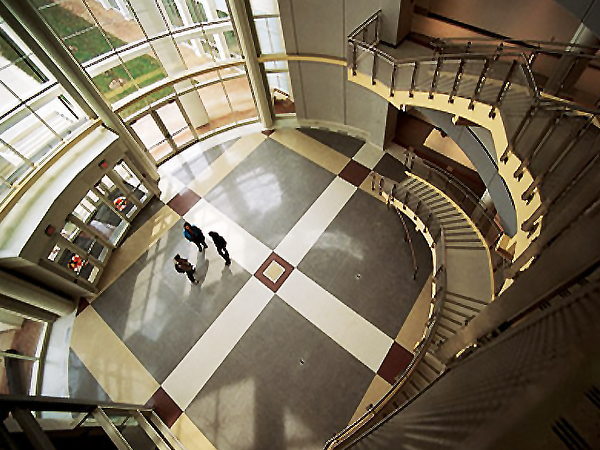
Stories / September 10, 2026
BIOE Announces Faculty Promotions and Appointments

Stories / September 3, 2026
UMD Convocation will honor five from the Clark School
Stories / August 26, 2026
Graham Named Honorary ASME Member

Stories / August 25, 2026
NSF Renews Maryland-Led Quantum Simulation Institute’s Funding

Stories / August 19, 2026
Smooth Sailing: MATRIX Dives Into Ship Inspecting

Stories / August 18, 2026
New Faculty Spotlight: Yu Gan
Stories / August 5, 2026
New Speech Model Reads Mouth Movement Across Languages