News Story
UMD Bioengineering Graduate Program Ranked #13 Public Nationally

The Fischell Department of Bioengineering (BIOE) at the University of Maryland continues to rank among the nation’s leading graduate programs in bioengineering and biomedical engineering, according to the latest U.S. News & World Report rankings.
On April 7, U.S. News released its 2026–2027 Best Graduate Schools rankings, with BIOE ranked #13 among public programs and #29 overall nationwide. The department remains a leader in advancing interdisciplinary research and training the next generation of bioengineers.
“Our graduate program emphasizes both research scholarship and impact, with the aim of making meaningful contributions toward solving real health challenges," said Ian White, associate chair and director of graduate studies. “This ranking reflects the strong commitment to impactful research that our students and faculty give every day."
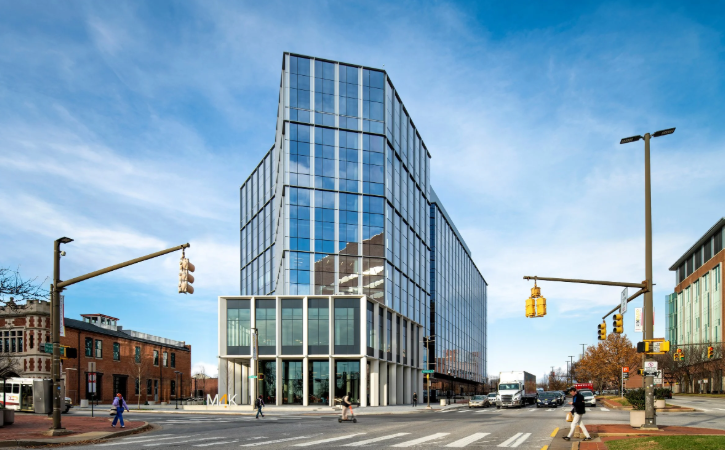
BIOE continues to build on its strengths through research growth and cross-campus collaboration. The newly launched Edward and Jennifer St. John Center for Translational Engineering and Medicine in Baltimore brings together engineers and clinicians to develop medical technologies that address patient needs. Through this bridge, graduate students gain the opportunity to work in close proximity to clinical environments, collaborating directly with healthcare professionals to translate research into technologies that address real patient needs.
“Our consistent rankings reflect the dedication of our faculty and students and the strength of our educational and research programs,” said John P. Fisher, Distinguished University Professor and department chair of the Fischell Department of Bioengineering. “We are focused on turning discoveries into real-world solutions that improve human health.”
Graduate students in BIOE engage in research spanning biomaterials, drug delivery, biomedical imaging, and medical devices. With access to state-of-the-art facilities and strong partnerships across the University of Maryland system, students gain the skills and experience needed to contribute to advances in healthcare and technology.
RESEARCH
With more than $22 million in research expenditures in 2025, BIOE ranks among the top in annual expenditures among Big Ten bioengineering programs. This growth is driven by strong partnerships with government agencies, industry, and clinical collaborators, supporting innovative research across a wide range of areas in bioengineering.
BIOE graduate student research is supported and recognized through a variety of department- and college-level opportunities, and students are regularly selected for awards and fellowships from leading organizations and institutions. Notable recognitions from the 2025–26 academic year include:
-
Graduate student Martin Carrasco was selected as the first inaugural Mickey Dale Family Foundation Endowed Distinguished Graduate Fellowship in Bioengineering, supporting a shared mission between UMCP and UMSOM to advance organ transplantation research
-
Ph.D. Graduate Nicholas Pirolli secures TEDCO funding to advance inflammatory bowel disease therapeutics. His work focuses on engineering probiotic bacteria to produce therapeutic extracellular vesicles, addressing key challenges in treatment and scalability.
-
Doctoral candidates Ryan B. Felix and Darby Steinman received the 2025 Fischell Fellowships in Biomedical Engineering, recognizing outstanding graduate students pursuing applied research and product design with the potential to transform human health.
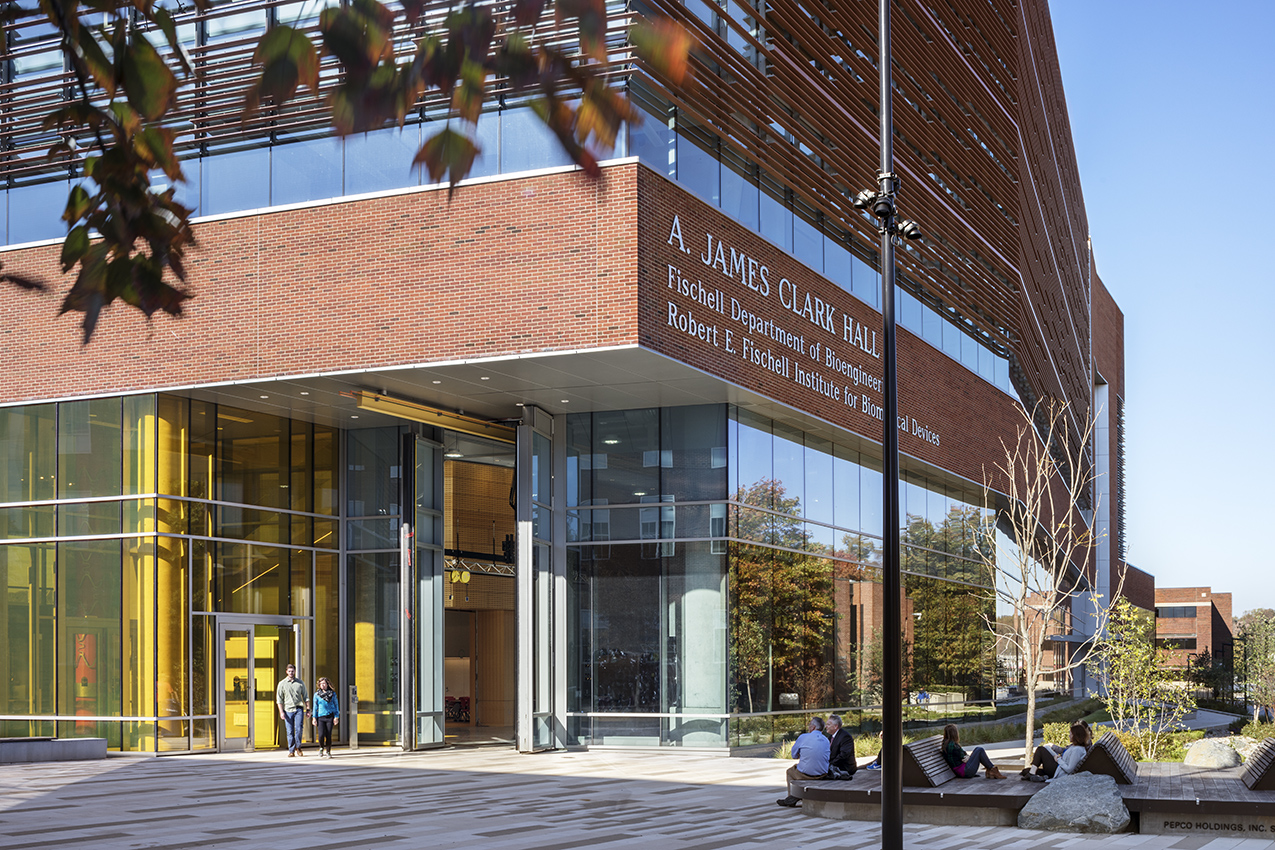
BIOE’s faculty are at the forefront of emerging fields, including biocomputation, biomolecular engineering, medical imaging, drug delivery, and regenerative medicine. Researchers apply computational modeling to better understand biological systems, design bioinspired materials for treating disease, and advance optical technologies for diagnostics. The department also sustains strong partnerships with research centers and institutes, such as the Robert E. Fischell Institute for Biomedical Devices, to help translate discoveries into practical solutions that improve human health.
The department offers a range of graduate degree options, including a Doctor of Philosophy (Ph.D.), Master of Science (M.S.), dual Doctor of Medicine/Master of Science (M.D./M.S.) and Doctor of Medicine/Doctor of Philosophy (M.D./Ph.D.) programs with the University of Maryland School of Medicine. BIOE also offers a Graduate Certificate and Master of Engineering (M.Eng.) in Bioengineering through the Maryland Applied Graduate Engineering (MAGE) program, available online or on campus. Across all programs, students work at the intersection of engineering, biology, and medicine, gaining the skills and experience needed to advance human health.
Published April 7, 2026
Related Stories
Stories / April 7, 2026
Maryland Engineering: Top 10 in the Country, 8 Years Running

Stories / April 8, 2025
UMD Bioengineering Graduate Program Holds #12th Public National...
Stories / June 4, 2026
BIOE Graduate Program Receives Mentoring Excellence Award
Stories / June 2, 2026
Wielgosz Receives ARCS MWC Foundation Scholarship

Stories / May 19, 2026
Student Success at SAMPE 2026

Stories / May 7, 2026
Melissa Buys Earns Presentation Award at SSPI–Mid Atlantic...

Stories / April 8, 2026
Nine UMD Students Receive Vertical Flight Foundation...
Stories / March 23, 2026
Morcos Awarded UMD Ann G. Wylie Dissertation Fellowship

Stories / September 25, 2025
UMD Bioengineering Undergraduate Program Ranks #10 Among...
Stories / September 23, 2025
UMD Students Sweep 2025 VFS Student Design Competition