News Story
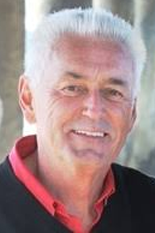
Investing in the Next Generation: Marco Concha ’93

By Laura Farmer
Marco Concha still remembers the day he lost his wallet during a prospective student visit to the University of Maryland more than 30 years ago. A high school senior at the time, he attended a scholarship event hosted by Rosemary Parker, now director of the Center for Minorities in Science and Engineering, and Jim Newton, the center’s founding director.
Marco, whose parents immigrated from Ecuador, was searching for an engineering program with the diversity and sense of belonging he had experienced growing up in Philadelphia. At Maryland, he found both. The feeling was reinforced when Parker personally called days later to say his lost wallet had been found and mailed back.
“It felt like this was a place that takes care of people,” he recalls.
Maryland ultimately sealed the deal by awarding him the Banneker/Key Scholarship, a full-tuition, four-year merit-based award.
Says Marco, “I accepted and the rest is history.”
The Road to Maryland
As a first-generation Ecuadorian, Marco was drawn to the diversity of Maryland’s student body. His mother, who comes from the indigenous Cañari community in rural Ecuador, had limited formal schooling before immigrating to the U.S. to work as a nanny in the Washington, D.C. area—an experience that shaped her expectations for education and achievement within her own family. His father immigrated in the early 1960s, completed high school in the U.S., became fluent in English, and later served as director of foreign languages for the Philadelphia public school system.
Marco’s parents’ high standards for him and his siblings, coupled with his exceptional talent, helped launch his big dreams. By middle school, Marco passionately aspired to be an astronaut.
“Some kids dreamed of playing in the NBA or becoming the next president of the United States—I wanted to go to space!” he shares. He vividly remembers when a National Guard pilot visited his classroom in middle school and shared an unexpected barrier to Marco’s dream of space travel.
“I was inspired by his presentation! I went to speak to him afterward and he told me, ‘With prescription glasses, you can’t be a pilot.’ That was pretty soul-crushing at the time. But I was good at math and science, so I decided the next best thing was aerospace engineering,” shares Marco.
Marco knew he wanted to pursue a degree at a top-tier engineering school, which eventually led him to Maryland.
When you reach a point where you can give back, you should. Representation matters. That’s why I invest. It’s about being present for the next generation. Having my name attached to a scholarship isn’t about recognition—it’s about signaling to students that someone believes in them, they belong here, and there’s a path forward.
Marco Concha ’93
That Maryland Life
At Maryland, Marco quickly found more than a classroom education. Even before freshman year began, he was invited to settle in a bit early thanks to the Bridge Program, organized by the Center for Minorities in Science and Engineering (CMSE).
“This program brings students from minority backgrounds in early to help you meet people, and build a cohort. That made a huge difference for me—having familiar faces from day one,” shares Marco. CMSE also offered Marco a “home away from home,” providing a comfortable gathering place for him and his friends between engineering classes. In fact, Marco collaborated with people he met at the Center to co-found Maryland’s chapter of the Society of Hispanic Professional Engineers (SHPE).
“There were five of us at the beginning. We petitioned the College of Engineering and built the organization from the ground up. The Center was incredibly supportive. We eventually secured space, the SHPE lounge, and built a community there. I became president the following year. Membership grew to 20 or 30 students. We were committed to showing up, creating value, bringing in speakers, helping with resumes and more. A lot of students I meet even today say they’re the first in their family to pursue certain paths. I’m a product of that experience,” he recounts.
That instinct to build pathways for others carried into his career.
Reach for the Stars
After graduating, Marco achieved his childhood dream, joining NASA’s Goddard Space Flight Center as an aerospace engineer, where he worked on small, high-impact teams solving complex problems. In his twenties, he served as chief navigator for a mission to the moon, helping guide one of NASA’s first lunar missions since the Apollo era. He later contributed to groundbreaking work in satellite servicing and led navigation efforts for the GOES-R program, which underpins modern weather forecasting and disaster preparedness.
Today, at Amazon, he is helping shape the future of satellite constellations at a global scale. This work influences not just technology, but international policy and safety.
Yet for Marco, professional achievement is only part of the equation. For years, he stayed connected to students as a mentor and speaker. But over time, he began to ask a different question: was influence enough, or was it time to invest more directly?
The answer led him back to Maryland.
Through the Marco Concha ’93 Endowed Scholarship, he has created opportunities for students who, like him, are navigating unfamiliar terrain—often as the first in their families to pursue a college degree. In many ways, his story reflects a broader arc: not just access to opportunity, but a commitment to extend it.
“At this point in my life, I’m just living the values I was raised with,” shares Marco. “In immigrant communities, service is fundamental. We take care of each other. When you reach a point in your life where you can give back, you should. Representation matters. That’s why I invest. It’s about being present for the next generation. Having my name attached to a scholarship isn’t about recognition—it’s about signaling to students that someone believes in them, they belong here, and there’s a path forward. For me, investing is just another form of service.”
Published June 25, 2026
Related Stories
Stories / June 25, 2026
Leading the Way: Gabriella Anthony ’26

Stories / June 24, 2026
A New Path: William Coyle ’00

Stories / February 4, 2026
Joshua Budram Takes Flight
Stories / March 23, 2023
Alumnus Chance Glenn Establishes Morningbird Foundation...
Stories / February 16, 2022
Celebrating Black Aerospace Engineers: James Lankford (M.S....
Stories / December 14, 2021
Dean's Circle Spotlight: Supporting the Engineering Pipeline
Stories / July 27, 2021
Three UMD Alumni Among Aviation Week Network’s 2021 20...
Stories / February 23, 2021
Paying It Forward with Double the Impact
Stories / September 30, 2020
Mehr Gift Establishes Two Funds at UMD
Stories / March 3, 2020
Pattishall Family Establishes Scholarship to Support Women in...