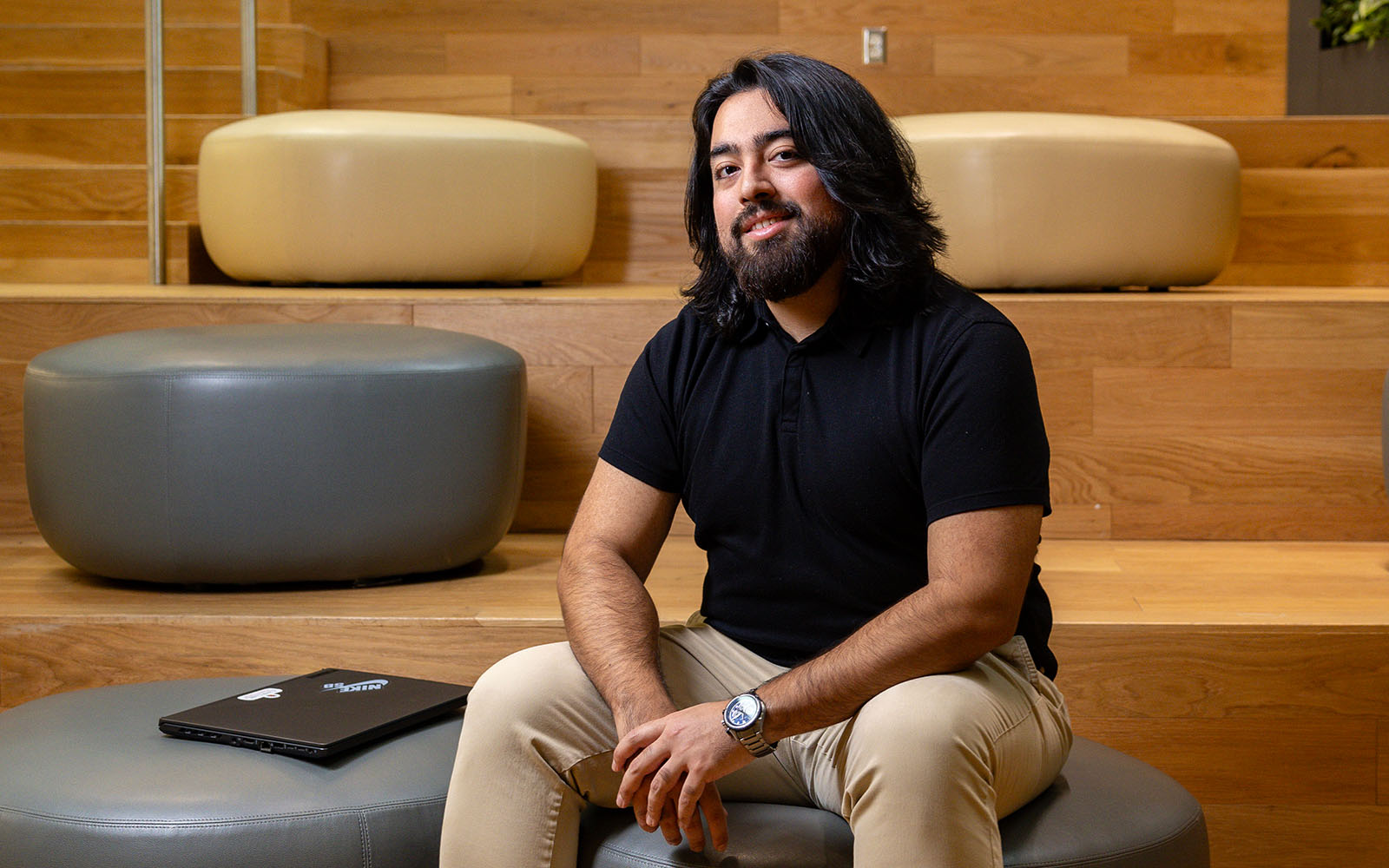
Growing up with a mother who works as an MRI technician, Leonardo Buitrago ’24 has long appreciated the power of medical imaging to reveal the inner workings of the human body.
He’s now fascinated with the field’s next frontier: teaching computer models to accurately analyze those images to make predictions, including whether a tumor is malignant.
So when Buitrago transferred from Montgomery College to the University of Maryland, College Park, he chose Biocomputational Engineering (BCE) as his major. The niche program became one of the first of its kind in the nation in Fall 2021. It teaches students how to analyze and visualize reams of health data to solve some of today’s most challenging medical problems.
Solving big challenges with big data
One of the projects Buitrago worked on as a BCE student researcher entailed training a computer model to quickly recognize breast cancer tumors via thermal imaging—one way AI can be used to help patients avoid long, anxious waits for test results.
Maryland prepares graduates to adapt to the future of work
- Major in the future: Maryland’s BCE major is meeting calls from biotech and pharmaceutical companies across the U.S.—including Johnson & Johnson, AstraZeneca, and Novartis—for graduates as well-versed in (and passionate about) engineering and computer analytics as they are in math and biology.
- Classes for where you are: BCE courses are held at The Universities at Shady Grove in Rockville (pictured above), in the heart of Montgomery County’s biotech corridor. Students graduate with a degree from the University of Maryland, College Park.
- Powered by Maryland engineers: Students in the BCE program have collaborated with experts at the nearby National Institute of Standards and Technology, the Institute for Bioscience and Biotechnology Research, the Food and Drug Administration, and the University of Maryland School of Medicine in Baltimore.
“You want to help patients get treatment early and make sure that their test results are accurate,” says the BCE graduate, who now works with the program as a student assistant while pursuing a master’s in biotechnology at the University of Maryland, Baltimore County. “I always feel good that I’m contributing to this type of research.”
Thanks to the big-data boom, there are endless medical quandaries for “biocomp” engineers like Buitrago to explore. Using high-performance GPU workstations and AI, BCE students are also mining, analyzing, and visualizing troves of medical data to help predict the spread of viruses and develop new medicines, vaccines, and treatments. Recent student projects have included distinguishing between different strains of the COVID-19 virus, predicting how various coronavirus mutations behave, and classifying blood cells to speed up diagnoses of leukemia and other diseases.
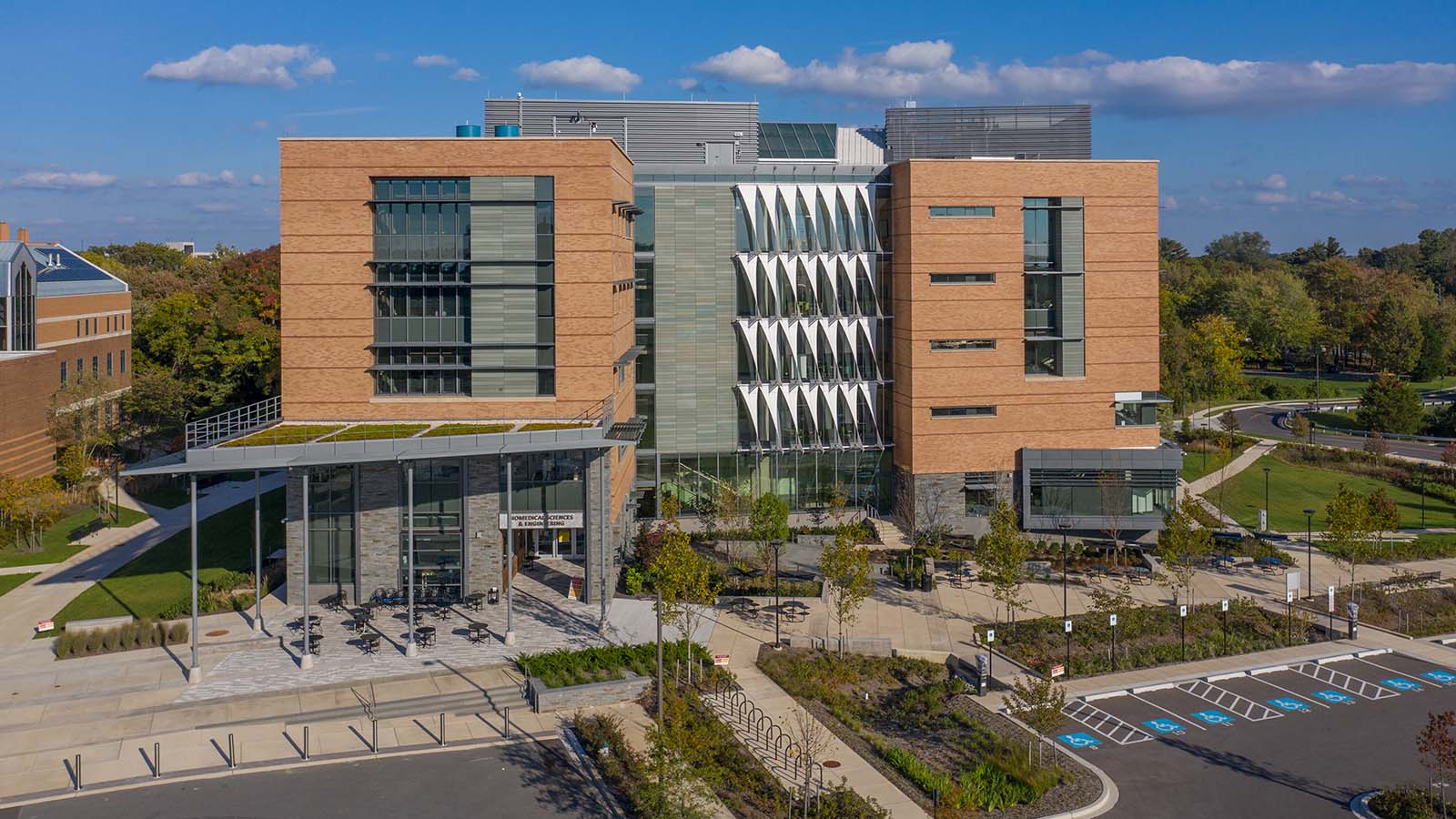 BCE students use the advanced facilities at The Universities at Shady Grove while earning their degrees from University of Maryland, College Park. (Photo courtesy of the Universities at Shady Grove)
The big challenge? Spreading the word so that more computer-loving engineers and data-driven biology buffs can join the growing, in-demand field.