News Story
Solid Oxide Fuel Cell Breakthrough

A major breakthrough in solid oxide fuel cell (SOFC) technology is opening the door to more affordable, efficient, and practical clean energy systems.
For decades, researchers have sought to decrease the size and corresponding capital costs of SOFCs by increasing power density, while also trying to lower operating temperatures to reduce system costs, shorten startup times, and improve long-term durability. The challenge has been the tradeoff between these two goals as SOFCs have required high temperature to achieve high power density.
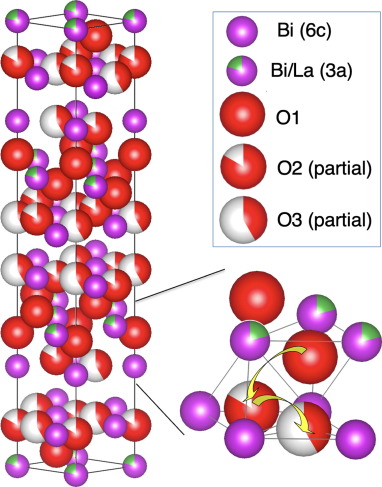
A recently published paper in Advanced Energy Materials from the lab of University of Maryland (UMD) Distinguished University Professor and Director of the Maryland Energy Innovation Institute (MEI2), Dr. Eric Wachsman, demonstrates a novel ceria-based electrolyte structure that with increased oxygen pressure at the cathode, significantly reduces energy losses, enhances overall performance, and helps unlock the full potential of advanced SOFCs operating at lower temperatures.
Using this strategy with their newly developed nano-engineered cathode technology, the group achieved a record-setting performance of 4 W/cm² at just 650°C—the highest power density ever reported for a low-temperature SOFC.
These results show that pressurization can be a practical pathway to next-generation fuel cells that are more efficient, more durable, and more cost-effective; thus, bringing this high-performance clean energy technology one step closer to widespread deployment.
“These high-power density lower temperature SOFCs can not only address the rapidly growing data center demand for low cost and efficient power generation but also enable electrification of aviation and heavy-duty transport” said Wachsman.
The breakthrough will be a key component of the recently received Grand Challenges Impact Award from UMD. This initiative will integrate cross-disciplinary expertise to not only provide input to help guide the State of Maryland’s policy for AI and quantum data center deployment, but to chart a national and global path toward sustainable and ethical AI infrastructure. Deployment of advanced SOFCs to power these datacenters can both bring down the cost to rate payers and reduce GHG emissions due to their higher efficiency compared to the growing deployment of natural gas turbines.
S. A. Horlick, Y.-L. Huang, K. L. Duncan, et al. “High Power Density, Low Temperature, Solid Oxide Fuel Cells at Elevated Oxygen Partial Pressure.” Advanced Energy Materials (2026): e71242. https://doi.org/10.1002/aenm.71242
Published July 8, 2026
Related Stories
Stories / July 9, 2026
Alchemity Announces New Seed Financing

Stories / June 25, 2026
MEII Director serves on Daily Record virtual panel discussion

Stories / June 8, 2026
Alchemity receives Build our Future Award from Governor Moore

Stories / November 14, 2025
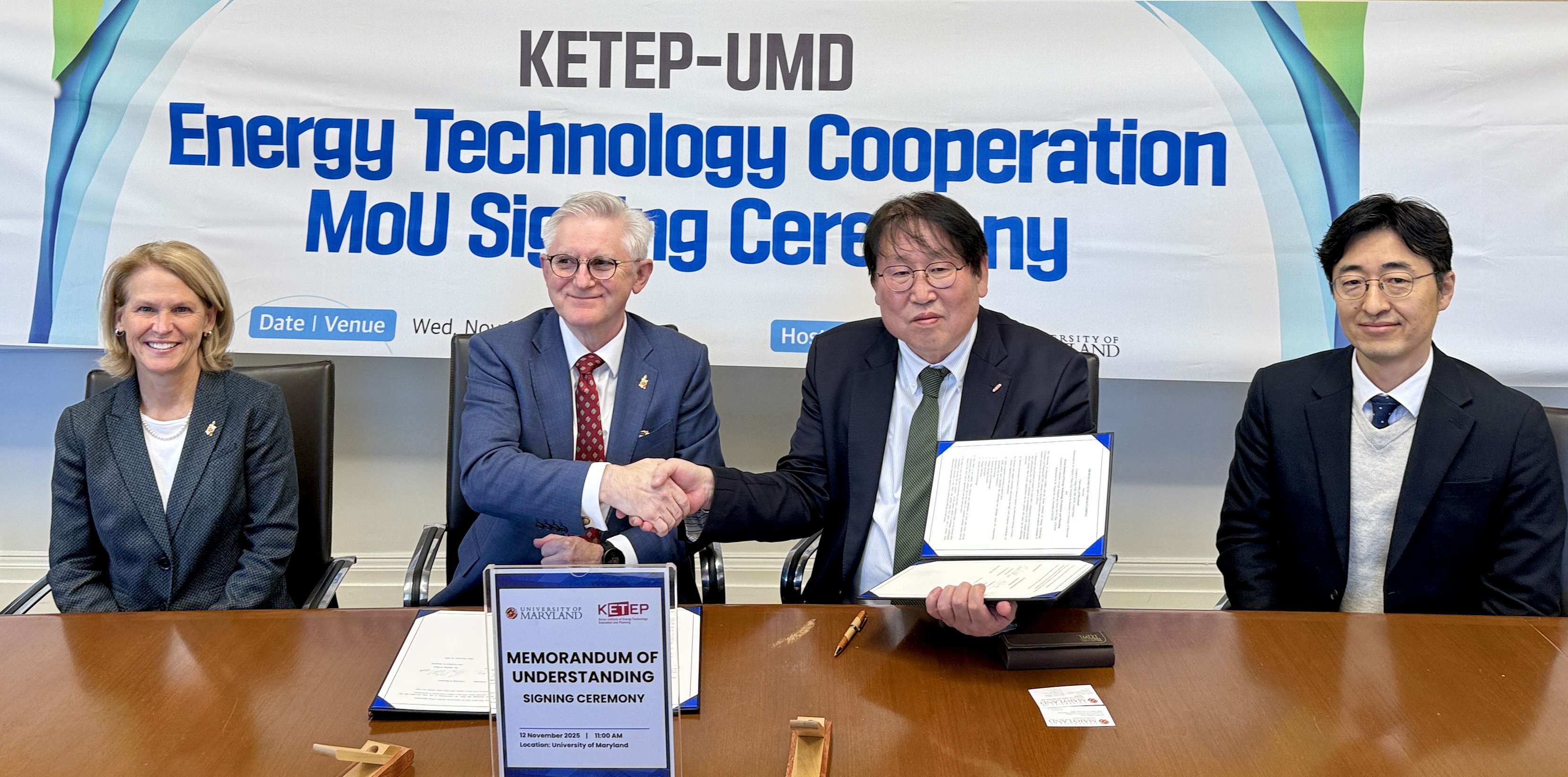
UMD - KETEP Research Collaboration Solidified
Stories / November 7, 2025
Wachsman named Materials Research Society Fellow
Stories / October 21, 2025
UMD Distinguished University Professor highlights US-France...

Stories / July 25, 2025
Two MEI2 energy seed awardees receive MD Commerce Build Our...
Stories / May 6, 2025
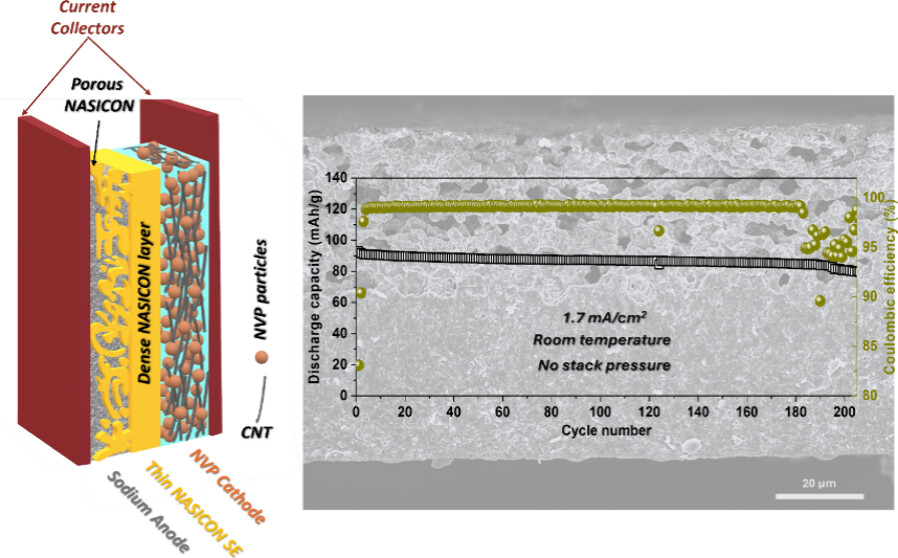
New Solid-State Sodium Battery Offers Energy Density Comparable...
Stories / April 17, 2025
Wachsman lab develops highest oxygen-ion conductivity material
Stories / March 27, 2025
Two UMD Companies listed in America’s top Greentech companies...