Leading AI education in engineering
Maryland’s new Engineering AI master’s degree for professionals gives graduates an edge in an evolving workplace.
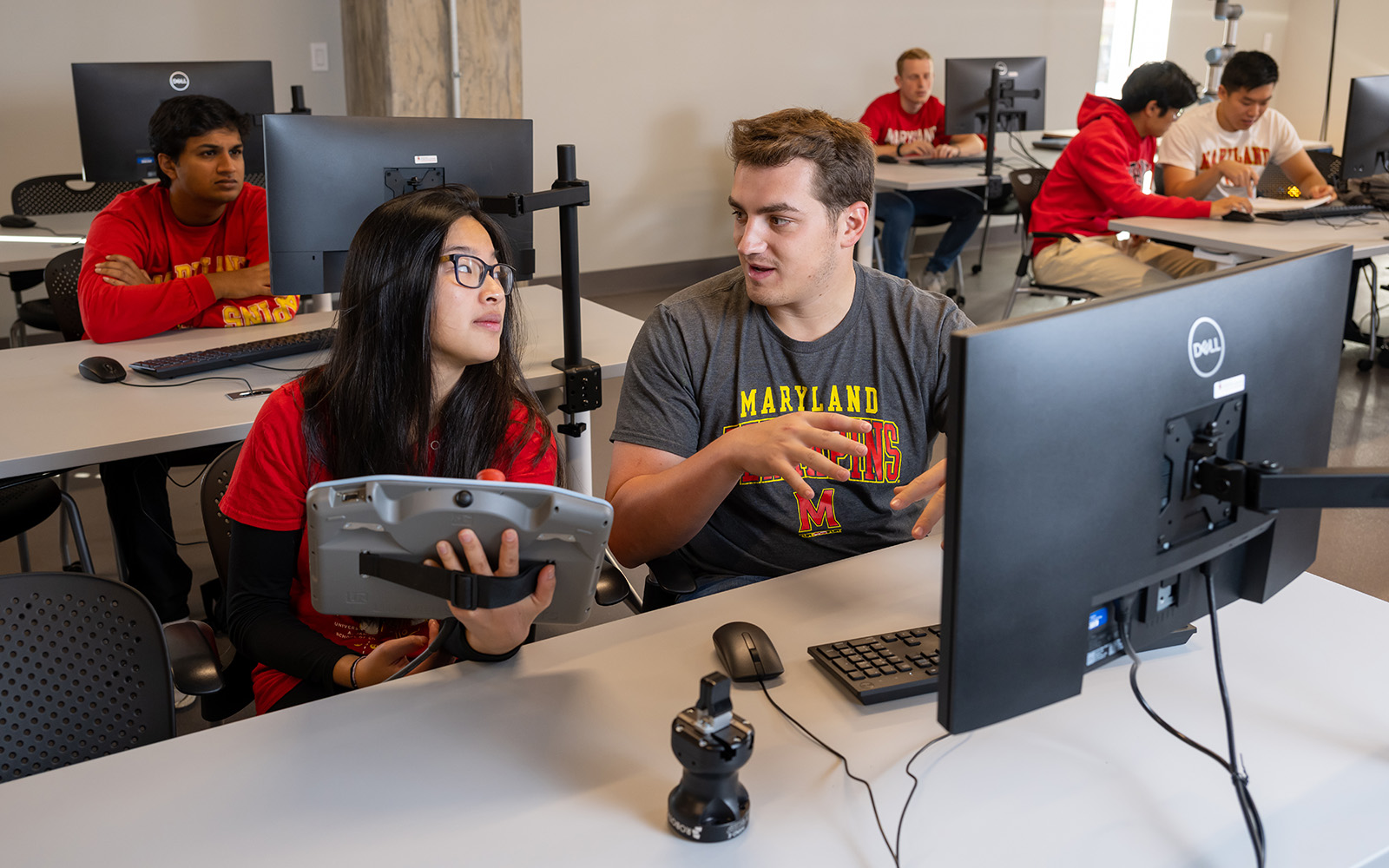
Maryland’s new Engineering AI master’s degree for professionals gives graduates an edge in an evolving workplace.
Industries including medicine, manufacturing, and transportation desperately need employees with a grasp of AI as well as the physical systems where it’s deployed. Working professionals who want to fill this niche can draw on the extraordinary resources of Maryland Applied Graduate Engineering (MAGE) and its Engineering AI professional master’s program, which welcomed its inaugural cohort in Fall 2025.
In contrast to other graduate programs in AI, which focus on algorithms, statistics, and coding, Maryland’s Master of Engineering (M.Eng.) teaches students how to apply those skillsets to physical systems.
“Industry is looking for people who know AI and who also think like engineers,” says Sennur Ulukus, chair of the Department of Electrical and Computer Engineering and content advisor to the program. An M.Eng. graduate would, for instance, understand the large language models that power chatbots, as well as how that technology can be harnessed in a robot that helps the elderly with household tasks.
It’s unusual to find a master’s program for professionals in Engineering AI, Ulukus says, but building a workforce that’s fluent in both computer science and physical systems is critical to maintaining competitiveness in the global marketplace. Graduates with a Maryland M.Eng. will contribute to developing technologies that advance health care, transportation, manufacturing productivity, and communication.
Engineering AI is an emerging discipline, Ulukus says: “The combination of physical systems with the intelligence that AI algorithms bring—that’s the future. That’s going to change any field we can think of.”
All students in MAGE’s Engineering AI program take four foundational courses:
Additional core courses are chosen from class options including generative engineering AI and fairness, ethics, and sustainability.

MAGE administers our online Master of Engineering curriculum, ranked No. 11 in the nation by U.S. News & World Report in its 2026 Best Online Programs rankings.
For the remaining electives, students can choose from offerings across all 19 MAGE academic options to tailor their degree for a specific career interest, such as cybersecurity, civil engineering, or robotics.
“That customization makes the degree flexible and adaptable to your actual needs,” says George Syrmos, assistant dean for continuing education and director of MAGE.
What’s more, by choosing electives from one domain of engineering, a student can earn both a master’s and a graduate certificate with just 10 courses. “The stacking of the degrees is another, very attractive feature,” Syrmos adds.
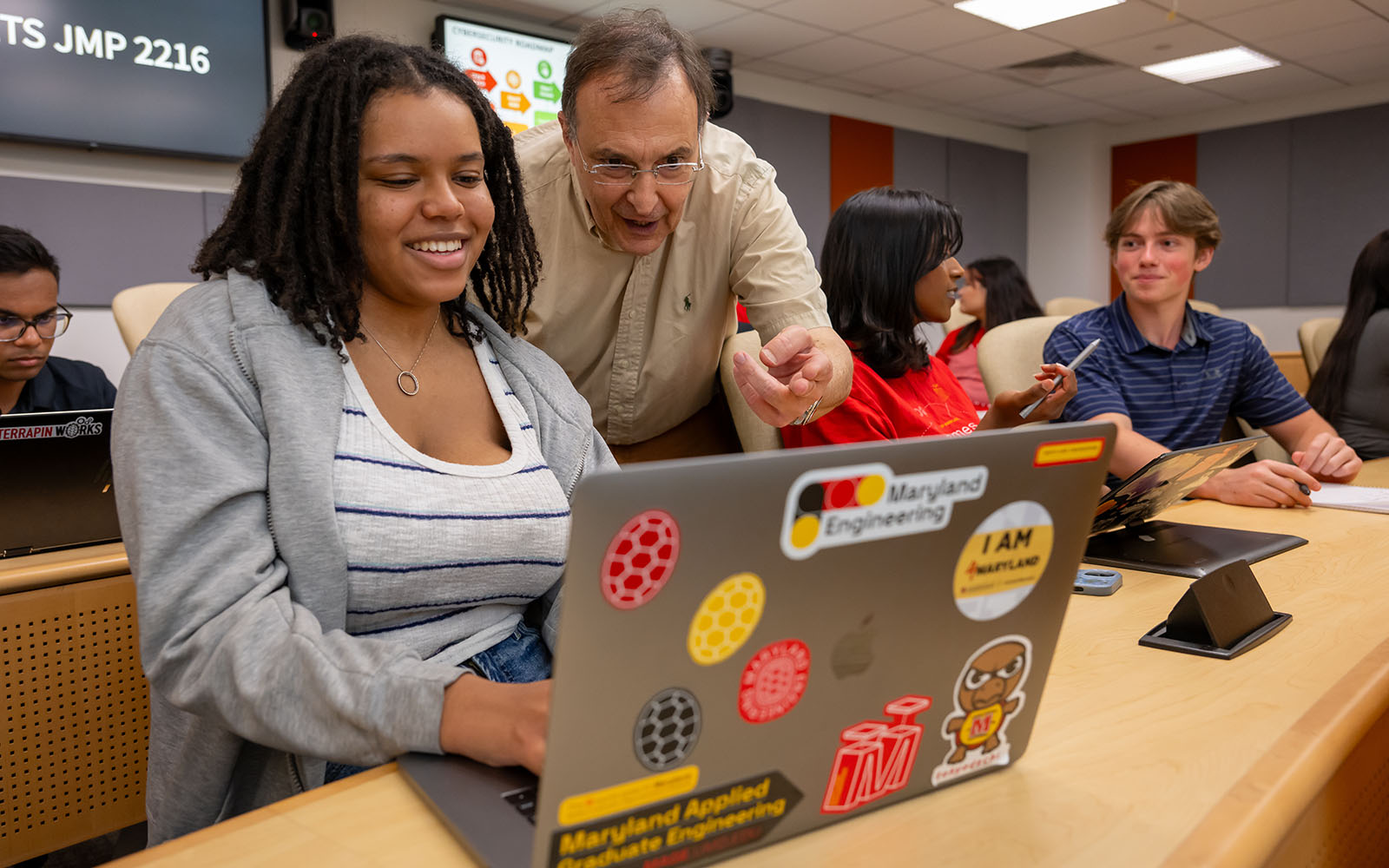
Syrmos is committed to developing quality, practice-oriented engineering programs to address the continuing education needs of working professionals.
Small classes + Active learning = Better outcomes
“The classes are small, and the professors are able to give us individual attention. I especially appreciate that my probability and statistics professor would show how the theoretical knowledge applied to real-world examples.
“One of the best aspects of the program is the projects we complete. My group was initially intimidated by doing a project because we had been learning more theoretical material. But when we dove into the project, we were able to convert what we had learned to solving an actual problem.
“We developed a Python program to optimize the maintenance schedule for critical airplane engine parts to improve safety and reduce unnecessary costs. The experience gave me the confidence that I can apply my knowledge to practical problems, and that l can speak about my understanding of basic AI functionality in an interview.”
— Taha Tahseen, Engineering AI student
View all: Engineering AI for the Public Good