Data centers: Metric-based building standards for long-term success
As data centers proliferate, UMD engineers are ensuring these enormous structures are built to last, with fewer environmental impacts.

As data centers proliferate, UMD engineers are ensuring these enormous structures are built to last, with fewer environmental impacts.
With their immense size, heat generation, water usage, and noise production, data centers are unlike any other infrastructure. But the data-center construction industry is so young that no building standards or maintenance protocols exist.
The current construction boom is akin to a gold rush, says Nii Attoh-Okine, chair of the Department of Civil and Environmental Engineering: “Everybody is focused on the output from these data centers, and that’s important—but we’re overlooking the civil and the maintenance aspect of these huge buildings. If the building itself will have problems in a few years, that threatens the investment in the computer technology.”
Attoh-Okine is developing a data center “report card” based on metrics (such as water use per square foot) that companies can use for self-evaluation and improvement. He’s also partnering with industry to develop maintenance protocols, adaptable to regional variations in climate, water availability, soil structure, and seismic activity.
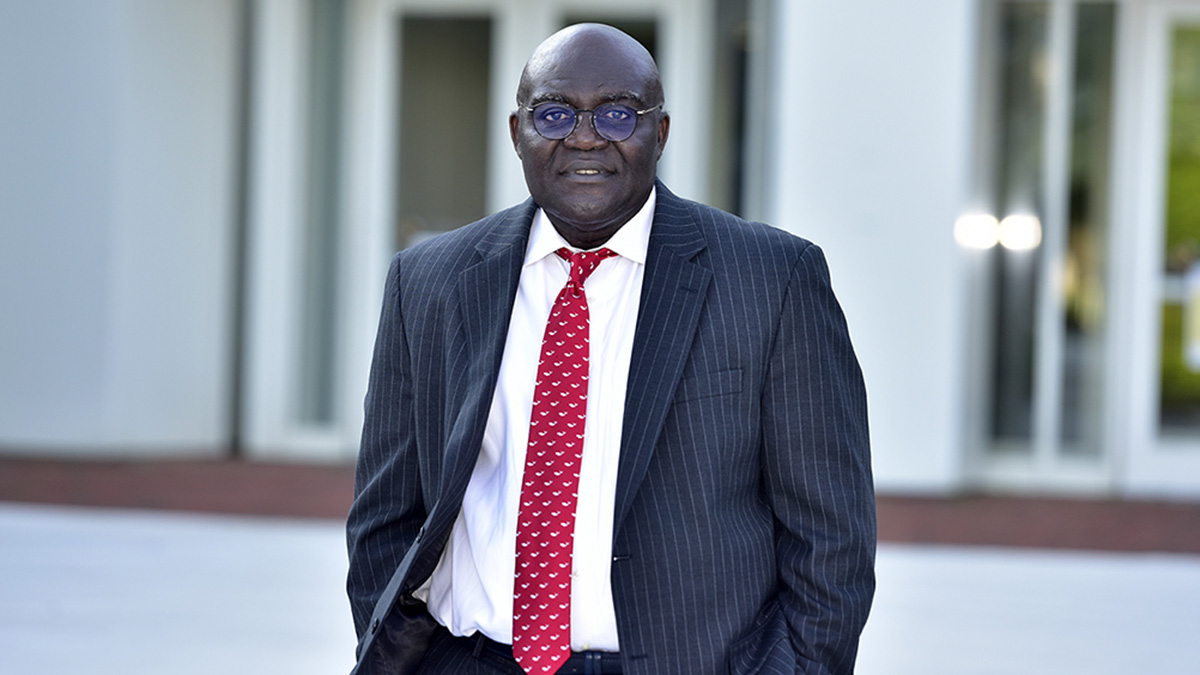
Attoh-Okine is a founding associate editor of the ASCE/ASME Journal of Risk and Uncertainty Management in Engineering Systems.
Such guidelines can be used to train the data center technicians who maintain this new type of infrastructure: the foundation, walls, and roof, as well as the computing equipment.
“We need a workforce that can handle very complex infrastructure maintenance,” Attoh-Okine says. “Right now they are largely learning it on the job, as they go.”
Last fall, Attoh-Okine and Professor of Civil and Environmental Engineering and Chair of Civil Empowerment Birthe Kjellerup led the inaugural gathering of experts from academia, industry, government, and local trade unions to discuss sustainable design, strategic location, and future job creation related to data centers. The conversation led to the launch of an information hub that will be a resource for the mid-Atlantic region.
“Data centers aren’t going away—on the contrary,” Kjellerup says. “We can design them well from the start if we plan now. At the University of Maryland, we have the resources, we have the knowledge, and we can be the ones that have the innovative solutions.”
View all: Engineering AI for the Public Good