Facing three large fans blasting air, the small drone drifted backwards before it quickly got its bearings, fought its way into the wind, and touched down about five feet from its launch site.
Mission accomplished.
In a lofty room about half the size of a high school gym, 40 cameras had measured—down to the millimeter—the rapidly changing distances between the wobbly drone and its landing spot.
Kasra Torshizi ’23, M.S. ’24, a Ph.D. student focusing on AI and robotics, uses the camera data to teach the drone how to navigate the kinds of topsy-turvy winds it could encounter when landing on aircraft carriers at sea. Such technology could also be used with larger unmanned drones, sparing military pilots the risky job of refueling planes mid-air before returning to ship.
It’s one example of the cutting-edge research underway at the Maryland Autonomous Technologies Research Innovation and eXploration (MATRIX) Lab, UMD’s research hub for autonomous technologies in Southern Maryland.
Developing safe, reliable independent robots
At MATRIX, researchers are developing self-guided robots that can fly and swim—all while learning and making decisions as they go.
Independent robots not only need to carry out their mission; they also must prove safe and reliable. “These are intelligent machines that will make our lives easier and more efficient, so they have to be trusted,” says Reza Ghodssi, UMD Distinguished University Professor and MATRIX Lab executive director of research and innovation.
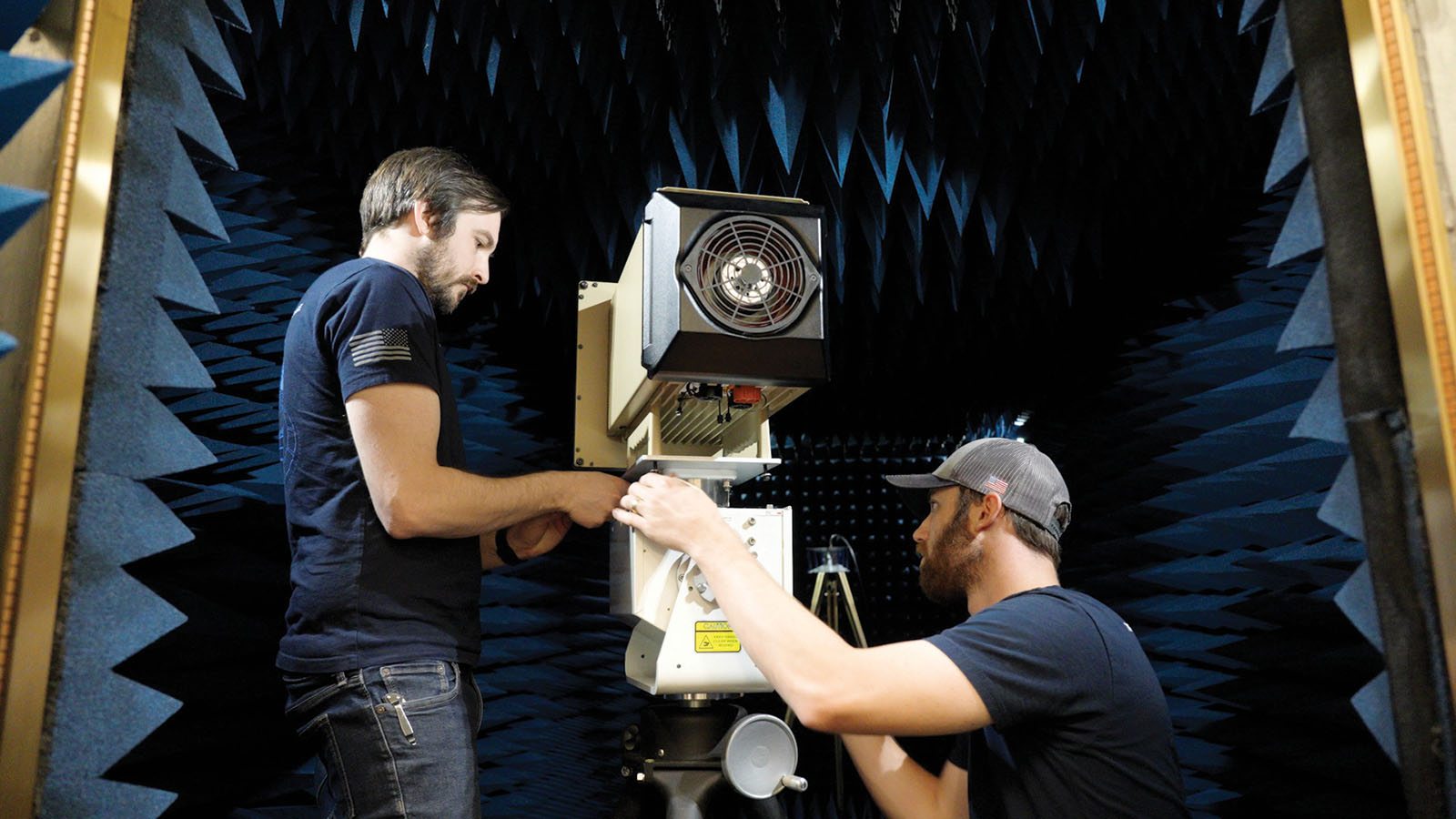 Spaces are available for both students and professionals to reserve and work in. (Photo by Zachary Cusson)
Southern Maryland anchors the state’s autonomy corridor
All in one place: Here at the MATRIX Lab (located at the University System of Maryland at Southern Maryland), researchers can access unparalleled resources to research, design, manufacture, and test the next generation of AI and autonomous systems, including:
- 80'x60' open air-land lab: Radio frequency attenuated and featuring a Vicon Vantage V16 camera system for testing and tuning air and ground autonomous systems in an electromagnetic-shielded space.
- Fluid dynamics tank: Equipped with laser and optical measuring systems for aerodynamic and hydrodynamic research.
- Anechoic chamber: A high-level electromagnetic “clean room” for testing radio frequency transmitting and receiving components and systems.
- Outdoor UGV playground: A 750-square-foot area with terrains and obstacles providing challenging scenarios for testing robotic ground vehicles.
- Other facilities: A project assembly area, 3D printers, machine shop facilities, and electrical and mechanical engineering labs for researchers, students, and others to collaborate, create, and revise.
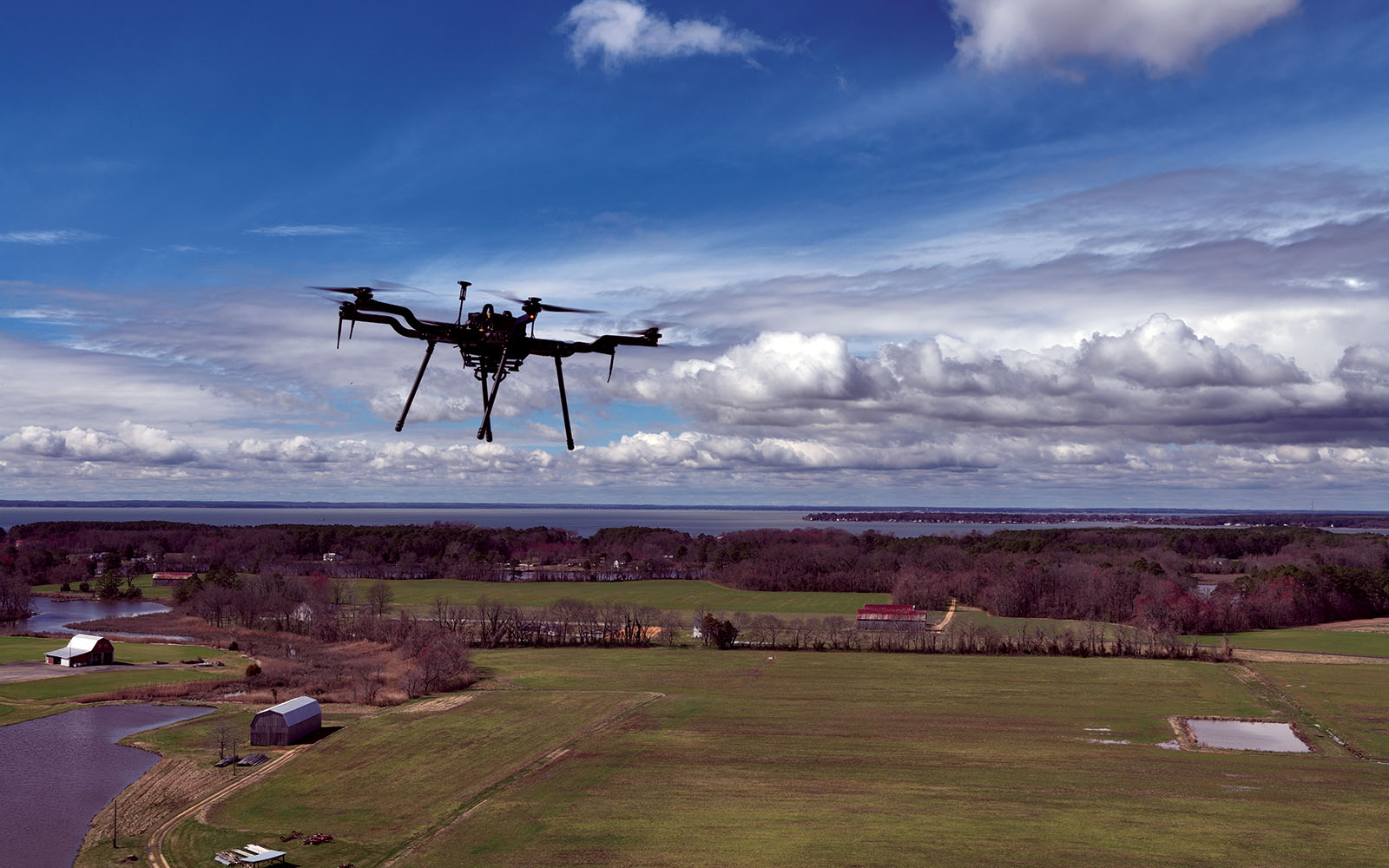
Just down the road from MATRIX, aerial robots are moving out of the lab and into open-air testing at UMD’s Uncrewed Aircraft Systems (UAS) Research and Operations Center (UROC).
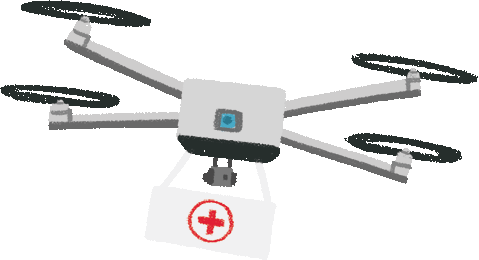
Using restricted airspace at the nearby Naval Air Station Patuxent River, UROC has tested drones that could be used to deliver prescription drugs to rural Maryland communities and emergency trauma kits to car crashes in remote areas. Others are equipped with sensors and advanced AI to quickly locate mass casualty victims, assess their condition, and direct ground robots and human medics to those most badly hurt.
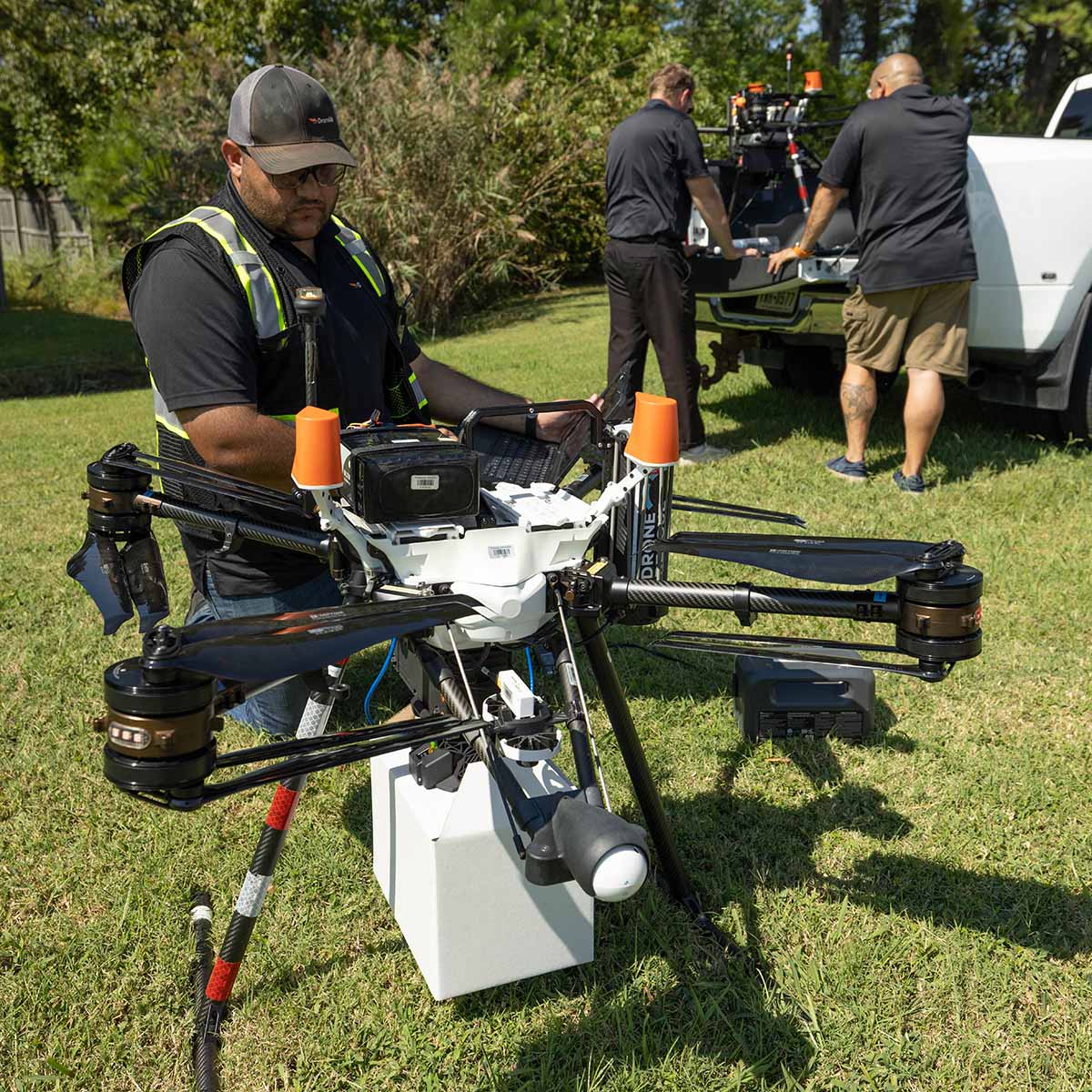 UROC takes care of the technical complexities of UAS operations, ensuring that the drone used for the project is the right fit and that every step is legal, safe, and effective. (Photo by John T. Consoli)
One big next step: working with the Federal Aviation Administration to enable broad access to the nation’s busy airspace. Another: demonstrating to the public that drones can make their lives better and safer while protecting the privacy of people on the ground, says UROC Director John Slaughter. He recently joined the Maryland Advanced Air Mobility Council, a group created by Maryland Gov. Wes Moore to explore ways the state can lead the nation in emerging aviation technology.
“A big challenge is getting the public to embrace these technologies, not be afraid of them,” Slaughter says. “We believe the best way to do that is to let people see them in action: making it more convenient to get food, medicine, or merchandise while also improving their quality of life.”