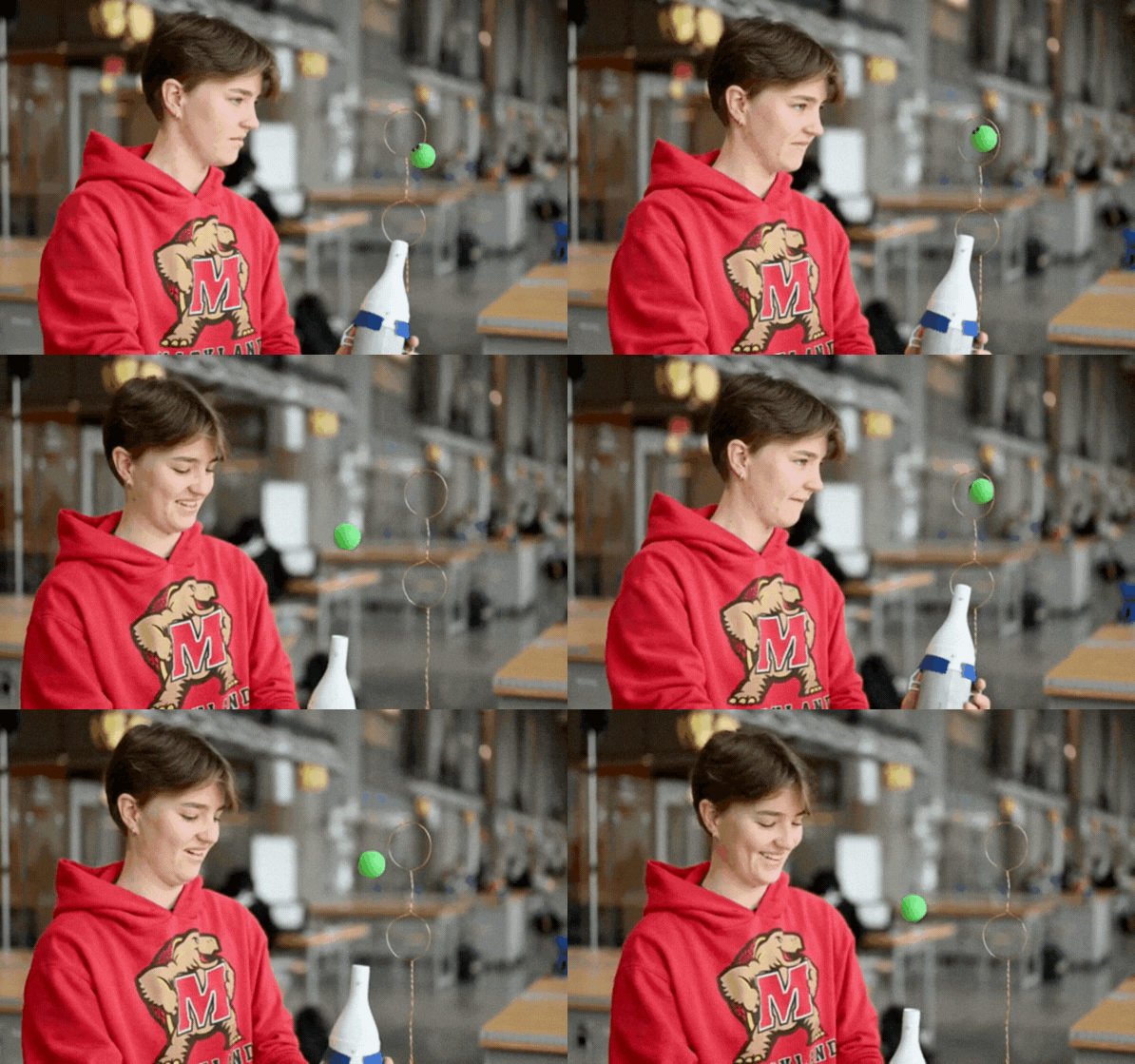
Success! Mechanical engineering major Anna Dyson ’25 demonstrates a Vertically Integrated Project: an at-home, hands-on instructional kit to boost students’ learning of fluid dynamics. (Photo by: Maximilian Franz)
Faculty Are in the Students’ Corner
By engaging with others and learning from their unique perspectives, students expand their abilities to innovate, collaborate, and lead.
When Anna Dyson ’25 joined a Vertically Integrated Projects team to develop at-home, hands-on instructional kits to boost college students’ learning of fluid dynamics, they immediately appreciated its potential impact. “It’s designed to replicate laboratory conditions, empowering students to complete their work without having to go into a large facility,” Dyson says of the devices they and fellow students are creating under the direction of mechanical engineering Professor and Associate Dean for Undergraduate Programs Kenneth “Ken” Kiger.
Working alongside students majoring in disciplines from bioengineering to chemical engineering, the mechanical engineering major shares their knowledge with teammates, while also learning from others who bring unique domain knowledge to the project.
This type of cross-disciplinary collaboration benefits both students and faculty, creating richer learning experiences and stronger projects. It’s also a hallmark of the Vertically Integrated Projects (VIP) Model for Experiential Learning, which brings together teams of undergraduate students, graduate students, and faculty members for long-term collaborations. Now piloting at Maryland, VIP is an award-winning educational construct that allows students to offer substantial contributions to real-world applications, while expanding the scholarship of faculty mentors.
A key goal of these VIPs, says Office of Global Engineering Leadership Director Brian Dillehay, is to accelerate students’ opportunities to solve complex problems with people who have different experiences and discipline expertise. The end result? A product that is better than anything an individual could do alone.
Dyson, for their part, says that VIP has been a joyful, often eye-opening experience. While working to create a nozzle that would function in two distinct experiments for the fluid dynamics instructional kit, for example, they got help and input from teammates who could offer insight on the data that was collected from the experiment. Dyson, in turn, has taken the lead on areas they know well, such as CAD processes. “I have loved being able to use everything from the classroom in a direct application, and to be able to teach the other members of my sub team who do not have as much CAD or fluid dynamics experience,” Dyson says.
Global Study
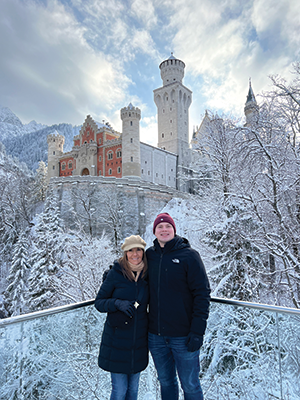
As part of Maryland Engineering’s Global Opportunities and Study Abroad programming, students can take specialized courses in maritime engineering at the Norwegian University of Science and Technology or participate in programming about the development of smart green cities in Sweden and Denmark— unique learning experiences in places that aren’t just directly tied to these fields, but are globally recognized for excellence.
No matter where they go, Terps will develop skills for wherever life takes them next, says Dillehay. “These are experiences that deepen students’ understanding of what engineering looks like globally,” he says. “It teaches them how to engage effectively across cultural differences and to deal with ambiguity. These are skills that many engineering firms are looking for.”
Foster Academic and Social Connections
While Maryland Engineering offers numerous clubs, open to all, where students can connect with others who share their identity, students can also participate in robust programming to learn more systematically about challenges and solutions. For example, through the Women in Engineering Program’s popular living-learning communities for women and men, Flexus and Virtus, these topics are tackled head on, with honesty.
Through a structured series of courses and activities over two years, students learn the skill of deeply listening to others—and meaningfully grappling with a wide range of perspectives. “We know that designs are better when you have developed the skill sets for empathy and understanding across differences, because you think about problems differently, and you have broader solution spaces,” says Paige Smith, director of the Women in Engineering Program. “We need everyone to be thinking about understanding across difference in an intentional way.”
Top