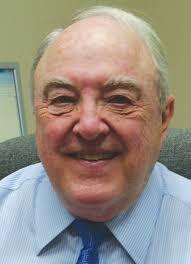
 Captain Thomas C. Crane USN, RET ’62
Born in Baltimore and raised in Catonsville, MD, Tom knew early on he was heading for a career in engineering. Following his graduation with honors from high school and having participated as a class officer and athlete, he set his sights on the University of Maryland, College Park, where several of his classmates were headed. Tom’s parents were strong supporters of education and encouraged his plans. “My father didn’t finish college and struggled his whole life to get ahead, even though he had good jobs. He wanted to make sure that I attended and finished college so I would have a good opportunity at a career.” Tom’s strength lay in math, so he decided to pursue an undergraduate degree in civil engineering.
Upon graduation with his undergraduate degree, Tom joined the Navy’s Civil Engineer Corps. He attended Officer Candidate School in Newport, RI, and trained further in California in preparation for his first tour in Guam. When Tom received his orders to report for service in Puerto Rico, he had just gotten married in Port Hueneme to Barbara, who hailed from Camarillo, CA.
During his time in Puerto Rico, he was selected for the Navy’s Shore Nuclear Power Program graduate school and graduated with a master’s degree in that field from Pennsylvania State University in December 1969. As a qualified officer-in-charge, he made four trips to Antarctica at the nuclear power plant there, which supported National Science Foundation projects at McMurdo Station. Toward the end of his time on this tour, he was responsible for the plant decommissioning, noting that the project took five years, as the station is in international territory and had to comply with the Antarctic Treaty of 1959 as well as United States transportation regulations.
Upon his return to San Diego, Tom became executive officer of the amphibious construction battalion responsible for “ship to shore” supplies for beach support in the event of an invasion. Later he was in charge of naval construction in the northwestern states and built a one-of-a-kind nuclear refueling facility at the Puget Sound naval shipyard, which was the largest and most technically difficult construction project of the Navy in 1981. Subsequent years found him based in Hawai,i building a remote over-the-horizon radar site on the Aleutian Islands chain, and later he became commanding officer of the Public Works Center in San Francisco during the time of the Loma Prieta earthquake in 1989. When the quake hit, he was living on Yerba Buena Island and ran the short distance to the freeway to begin directing traffic for those stranded on the Bay Bridge. In the following days, “We had to deal with over 600 instantaneous utility breaks… water and sewer lines, damaged runways, unusable freeways, and collapsing buildings.” He returned to the San Diego area and focused on consolidating engineering services on the West Coast for the Navy, which included housing and military construction as well as environmental remediation work.
Tom retired in 1993 with the rank of Captain after a 31-year career. During that time, he was awarded three Legion of Merit medals and five Meritorious Service Medals for his service to our Nation.
Shortly after retirement, he launched his sole proprietor consulting business that he ran for around 13 years. During this time, he also volunteered for the San Diego Police Department. In 2009, he was hired as an assistant director in the Public Utilities Department for the City of San Diego, consolidating their water and wastewater departments, where he stayed until 2018.
Top