News Story
NSF Grant for Hurricane Forecasting Work
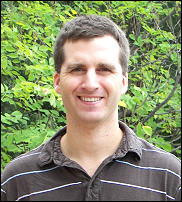
Derek Paley
The Clark School's Department of Aerospace Engineering will collaborate with the the University of Miami Department of Meteorology and Physical Oceanography to yield an unprecedented observation and forecast framework that integrates aerospace engineering with atmospheric science. The potential impact is significant reduction in loss of lives and property through improved emergency response decisions. The grant is funded through the American Recovery and Reinvestment Act of 2009 (Public Law 111-5) and has significant potential to broadly impact risks associated with hurricane-related disasters.
According to the project abstract the research objective of this project is to reduce the uncertainty of hurricane forecasts by creating and observing a network of unmanned aircrafts. The broader significance of this research project lies in its potential to improve hurricane forecasts by integrating next-generation weather prediction models with new strategies for adaptive motion coordination of multiple unmanned aircrafts. Better forecasts and reduced uncertainty in hurricane intensity prediction lead to reduced loss of life and property via improved emergency management decisions.
Hurricane forecasts are typically dependent on the data obtained and synthesized from observations of pressure, wind velocity, and temperature at altitudes lower than manned aircrafts can safely fly. Small, unmanned aircraft can fill this important gap in observation data by flying at altitudes as low as one hundred meters. A coordinated team of unmanned aircraft can further reduce the uncertainty in hurricane forecasts by collecting low-altitude observations in a prescribed spatial distribution. The project will also provide undergraduate and graduate students with a unique interdisciplinary training opportunity which will combine atmospheric science and dynamical control systems.
The grant is worth $275,000.
More information about this and many other NSF related topics can be found on the research.gov website.
Published September 28, 2009
Related Stories
Stories / September 1, 2009
Barua Wins NSF Grant

Stories / October 8, 2019
Envisioning the Future of Urban Transportation
Stories / September 25, 2009
$1.5M NSF Grant for Ant-like Microrobots
Stories / September 10, 2009
Grant to Improve Data Reliability

Stories / August 10, 2009
NSF Grant for Srivastava, Narayan

Stories / July 29, 2009
NSF Grant for Ephremides

Stories / June 2, 2026
Wielgosz Receives ARCS MWC Foundation Scholarship

Stories / May 13, 2026
Capstone Design Expo 2026: Students Solve for Maryland & Beyond
Stories / May 7, 2026
Melissa Buys Earns Presentation Award at SSPI–Mid Atlantic...

Stories / May 5, 2026
UMD Students Earn Top Honors at AIAA Regional Conference
