|
A Whiting-Turner Lecture:
|
|||||||
 |
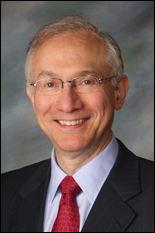
One of America's strengths has been a robust research and development enterprise in advancing medical technology that can save lives and improve the quality of life. At the same time, many economic analyses ascribe a high share of the rising costs of health care to increasing use of medical technology. This talk will explore the following question: Is it possible to promote and realize the benefits of new science and technology for health and at the same time to maintain an affordable health system? Special emphasis will be placed on the role of comparative-effectiveness research and other policy tools to achieve these dual goals. Biography Dr. Fineberg helped found and served as president of the Society for Medical Decision Making and also served as consultant to the World Health Organization. At the Institute of Medicine, he has chaired and served on a number of panels dealing with health policy issues, ranging from AIDS to new medical technology. He also served as a member of the Public Health Council of Massachusetts (1976-1979), as chairman of the Health Care Technology Study Section of the National Center for Health Services Research (1982-1985), and as president of the Association of Schools of Public Health (1995-1996). Dr. Fineberg is co-author of the books Clinical Decision Analysis, Innovators in Physician Education, and The Epidemic that Never Was, an analysis of the controversial federal immunization program against swine flu in 1976. He has co-edited several books on such diverse topics as AIDS prevention, vaccine safety and understanding risk in society. He has also authored numerous articles published in professional journals. Dr. Fineberg is the recipient of several honorary degrees and the Joseph W. Mountin Prize from the U.S. Centers for Disease Control. He earned his bachelor's and doctoral degrees from Harvard University.
|
  |
Students Welcome! April 21, 2009 Can't Attend? This lecture will be webcast. |
|||||